
Updated: 11 November 2026 by Sylwia (MyCrochetory)
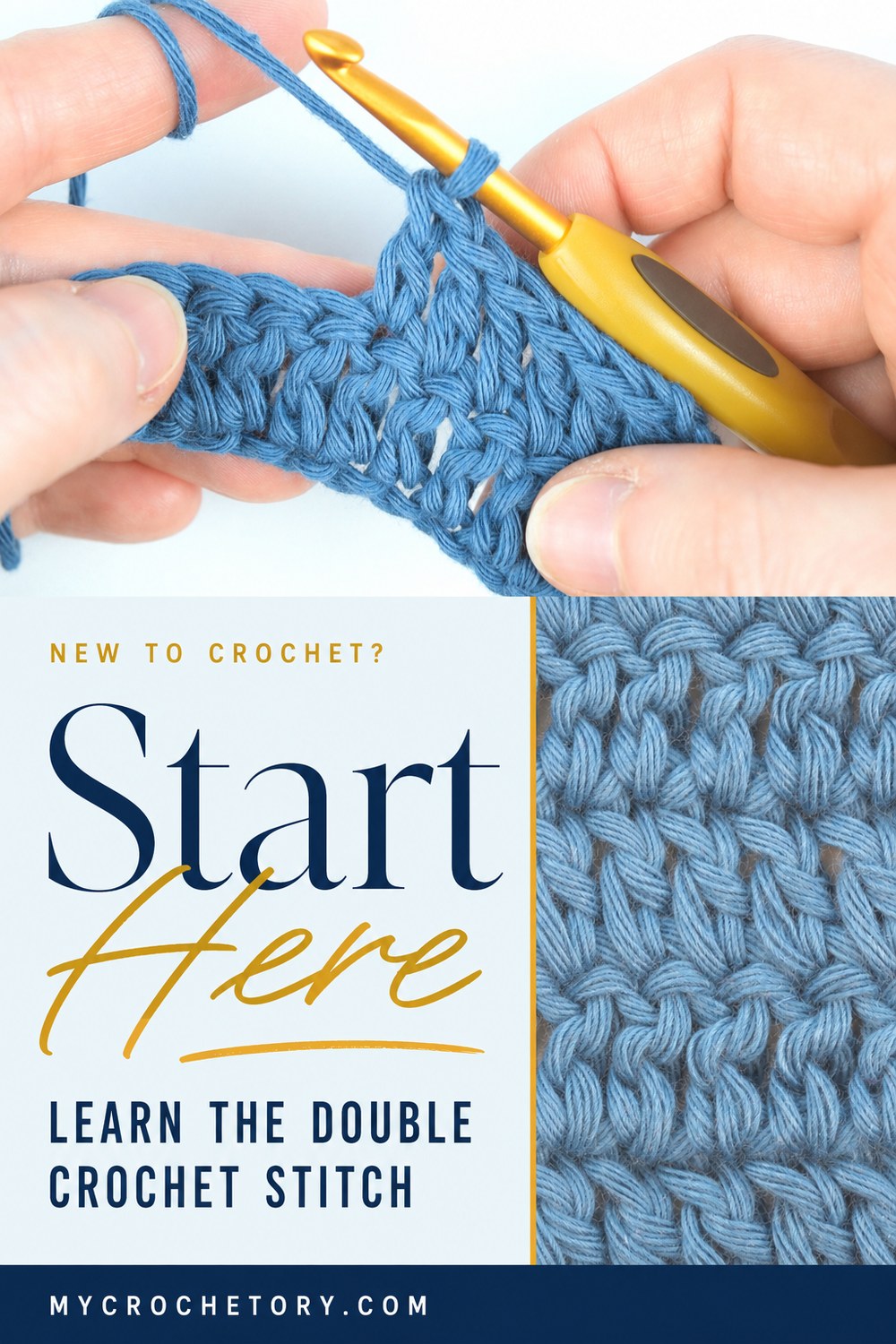
The double crochet stitch is the moment crochet suddenly speeds up. You yarn over, insert the hook, pull up a loop, then yarn over and pull through 2 loops twice, and one tall stitch is done.
One row of dc is about as tall as two rows of single crochet, which is exactly why blankets, shawls and granny squares are full of it. Here you get my video, a photo of every move, increases, decreases, rounds, and the back loop version I keep coming back to in my Kalinda patterns.
New to crochet? My Free Crochet Tutorials for Beginners guide has 20+ step by step tutorials in one place.

Double crochet stitch in 4 steps
- Yarn over and insert the hook into the stitch.
- Yarn over and pull up a loop. You have 3 loops on the hook.
- Yarn over and pull through the first 2 loops. You have 2 loops left.
- Yarn over and pull through the last 2 loops.
Say it out loud a few times, yarn over, in, pull up, through two, through two. By the third row it starts to feel like counting to four.
What is the double crochet stitch?
In US patterns the double crochet stitch is written as dc, and in charts it’s a tall T with one little slash across the stem. Height-wise it sits right in the middle of the family, about twice as tall as single crochet, a bit taller than half double crochet and shorter than treble crochet.
All that height is the reason dc rows usually start with a turning chain of 3. The fabric comes out softer, lighter and more drapey than single crochet, the kind that hangs nicely instead of standing up on its own.

Double crochet stitch video tutorial
Prefer to see the hook move first? In the video I work the double crochet stitch, an increase and two decreases, the regular one and the invisible one.
If you use an ad blocker, turn it off for this page, or the video may not load.
How to work the double crochet stitch step by step
Row 1
Step 1. Make a chain of any length.

Step 2. Yarn over and insert the hook into the 4th ch from the hook.


Step 3. Yarn over and pull up a loop. You have 3 loops on the hook.


Step 4. Yarn over and pull through the first 2 loops. You have 2 loops left.


Step 5. Yarn over and pull through the last 2 loops. That’s one double crochet.


Step 6. Work 1 dc in each chain to the end.

Wondering where those first 3 chains went? They’re your turning chain, so 10 chains give you 7 double crochet stitches.
Row 2
Step 1. Turn your work and ch3.

Step 2. Yarn over and insert the hook under both loops of the first stitch. In this tutorial the ch3 doesn’t count as a stitch, so the first dc goes into the very first stitch.

Step 3. Yarn over and pull up a loop. You have 3 loops on the hook.

Step 4. Yarn over and pull through the first 2 loops.

Step 5. Yarn over and pull through the last 2 loops.

Step 6. Work 1 dc in each stitch across, with the last dc in the last dc of the row below.


From here it’s Row 2 on repeat for as long as you like. When you’re done, cut the yarn, pull the tail through the loop on your hook and weave in the ends.
Small confession, on my own dc edges I skip the ch3 and use standing stitches instead, because the side edges come out so much straighter, and my How to Crochet Straight Edges tutorial shows exactly how.
Back loop double crochet (BLdc)
Back loop double crochet, or BLdc, is a plain double crochet with one tiny change. You work into the back loop only, and the unworked front loop turns into a neat little ridge.
To work it, yarn over, insert the hook under the back loop only, the one farther from you, and finish the dc as usual. Worked in rows, the ridges show on alternate sides of the fabric, and in rounds without turning they all sit on the front.

If you’ve made any of my Kalinda patterns, you already know this stitch. BLdc makes the ridges in the Kalinda Shawl, the Kalinda Blanket, the Kalinda Wrap and the Kalinda Arrow Wrap.
Double crochet stitch in the round
Good news for hats and mandalas, the double crochet stitch in the round is the same stitch, you just keep going around. The only choice is how each round starts.
Joined rounds
Start each round with ch3, which counts as the first stitch in most patterns worked in the round. At the end, join with a slip stitch to the top of the ch3.

Spiral rounds
In spiral rounds you don’t join or chain, you just keep working into the next stitch. Put a stitch marker in the first stitch of each round so you know where it starts.

How to increase in double crochet
To increase in double crochet, work 2 dc into the same stitch. Patterns write it as dc inc or 2 dc in next st, and some use 3 or more dc in one stitch for a bigger increase.

How to decrease in double crochet
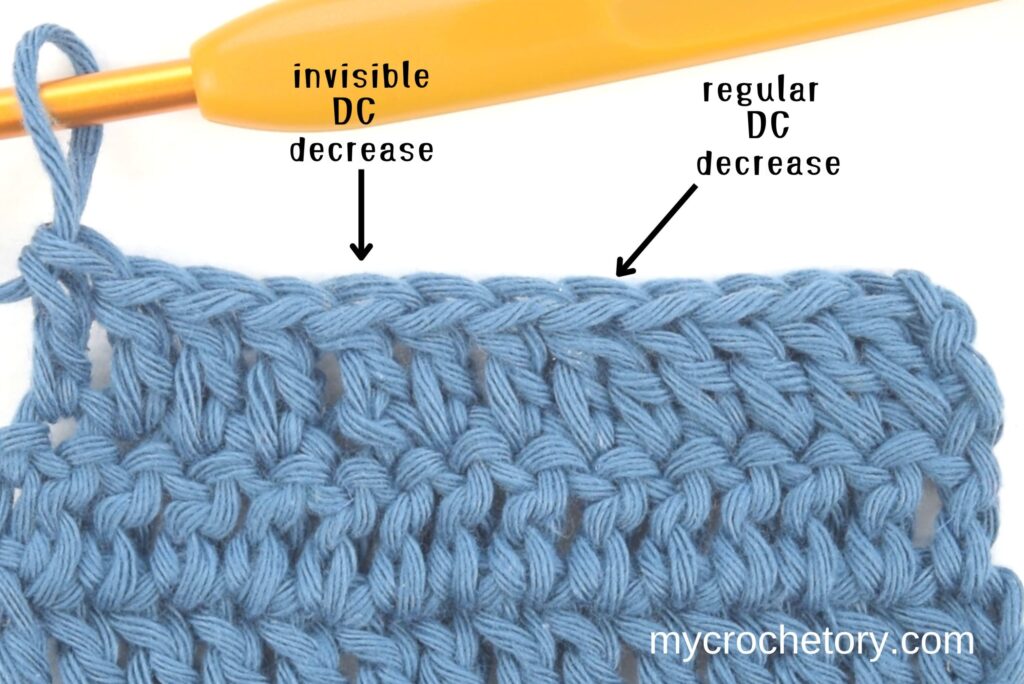
A double crochet decrease turns 2 stitches into 1, and patterns call it dc2tog or dc dec.
- Yarn over, insert the hook into the next stitch, pull up a loop, yarn over and pull through 2 loops. You have 2 loops on the hook.
- Yarn over, insert the hook into the following stitch, pull up a loop, yarn over and pull through 2 loops. You have 3 loops on the hook.
- Yarn over and pull through all 3 loops.
For a smoother decrease, use the invisible version. Yarn over, insert the hook into the front loop of the next stitch and then into the front loop of the stitch after it, and finish the dc as usual, as shown in my invisible decrease tutorial.
More double crochet stitch variations
Front loop double crochet (FLdc)
Here the hook goes under the front loop only. The unworked back loops leave a line on the other side of the fabric.

Front post and back post double crochet (FPdc and BPdc)
Post stitches go around the stem of the stitch below instead of into its top. They’re behind the texture of my basketweave stitch and the crochet waffle stitch.
V-stitch
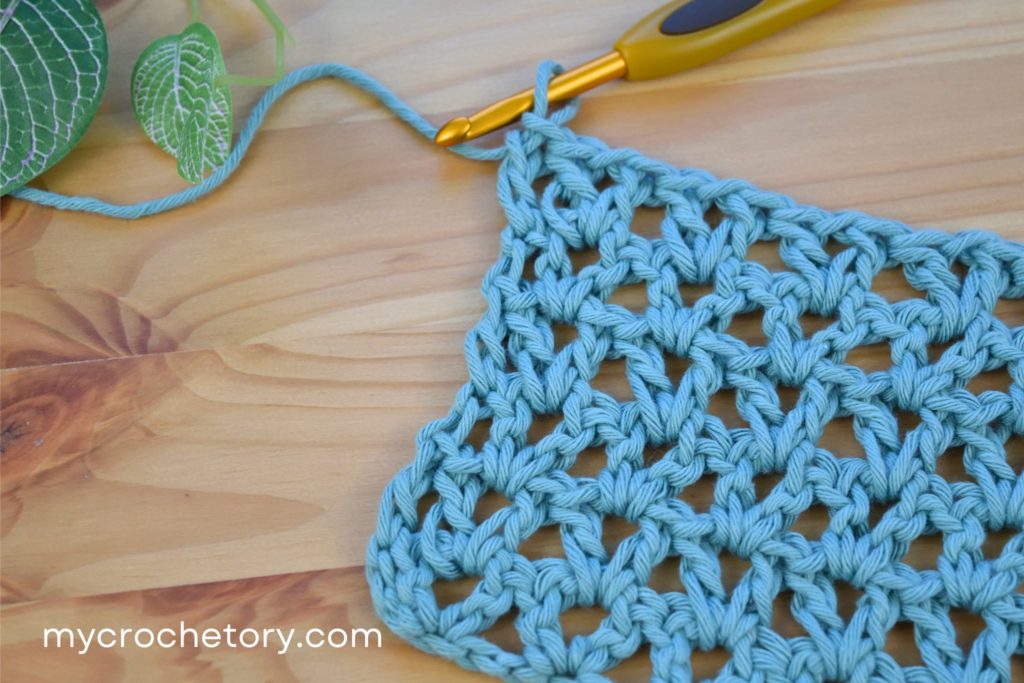
The V-stitch is a dc, ch1 and another dc worked into the same stitch, so it makes an open, airy fabric. My V-stitch tutorial shows it step by step.
Popcorn stitch
For a popcorn, you work several dc into the same stitch and close them together at the top. The result is a round bump that sticks out of the fabric.
Common double crochet stitch mistakes
Stitches of different heights
This one sneaks up on everyone. Pull up the first loop to the same height each time, because one short loop makes the whole stitch shorter than its neighbors.
Rows getting narrower or wider
Narrower rows mean a missed last stitch, and wider rows usually mean a dc worked into the turning chain. Count your stitches at the end of every row while you learn.
Stitches too tight
Relax your grip on the yarn, or go up half a hook size. If you have to wiggle the hook into every stitch, the tension is too tight.
Want this tutorial for later? Save this pin to your crochet board.
More basic crochet stitches
Collect the whole set. These are the other basic stitches on my blog, each with photos and a video.
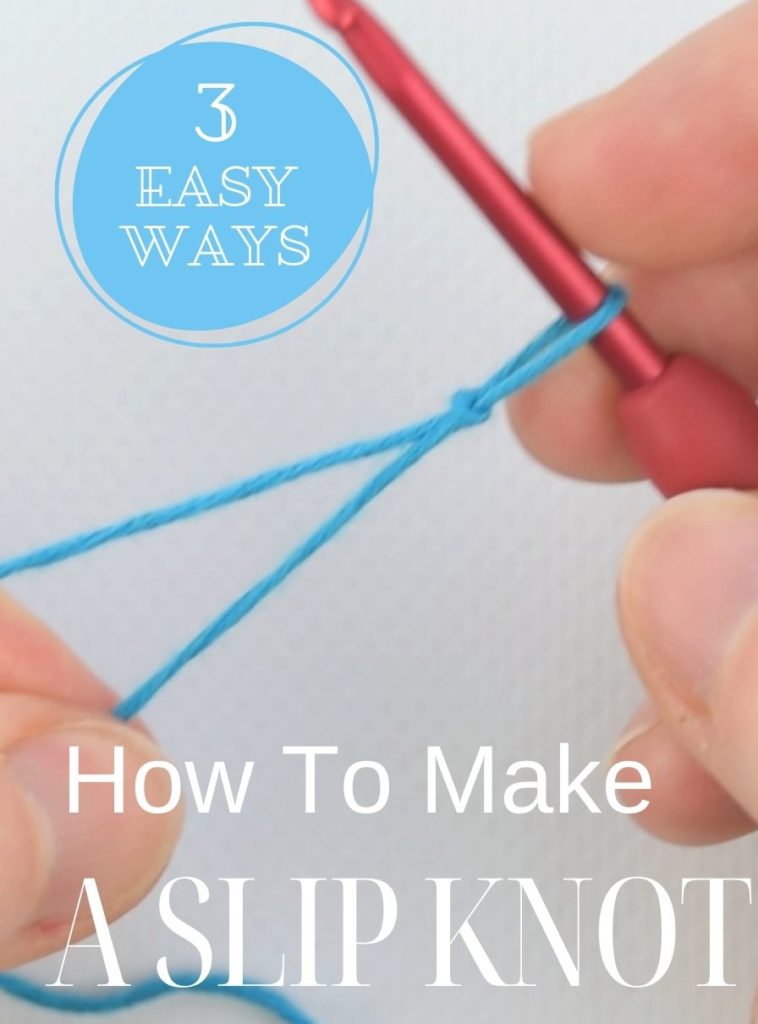


- Crochet Slip Knot is where every project starts.
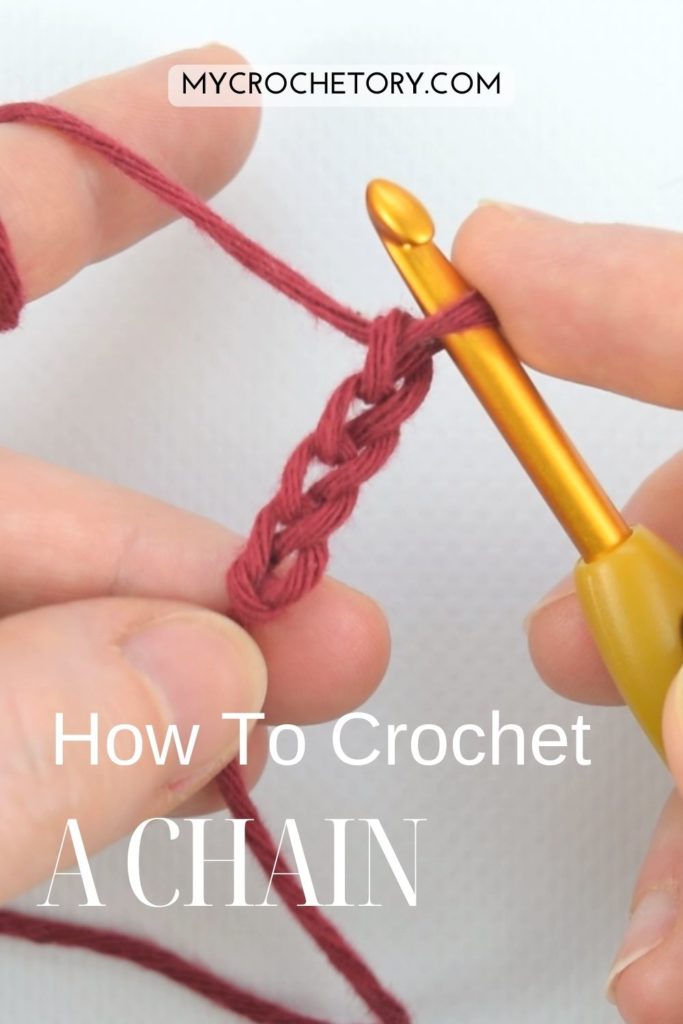
- How to Crochet a Chain makes the foundation for your first row of dc.
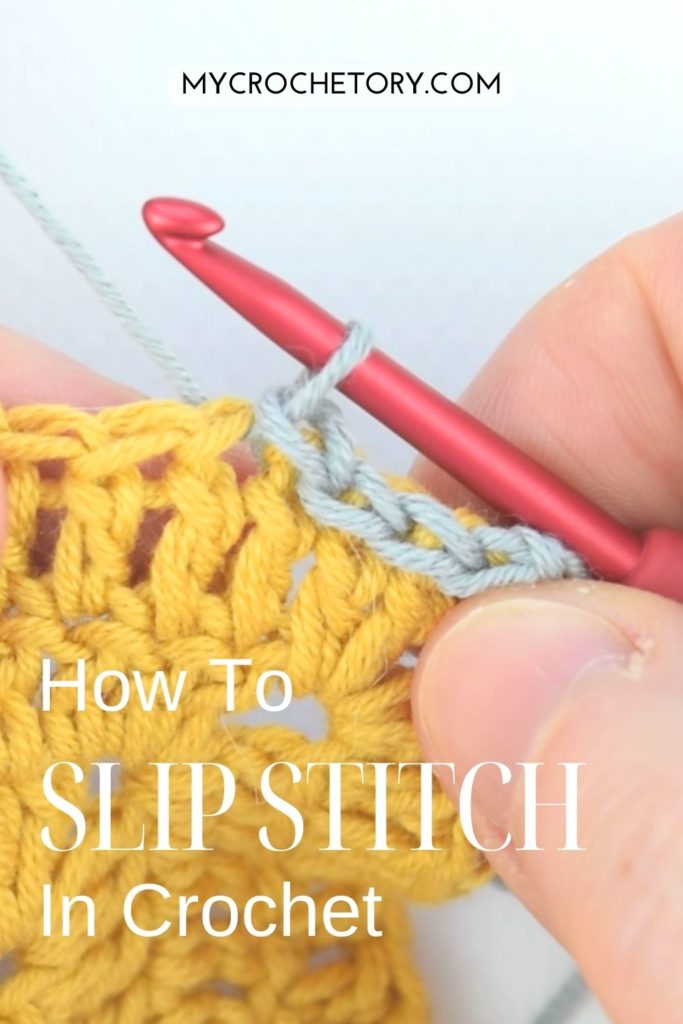
- How to Slip Stitch joins rounds of double crochet.
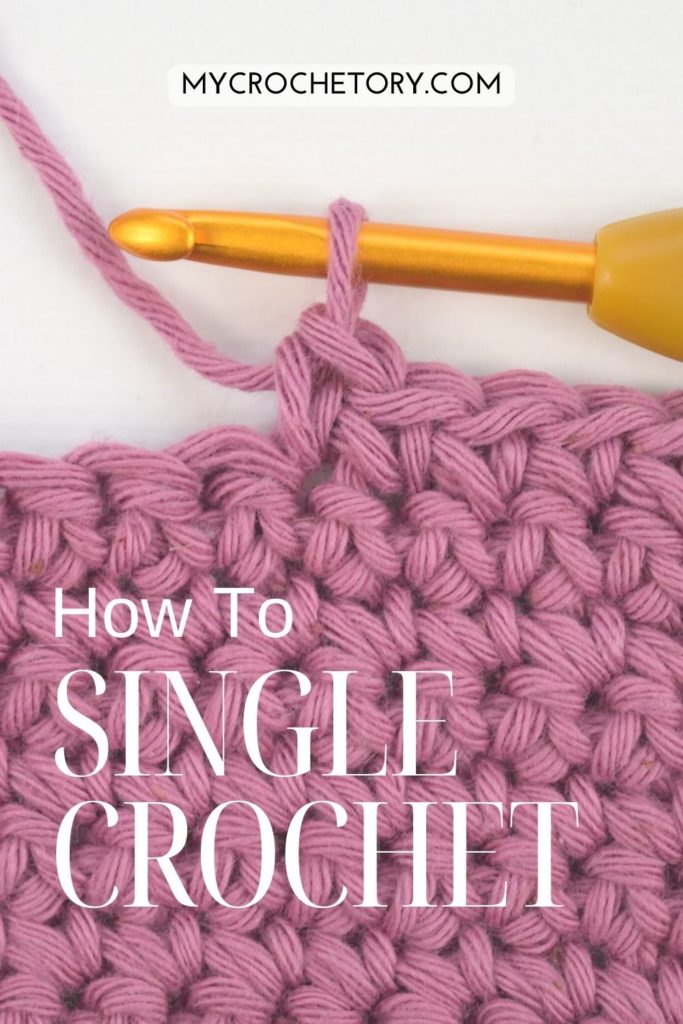
- Single Crochet Stitch is the short, firm basic stitch.
- How to Half Double Crochet sits between sc and dc.
- How to Treble Crochet is the next stitch up from dc.
- Foundation Double Crochet makes the chain and the first dc row in one go.
- Double Crochet 2 Rows at Once builds height even faster.
Double crochet stitch FAQ
Is US double crochet the same as UK double crochet?
No. US double crochet (dc) is called treble crochet (tr) in UK patterns, and UK double crochet is the US single crochet.
Does the ch3 count as a stitch?
It depends on the pattern, so always check its notes. In this tutorial it doesn’t count in rows, and in joined rounds it usually does.
Can I start a row of dc without a turning chain?
Yes. A standing double crochet starts the row at full height, with no ch3 at all.
What is BLdc in crochet?
BLdc means back loop double crochet, a double crochet worked into the back loop only. It makes horizontal ridges, as shown in the BLdc section above.
Got stuck on a step? Ask in my Facebook Group or Official Ravelry Group, or email me at mycrochetory@gmail.com.
You can also follow me on Instagram, Facebook and Pinterest.
Leave a Reply