
Updated: 1 November 2026 by Sylwia (MyCrochetory)
The herringbone crochet stitch is my favorite stitch, and yes, I play favorites. One extra strand on your hook turns plain single crochet into slanted stitches that line up in a zigzag, just like a herringbone tweed coat.
And the best part? If you can single crochet, you can learn it today. Below you’ll find my step-by-step photos, my video and a free stitch chart, so grab your hook and pick the way you learn best.
If you’re brand new to crochet, start with my single crochet tutorial and come back here right after. Or jump straight to the herringbone photo tutorial.
Join my Facebook Group and Ravelry Group to ask questions and share your work in progress. You can also follow me on Instagram, Facebook and Pinterest.
What is the herringbone crochet stitch?
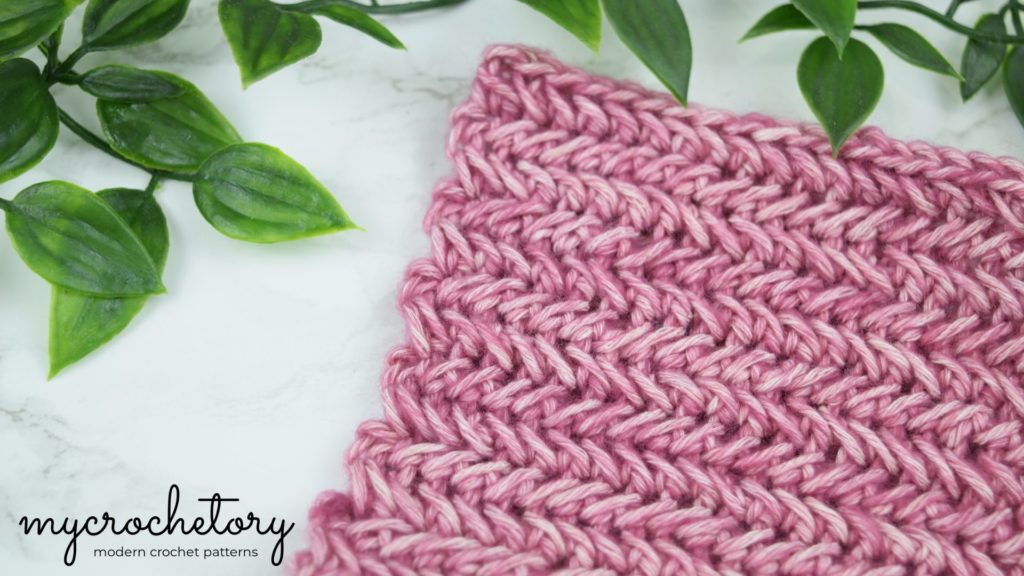
The herringbone crochet stitch is a single crochet that leans on its neighbor. Before you pull up a loop, you catch the left leg of the stitch you just made, and that tiny extra move makes every stitch tilt the same way.
Then you turn, and the next row tilts the other way. Row after row, the slants stack into a zigzag that looks almost woven, and your fabric gets dense, warm and so squishy you’ll keep poking it.
You’ll also see it called herringbone single crochet, or hbsc. There are no new stitches to learn, just chains, single crochet and one extra strand.
Why the herringbone crochet stitch is my favorite
My patterns totally give me away. Herringbone is in my cowl, my headband, a shawl, a hat, a bag and even a coaster, and I’m not done with it yet.
After the Herringbone Cowl I just wanted more, so I took the stitch into a big triangle shawl. That’s the Diana Shawl, named after a Malabrigo Rios colorway I fell in love with in a yarn store.
My Siri Hat is my favorite of all my hat designs, and of course, it’s herringbone. The fabric is thick enough for real winter, and the slanted stitches look great in solid and hand-dyed yarns alike.
Yarn and hook for the herringbone crochet stitch
For your first herringbone crochet stitch swatch, grab a smooth yarn in a light color. Fuzzy or dark yarn hides the legs, and you really want to see that extra strand.
My pink swatch in the video is Scheepjes Stone Washed with a 5 mm hook. No need to buy anything new for practice, though, any smooth yarn from your stash will do.
One thing to know before you start. Herringbone is tighter than plain single crochet, because every stitch grabs an extra strand, so if your fabric feels like cardboard, go up half or one hook size.
Herringbone crochet stitch chart
Some of us read charts faster than words, and if that’s you, this herringbone crochet stitch chart is for you. The slanted line on each stitch shows which way it leans, and the rows switch direction every time you turn.
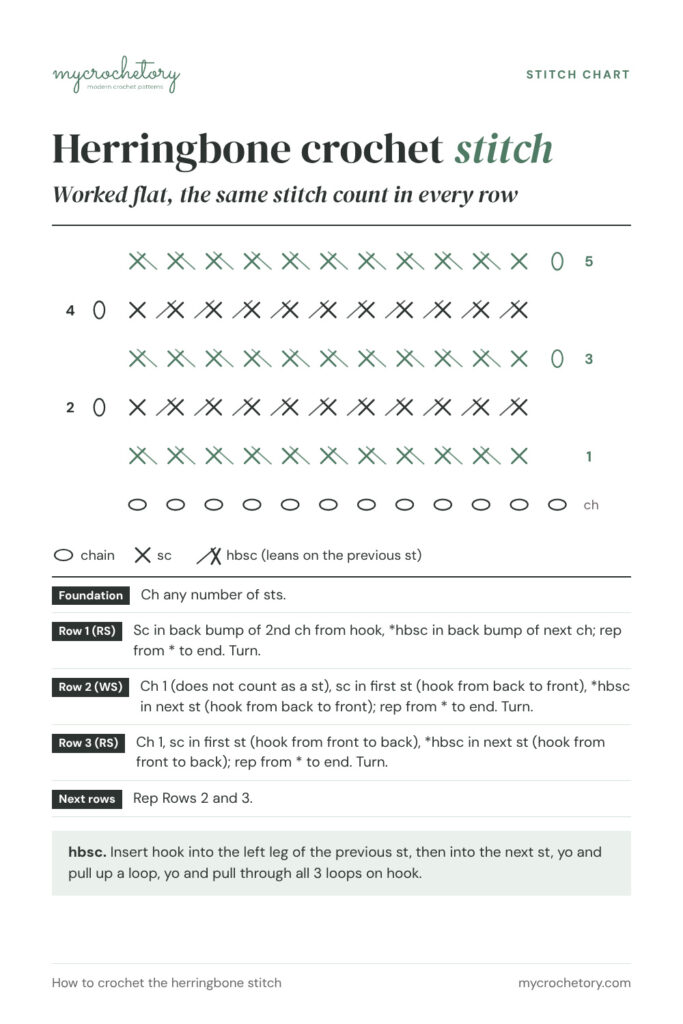
Save it to your phone or pin it, so the rows are right there next to your hook.
Herringbone crochet stitch video tutorial
Like to watch first and read later? My video shows every step on the pink swatch, so you’ll see exactly where the hook goes.
If the video doesn’t load, switch off your ad blocker for this page. The photos below show the same steps too.
Herringbone crochet stitch written pattern
Here’s the short version for when you just need a quick reminder mid-project. The stitch count stays the same in every row, which makes counting so much easier.
- Foundation. Ch any number of sts.
- Row 1 (RS). Sc in back bump of 2nd ch from hook, *hbsc in back bump of next ch; rep from * to end. Turn.
- Row 2 (WS). Ch 1 (does not count as a st), sc in first st (hook from back to front), *hbsc in next st (hook from back to front); rep from * to end. Turn.
- Row 3 (RS). Ch 1, sc in first st (hook from front to back), *hbsc in next st (hook from front to back); rep from * to end. Turn.
- Next rows. Rep Rows 2 and 3.
hbsc (herringbone single crochet). Insert hook into the left leg of the previous st, then into the next st, yo and pull up a loop, yo and pull through all 3 loops on hook.
Herringbone crochet stitch photo tutorial
Now let’s do it together, step by step. My photo swatch is mustard, so every leg and loop is easy to spot.
Foundation chain
Make a chain as long as you like. Herringbone doesn’t care about the number, any count works.

Row 1 (right side)
1. Insert your hook into the back bump of the 2nd chain from the hook and work a regular single crochet.


2. Now the herringbone part. Insert your hook into the left leg of the single crochet you just made.

3. Insert your hook into the back bump of the next chain and pull up a loop. Yarn over and pull through all 3 loops on your hook.


4. Repeat steps 2 and 3 in every chain to the end of the row, then turn. The arrows show where your hook goes, first into the left leg (1), then into the next chain (2).


Row 2 (wrong side)
5. Ch 1 (it doesn’t count as a stitch). Work a single crochet in the first stitch, inserting your hook from the back to the front.


6. Insert your hook into the left strand of the previous stitch, from right to left. Then insert it into the next stitch from the back to the front, yarn over and pull up a loop, yarn over and pull through all 3 loops.


7. Repeat step 6 to the end of the row, then turn.


Row 3 (right side)
8. Ch 1 and work a single crochet in the first stitch, this time inserting your hook from the front to the back.

9. Insert your hook into the left strand of the previous stitch, from right to left, then into the next stitch from the front to the back. Yarn over and pull up a loop, yarn over and pull through all 3 loops.


10. Repeat step 9 to the end of the row.


Keep going
Repeat Rows 2 and 3 until your piece is as long as you want. Flip it over and you’ll see two different faces, the slanted zigzag on the right side and neat horizontal ridges on the wrong side.


Tips for a neat herringbone crochet stitch
Keep the first stitch of every row a plain single crochet. It has nothing to lean on yet, so it just starts the slant for the rest of the row.
Count your stitches at the end of every row, I mean it. The last stitch loves to hide right next to the turning chain, and skipping it makes your edges shrink, so my tutorial on straight edges is worth a peek too.
Go easy on your loops when you pull through all 3. Tight loops squash the zigzag, and relaxed ones let the slant really show.
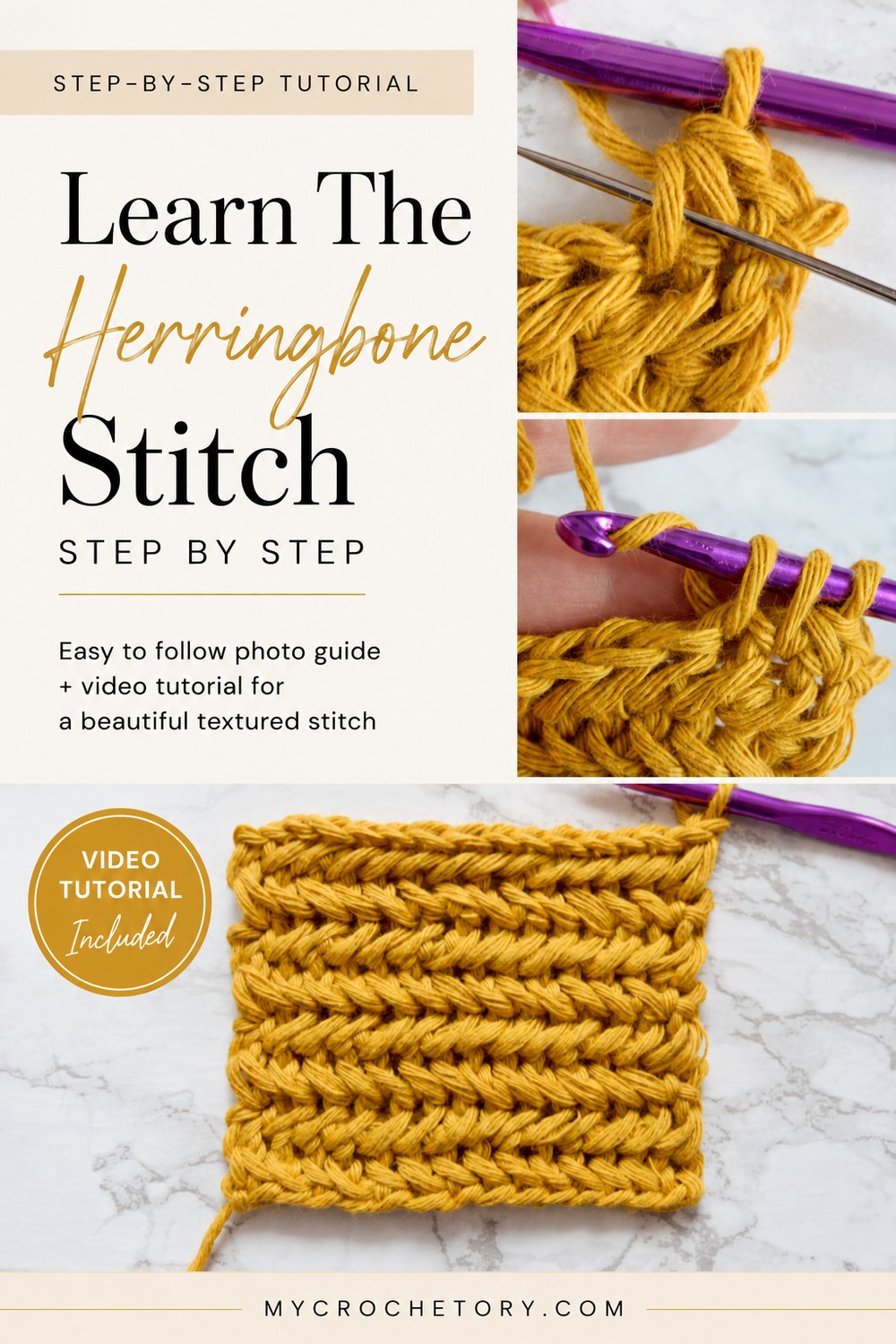
Not crocheting today? Pin this herringbone crochet stitch tutorial to your Pinterest board, so it’s right there when you’re ready.
Free herringbone crochet stitch patterns
These free patterns of mine are all worked in herringbone, so you can put your new favorite stitch to work right away.
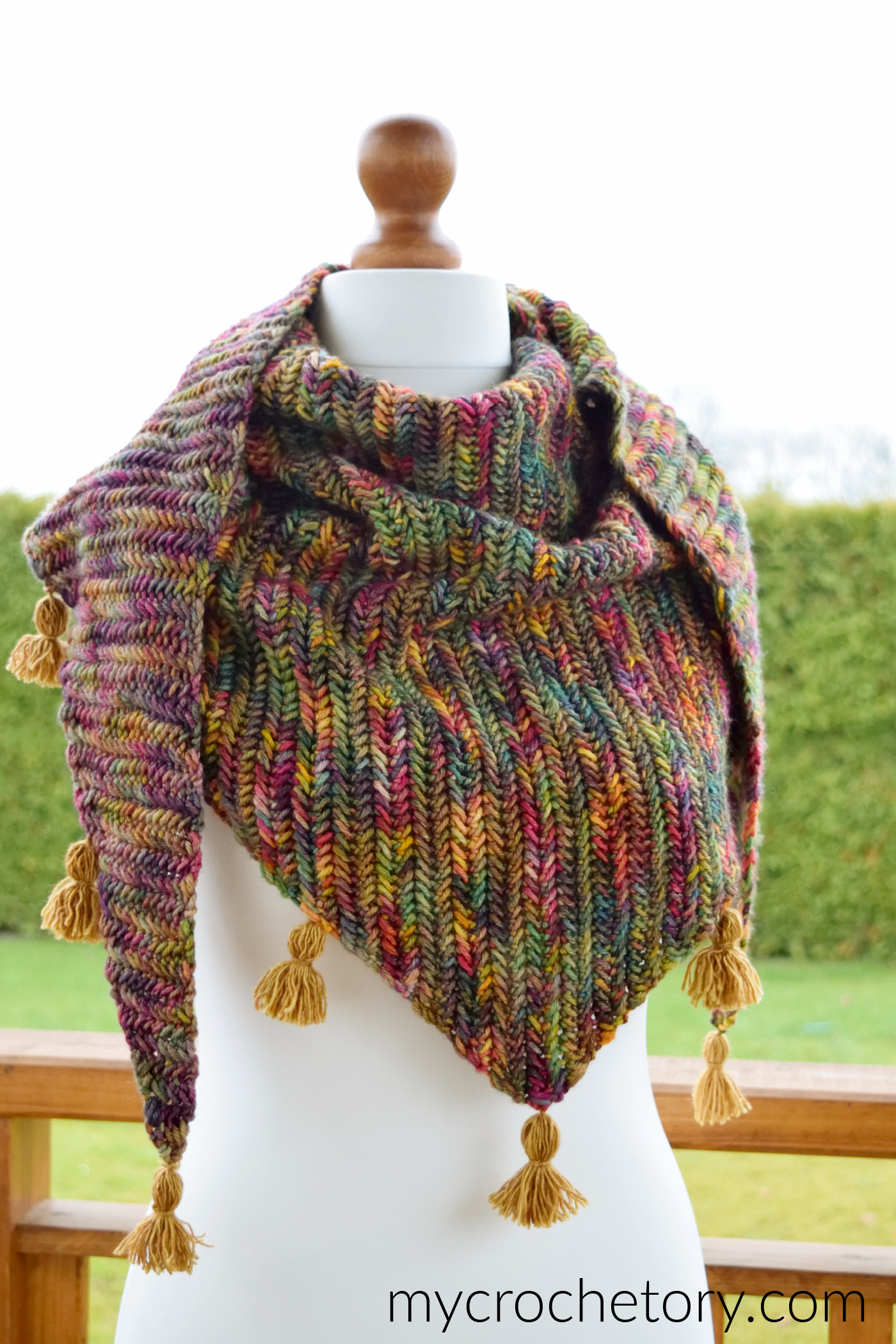
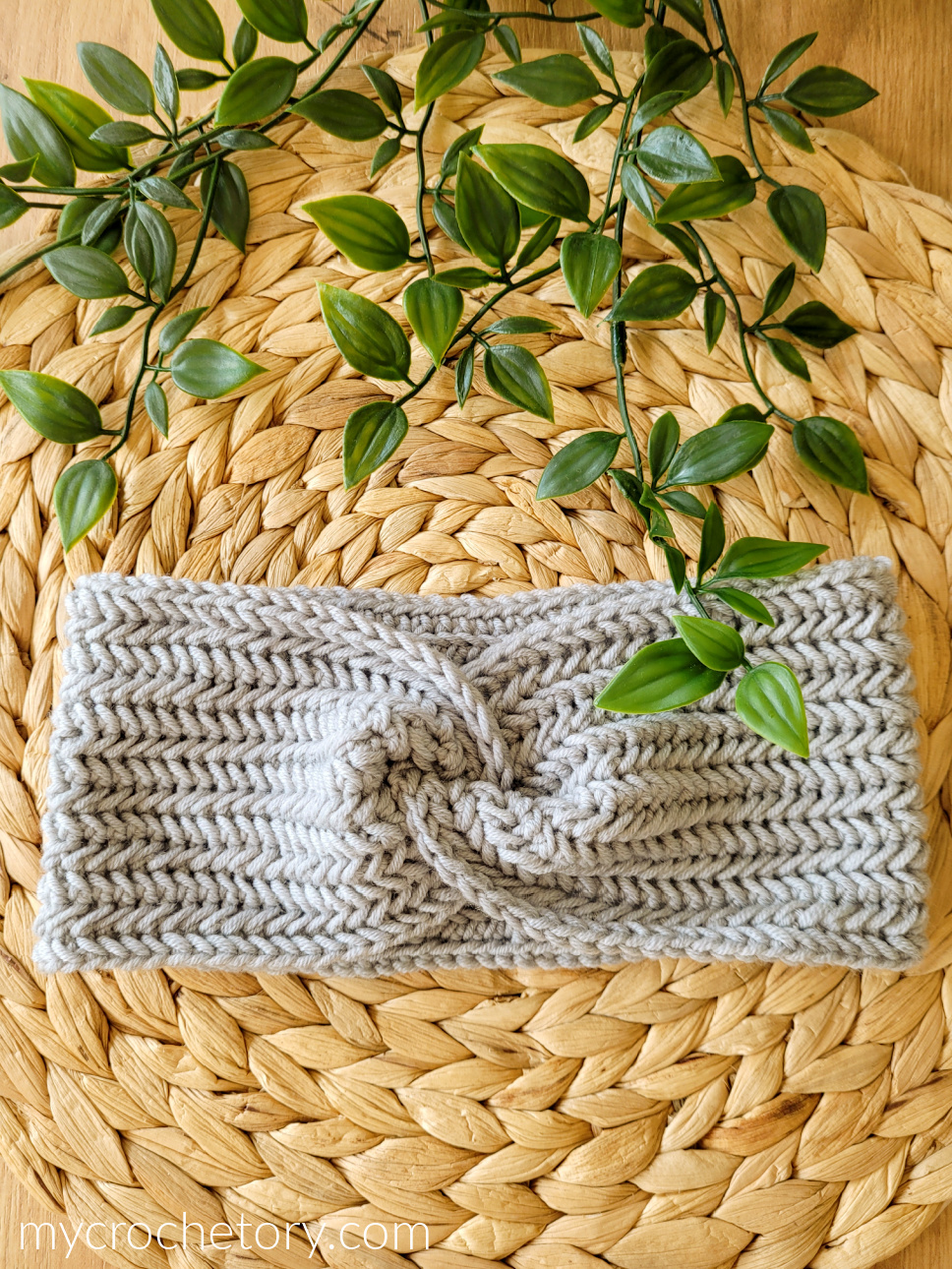
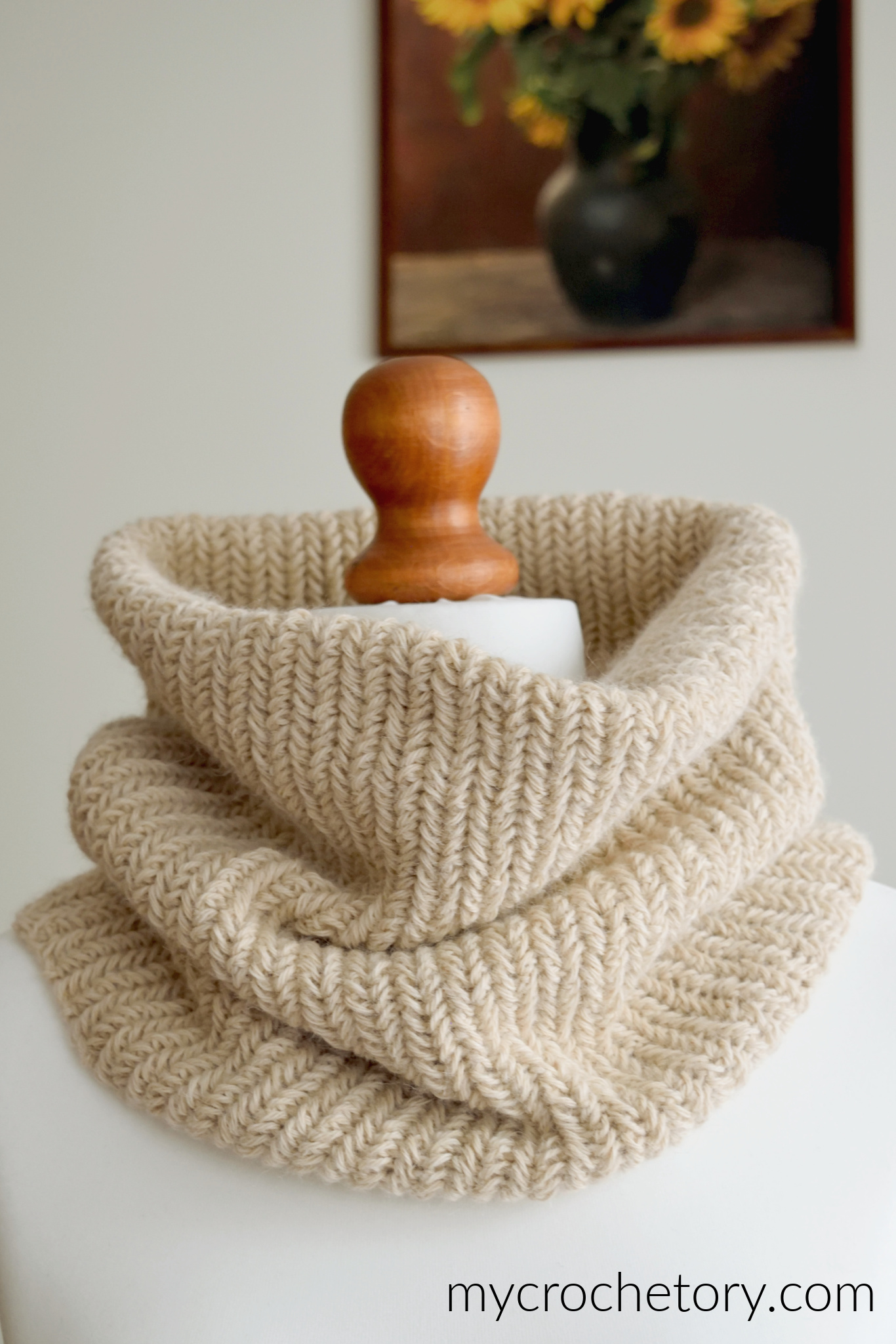
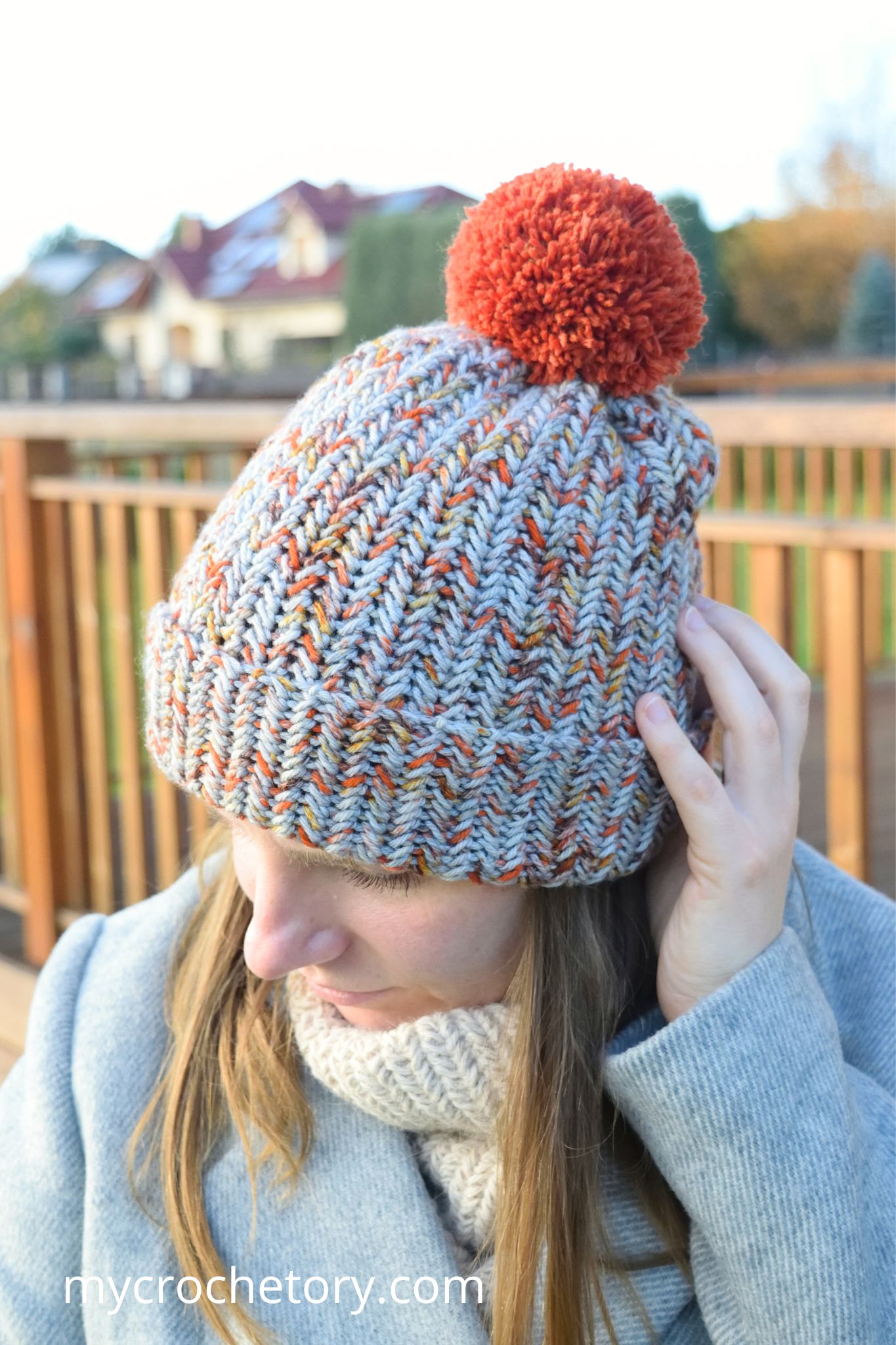
- Diana Herringbone Shawl. A big tip-to-tip triangle shawl in worsted weight yarn.
- Herringbone Crochet Cowl. A warm, squishy neck warmer for winter.
- Siri Herringbone Hat. My favorite hat design, worked flat and seamed, with a pom pom on top.
- Twisted Herringbone Headband. A headband with a twist at the front, in 3 sizes.
- Herringbone Drawstring Bag. A small cotton bag with I-cord drawstrings.
- Round Crochet Coaster. A quick herringbone coaster to practice on.
More textured crochet stitch tutorials
If you love texture as much as I do, these tutorials are the next ones to try.
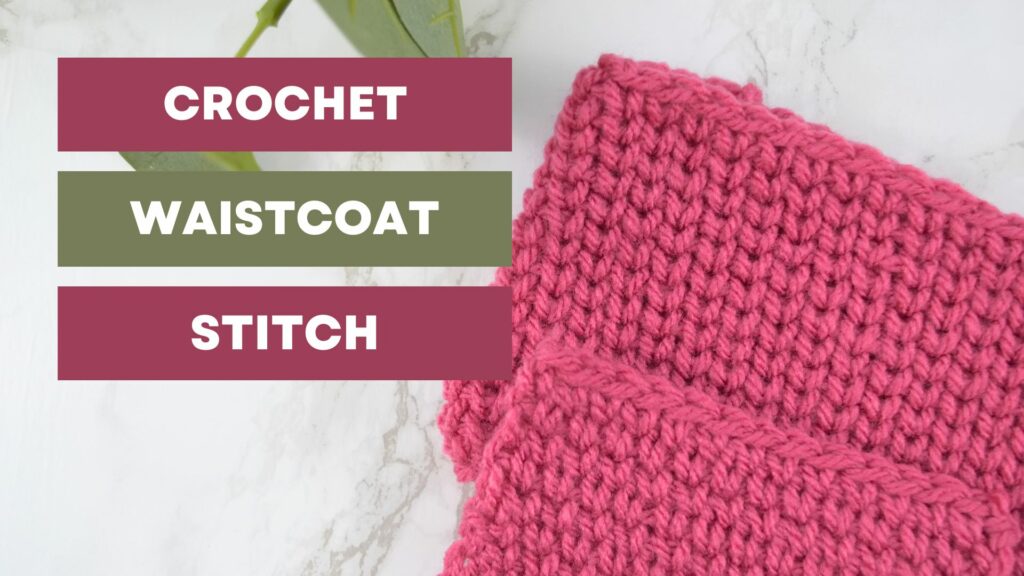

- Waistcoat stitch. A single crochet that looks like knitting.
- Basketweave stitch. A woven texture made with post stitches.
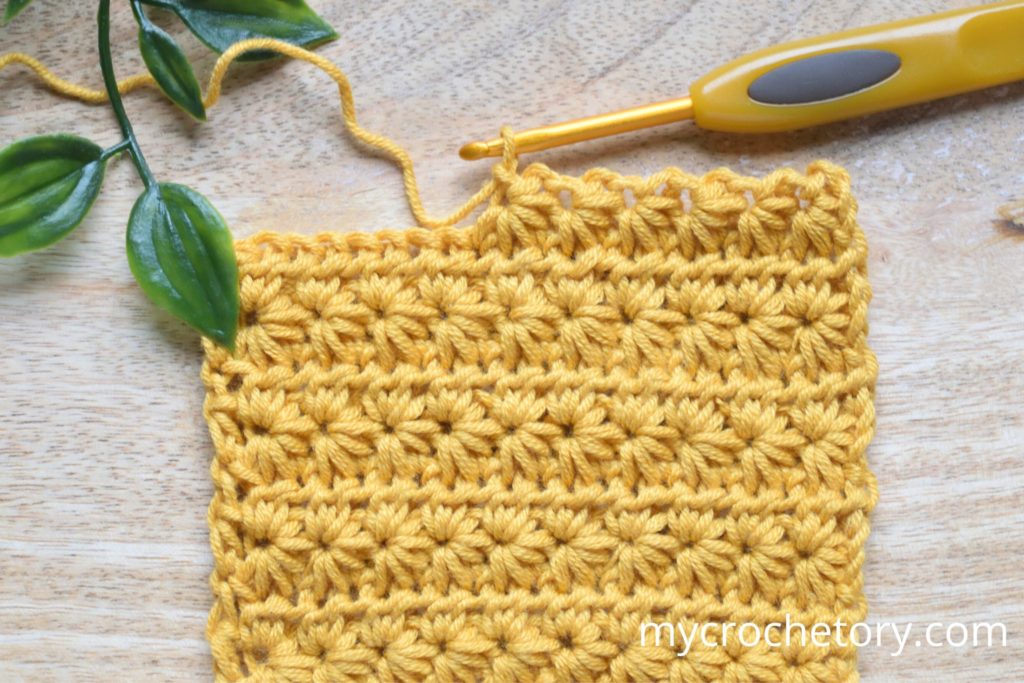
- Star stitch. Little stars in rows, great for blankets.
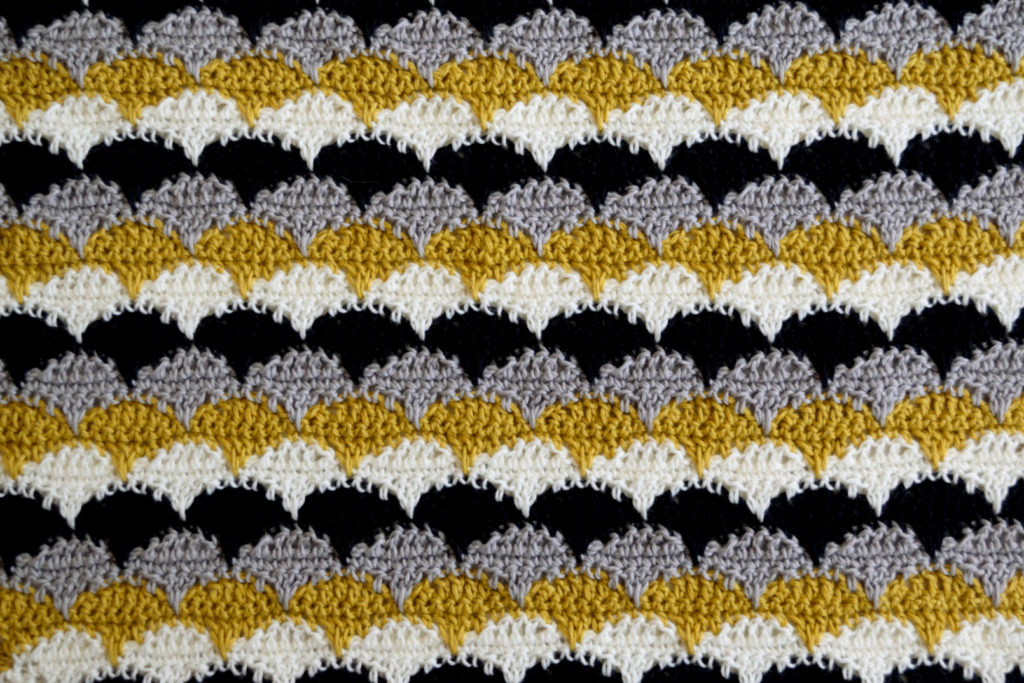
- Clamshell stitch. Scallops that look lovely in stripes.
- Moss stitch. A simple stitch with a woven, linen look.
- 40+ creative crochet stitches. My big list when you want even more ideas.
Herringbone crochet stitch FAQ
Is the herringbone crochet stitch good for beginners?
Yes, if you can single crochet. The only new move is catching the left leg of the previous stitch, and one small swatch is usually enough to get it.
Does the herringbone crochet stitch use more yarn?
A little more than plain single crochet, because the fabric is denser. Plan some extra yarn when you swap it into a project.
Can I use herringbone in a pattern written for single crochet?
Often yes, since the stitch count stays the same in every row. Make a swatch first and check your gauge, because herringbone fabric is denser than plain single crochet.
Still stuck on a row? Ask in my Facebook Group or Ravelry Group, or email me at mycrochetory@gmail.com.
Leave a Reply