
Updated: 16 October 2026 by Sylwia (MyCrochetory)

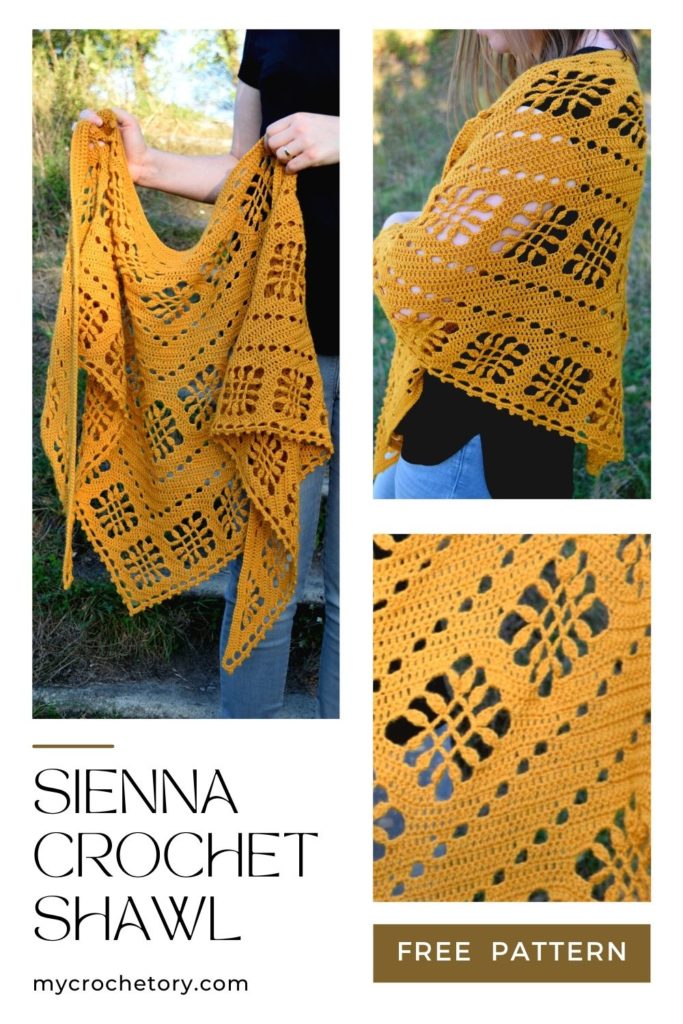
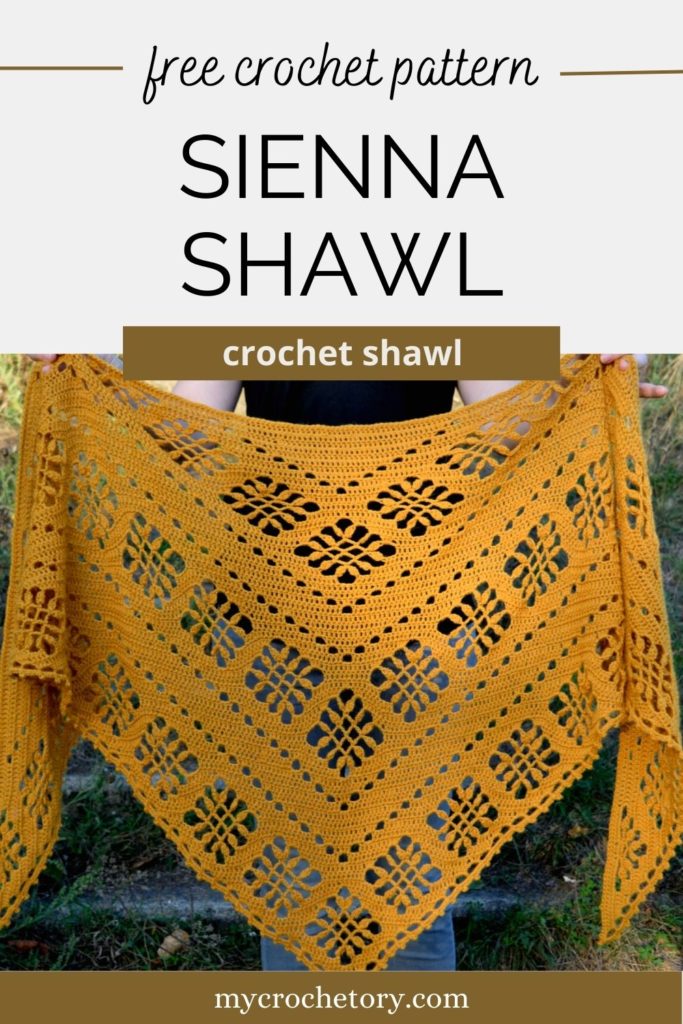
This crochet triangle shawl comes from one of the happiest and busiest stretches of my crochet life, August and September 2019. New ideas kept popping up almost every day, and Sienna was one of them. And the color? I’ve always loved ochre, so this one simply had to be warm mustard yellow.
It’s a big one, about 80 inches wide, so there’s plenty of shawl to wrap around your shoulders on a chilly evening.
I split the free pattern into four parts, and this is Part 1 with Rows 1 to 24. I also took photos of every step in the first rows, so you can see exactly where each cluster goes.
Sienna Shawl free pattern in 4 parts
Jump to Part 1 of the free Sienna Shawl pattern. Rather have the whole shawl in one file? Grab the complete ad-free, printable PDF with all stitch charts HERE on ETSY or HERE on Ravelry.

Want my next pattern before anyone else? Sign up below, and new patterns land straight in your inbox.
Join my Facebook Group and Official Ravelry Group where you can find necessary support, you can ask questions or share your finished projects.
You can also follow my Instagram, Facebook page and Pinterest.
How this crochet triangle shawl is made
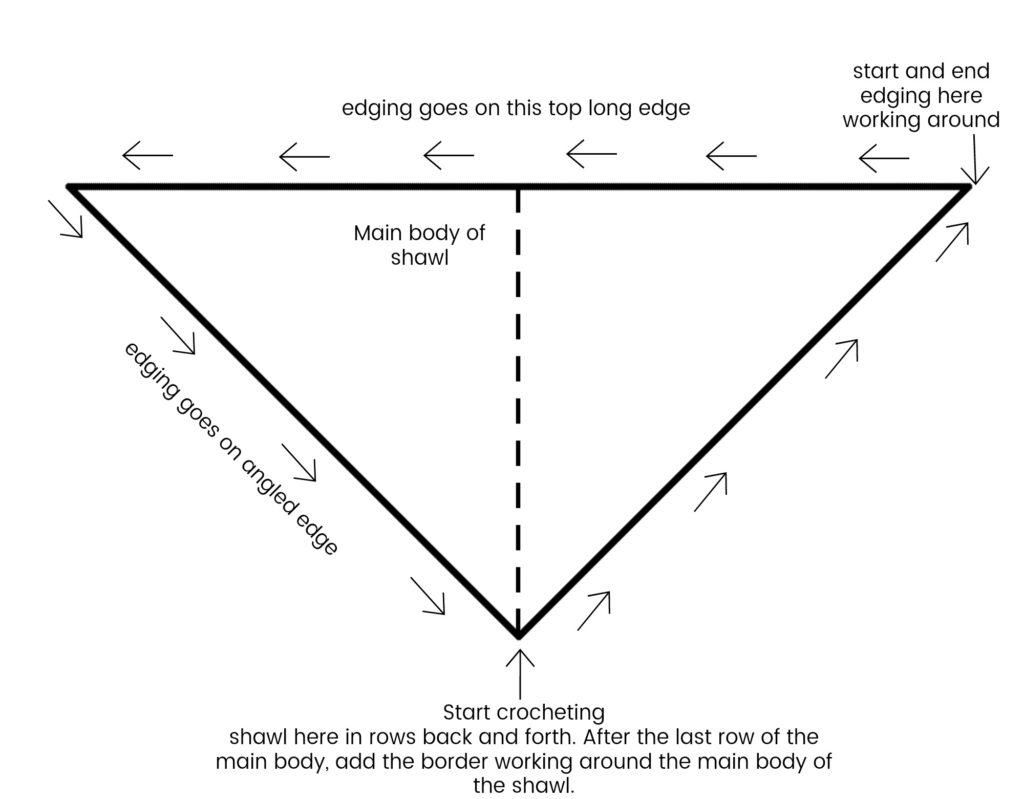
This crochet triangle shawl is made bottom up, so you start at the tiny tip and work toward the long top edge. Every row begins with ch7 and ends with a treble crochet, and that’s what makes both edges grow. A stitch marker in the 4th chain of those ch7 shows you where the last stitch of the next row goes.
The whole shawl is worked in one piece, so there’s nothing to sew at the end. Once the triangle is big enough, you add a lace border in the round, all along the edges. That border comes later, in the next parts of the pattern.
What makes the Sienna lace
The Sienna lace is made of clusters, little chain arches and single crochet, framed by solid blocks of double crochet. Each cluster is just ch4 and a dc2tog in the 4th chain from your hook. Two clusters side by side, with a single crochet between them, start every new lace motif.
Over the next rows, those clusters open into arches of ch5 and close again into a neat motif. Meanwhile the dc blocks between the motifs keep growing, from 4 stitches to 7, 10 and 13. That’s how the pattern stays airy in the middle but still has a solid frame.
Is the Sienna Shawl hard to crochet?
The stitches are simple, but this crochet triangle shawl asks for some patience. You only need chains, single, double and treble crochet, plus the dc2tog clusters. The tricky part is the long rows, where you have to keep track of the motifs and the dc blocks.
That’s why I marked the pattern intermediate to advanced. If you’re new to lace, keep a stitch marker close and peek at the photo tutorial whenever a row gets confusing. I made it for exactly those moments.

Yarn, size and blocking for your crochet triangle shawl
My Sienna Shawl is made with Drops Fabel in mustard (111), a blend of 75% wool and 25% polyamide. You’ll need 4 skeins, about 900 yards in total, and a 3 mm hook. Fabel is still available, and the wool and polyamide mix makes the shawl light but strong.
Four skeins mean a few yarn joins along the way. Want them to disappear? My guide on how to join yarn ends shows four easy ways to do it.
Since Fabel is mostly wool, I wet block this shawl. Soak it, stretch it gently and pin it to a mat, then let it dry completely. After blocking, the center of mine measured about 27 inches deep.

Sienna Shawl made by my testers
Seven testers crocheted Sienna before the pattern came out, and I’m so grateful to them. Their questions and tips made the instructions much clearer for you.
Want to see their shawls? You can check out my testers’ projects HERE.

Love this crochet triangle shawl but can’t start today? Pin it to your Pinterest board now, so all four parts are easy to find later. And while you’re there, come say hi at www.pinterest.com/mycrochetory!

Sienna crochet triangle shawl free pattern, Part 1
- Purchase the ad-free, printable PDF with stitch chart here on ETSY or here on Ravelry.
- Add this pattern to your Ravelry Queue HERE.
- Grab the MyCrochetory Shawl Pattern BUNDLE that includes 14 patterns for one low price HERE.
- Pin it for later.
Copyright 2018 – 2026 MyCrochetory. All rights reserved. This pattern is property of Sylwia Kawczyńska @MyCrochetory. Please DO NOT sell the pattern and claim this pattern as your own. The pattern is for personal use only and may not be translated or reproduced in another language. Please respect my rights, DO NOT share or publish this pattern anywhere without my permission.
The shawl you make following this pattern is yours, and you are free to sell it, as long as you credit MyCrochetory as the original designer. For more information, please read Terms Page.

As a bonus in the ad-free, printable PDF, I’ve provided stitch charts. If you’re a visual learner or if you just want to support my work you can purchase this crochet pattern HERE on ETSY or HERE on Ravelry. Thank you and I hope you find it useful!

Materials & Tools
- Yarn Drops Fabel (75% wool, 25% polyamide – 50g/205m/224yd) in 1 color.
- 4 skeins of mustard (111) color.
- Hook size 3mm. Adjust hook size if necessary to obtain correct gauge.
- Tapestry needle (to weave and hide yarn ends and to seam).
- Scissors.
Level
Intermediate/Advanced.
Size after blocking
Wingspan – 202cm/79.53”, Center depth – 68cm/26.77”.
Gauge after blocking
After Row 13 the triangle is approx. 14cm/5.5” high.
Gauge is not important for this project. However, changes might result in different yardage requirements and a different finished size.
Notes
- The pattern uses US crochet terminology.
- The shawl is worked bottom-up in one piece with a continuous border added in the round. Increases are made at the start and end of the rows.
- Instructions in square brackets […] are worked as many times as indicated.
- You can also use yarn in different weights, but just know that the width will be different depending on your gauge.
- The stitch charts are included in the ad-free printable PDF here on ETSY or here on Ravelry.
Stitches & Abbreviations (US terms)
st(s) – stitch(es)
yo – yarn over
dc2tog (double crochet 2 together) – [yo, insert hook in indicated st, yo, draw up a loop, yo, pull through 2 loops] twice, yo, pull through all 3 loops on hook.
cluster – ch4, dc2tog in 4th ch from hook
picot – ch3, insert your hook in the third chain from the hook, yarn over and draw the yarn through the stitch and through the loop on the hook.
sp – space
sk – skip
beg – beginning
prev – previous
Below are Rows 1 to 24 for Part 1.
Pattern
Row 1: ch9 (counts as a tr and ch-4 sp), tr in 9th ch from hook. Turn.
Row 2: ch7* (counts as a tr and ch-3 here and throughout), 4dcs in ch sp, ch3, tr in 4th ch of 9th at beg of prev row. Turn.
*TIP: place a stitch marker in 4th chain of those 7chains and reposition it as you go.
Row 3: ch7, 3dcs in ch-3 sp, dc in next 4dcs, 3dcs in next ch-3 sp, ch3, tr in 4th ch of 7th at beg of prev row. Turn.
Row 4: ch7, 3dcs in ch-3 sp, dc in next 4dcs, 2 clusters*, sk next 2dcs, dc in next 4dcs, 3dcs in next ch-3 sp, ch3, tr in 4th ch of 7th at beg of prev row. Turn.
*tutorial might be helpful for better visualization.
Row 5: ch7, 3dcs in ch-3 sp, dc in next 4dcs, cluster, ch3, sk next 3dcs, sc between two clusters from prev row, ch3, cluster*, sk next 3dcs, dc in next 4dcs, 3dcs in next ch-3 sp, ch3, tr in 4th ch of 7th at beg of prev row. Turn.
*here and throughout, “ch3, cluster” means: ch7, dc2tog in 4th ch from hook
Row 6: ch7, 3dcs in ch-3 sp, dc in next 4dcs, cluster, ch3, sc in ch-3 sp after first cluster, ch5, sc in next ch-3 sp, ch3, cluster, sk next 3dcs, dc in next 4dcs, 3dcs in next ch-3 sp, ch3, tr in 4th ch of 7th at beg of prev row. Turn.
Row 7: ch7, 3dcs in ch-3 sp, dc in next 4dcs, ch3, cluster, sk next 3dcs, sc in next ch-3 sp after first cluster, ch5, sc in next ch-5 sp, ch5, sc in next ch-3 sp, cluster, ch3, sk next 3dcs, dc in next 4dcs, 3dcs in next ch-3 sp, ch3, tr in 4th ch of 7th at beg of prev row. Turn.
Row 8: ch7, 3dcs in ch-3 sp, dc in next 7dcs, 3dcs in next ch-3 sp, ch3, cluster, sc in next ch-5 sp, ch5, sc in next ch-5 sp, cluster, ch3, sk cluster, 3dcs in next ch-3 sp, dc in next 7dcs, 3dcs in next ch-3 sp, ch3, tr in 4th ch of 7th at beg of prev row. Turn.
Row 9: ch7, 3dcs in ch-3 sp, dc in next 4dcs, 2 clusters, sk next 2dcs, dc in next 7dcs, 3dcs in next ch-3 sp, sk cluster, ch3, cluster, sc in next ch-5 sp, cluster, ch3, sk cluster, 3dcs in next ch-3 sp, dc in next 7dcs, 2 clusters, sk next 2dcs, dc in next 4dcs, 3dcs in next ch-3 sp, ch3, tr in 4th ch of 7th at beg of prev row. Turn.
Row 10: ch7, 3dcs in ch-3 sp, dc in next 4dcs, cluster, ch3, sk next 3dcs, sc between two clusters from prev row, ch3, cluster, sk next 3dcs, dc in next 7dcs, 3dcs in next ch-3 sp, ch2, sk 2clusters, 3dcs in next ch-3 sp, dc in next 7dcs, cluster, ch3, sk next 3dcs, sc between two clusters from prev row, ch3, cluster, sk next 3dcs, dc in next 4dcs, 3dcs in next ch-3 sp, ch3, tr in 4th ch of 7th at beg of prev row. Turn.
Row 11: ch7, 3dcs in ch-3 sp, dc in next 4dcs, cluster, ch3, sc in ch-3 sp after first cluster, ch5, sc in next ch-3 sp, ch3, cluster, sk next 3dcs, dc in next 7dcs, 2dcs in next ch-2 sp, dc in next 7dcs, cluster, ch3, sc in ch-3 sp after first cluster, ch5, sc in next ch-3 sp, ch3, cluster, sk next 3dcs, dc in next 4dcs, 3dcs in next ch-3 sp, ch3, tr in 4th ch of 7th at beg of prev row. Turn.
Row 12: ch7, 3dcs in ch-3 sp, dc in next 4dcs, ch3, cluster, sk next 3dcs, sc in next ch-3 sp after first cluster, ch5, sc in next ch-5 sp, ch5, sc in next ch-3 sp, cluster, ch3, sk next 3dcs, dc in next 10dcs, ch3, cluster, sk next 3dcs, sc in next ch-3 sp after first cluster, ch5, sc in next ch-5 sp, ch5, sc in next ch-3 sp, cluster, ch3, sk next 3dcs, dc in next 4dcs, 3dcs in next ch-3 sp, ch3, tr in 4th ch of 7th at beg of prev row. Turn.
Row 13: ch7, 3dcs in ch-3 sp, dc in next 7dcs, 3dcs in next ch-3 sp, ch3, cluster, sc in next ch-5 sp, ch5, sc in next ch-5 sp, cluster, ch3, sk cluster, 3dcs in next ch-3 sp, dc in next 10dcs, 3dcs in next ch-3 sp, ch3, cluster, sc in next ch-5 sp, ch5, sc in next ch-5 sp, cluster, ch3, sk cluster, 3dcs in next ch-3 sp, dc in next 7dcs, 3dcs in next ch-3 sp, ch3, tr in 4th ch of 7th at beg of prev row. Turn.
Row 14: ch7, 3dcs in ch-3 sp, dc in next 4dcs, 2 clusters, sk next 2dcs, dc in next 7dcs, 3dcs in next ch-3 sp, sk cluster, ch3, cluster, sc in next ch-5 sp, cluster, ch3, sk cluster, 3dcs in next ch-3 sp, dc in next 7dcs, ch2, sk next 2dcs, dc in next 7dcs, 3dcs in next ch-3 sp, sk cluster, ch3, cluster, sc in next ch-5 sp, cluster, ch3, sk cluster, 3dcs in next ch-3 sp, dc in next 7dcs, 2 clusters, sk next 2dcs, dc in next 4dcs, 3dcs in next ch-3 sp, ch3, tr in 4th ch of 7th at beg of prev row. Turn.
Row 15: ch7, 3dcs in ch-3 sp, dc in next 4dcs, cluster, ch3, sk next 3dcs, sc between two clusters from prev row, ch3, cluster, sk next 3dcs, dc in next 7dcs, 3dcs in next ch-3 sp, ch2, sk 2clusters, 3dcs in next ch-3 sp, dc in next 7dcs, ch2, sk next 2dcs, dc in next dc, 2dcs in next ch-2 sp, dc in next dc, ch2, sk next 2dcs, dc in next 7dcs, 3dcs in next ch-3 sp, ch2, sk 2clusters, 3dcs in next ch-3 sp, dc in next 7dcs, cluster, ch3, sk next 3dcs, sc between two clusters from prev row, ch3, cluster, sk next 3dcs, dc in next 4dcs, 3dcs in next ch-3 sp, ch3, tr in 4th ch of 7th at beg of prev row. Turn.
Row 16: ch7, 3dcs in ch-3 sp, dc in next 4dcs, cluster, ch3, sc in ch-3 sp after first cluster, ch5, sc in next ch-3 sp, ch3, cluster, sk next 3dcs, dc in next 7dcs, 2dcs in next ch-2 sp, dc in next 7dcs, ch2, sk next 2dcs, dc in next dc, 2dcs in next ch-2 sp, dc until next ch-2 sp, 2dcs in next ch-2 sp, dc in next dc, ch2, sk next 2dcs, dc in next 7dcs, 2dcs in next ch-2 sp, dc in next 7dcs, cluster, ch3, sc in ch-3 sp after first cluster, ch5, sc in next ch-3 sp, ch3, cluster, sk next 3dcs, dc in next 4dcs, 3dcs in next ch-3 sp, ch3, tr in 4th ch of 7th at beg of prev row. Turn.
Row 17: ch7, 3dcs in ch-3 sp, dc in next 4dcs, ch3, cluster, sk next 3dcs, sc in next ch-3 sp after first cluster, ch5, sc in next ch-5 sp, ch5, sc in next ch-3 sp, cluster, ch3, sk next 3dcs, dc in next 10dcs, ch2, sk next 2dcs, dc in next dc, 2dcs in next ch-2 sp, dc until next ch-2 sp, 2dcs in next ch-2 sp, dc in next dc, ch2, sk next 2dcs, dc in next 10dcs, ch3, cluster, sk next 3dcs, sc in next ch-3 sp after first cluster, ch5, sc in next ch-5 sp, ch5, sc in next ch-3 sp, cluster, ch3, sk next 3dcs, dc in next 4dcs, 3dcs in next ch-3 sp, ch3, tr in 4th ch of 7th at beg of prev row. Turn.
Row 18: ch7, 3dcs in ch-3 sp, dc in next 7dcs, 3dcs in next ch-3 sp, ch3, cluster, sc in next ch-5 sp, ch5, sc in next ch-5 sp, cluster, ch3, sk cluster, 3dcs in next ch-3 sp, dc in next 7dcs, ch2, sk next 2dcs, dc in next dc, 2dcs in next ch-2 sp, dc until next ch-2 sp, 2dcs in next ch-2 sp, dc in next dc, ch2, sk next 2dcs, dc in next 7dcs, 3dcs in next ch-3 sp, ch3, cluster, sc in next ch-5 sp, ch5, sc in next ch-5 sp, cluster, ch3, sk cluster, 3dcs in next ch-3 sp, dc in next 7dcs, 3dcs in next ch-3 sp, ch3, tr in 4th ch of 7th at beg of prev row. Turn.
Row 19: ch7, 3dcs in ch-3 sp, dc in next 4dcs, 2 clusters, sk next 2dcs, dc in next 7dcs, 3dcs in next ch-3 sp, sk cluster, ch3, cluster, sc in next ch-5 sp, cluster, ch3, sk cluster, 3dcs in next ch-3 sp, dc in next 7dcs, ch2, sk next 2dcs, dc in next dc, 2dcs in next ch-2 sp, dc until next ch-2 sp, 2dcs in next ch-2 sp, dc in next dc, ch2, sk next 2dcs, dc in next 7dcs, 3dcs in next ch-3 sp, sk cluster, ch3, cluster, sc in next ch-5 sp, cluster, ch3, sk cluster, 3dcs in next ch-3 sp, dc in next 7dcs, 2 clusters, sk next 2dcs, dc in next 4dcs, 3dcs in next ch-3 sp, ch3, tr in 4th ch of 7th at beg of prev row. Turn.
Row 20: ch7, 3dcs in ch-3 sp, dc in next 4dcs, cluster, ch3, sk next 3dcs, sc between two clusters from prev row, ch3, cluster, sk next 3dcs, dc in next 7dcs, 3dcs in next ch-3 sp, ch2, sk 2clusters, 3dcs in next ch-3 sp, dc in next 7dcs, ch2, sk next 2dcs, dc in next dc, 2dcs in next ch-2 sp, dc in next 13dcs, ch2, sk next 2dcs, dc in next 13dcs, 2dcs in next ch-2 sp, dc in next dc, ch2, sk next 2dcs, dc in next 7dcs, 3dcs in next ch-3 sp, ch2, sk 2clusters, 3dcs in next ch-3 sp, dc in next 7dcs, cluster, ch3, sk next 3dcs, sc between two clusters from prev row, ch3, cluster, sk next 3dcs, dc in next 4dcs, 3dcs in next ch-3 sp, ch3, tr in 4th ch of 7th at beg of prev row. Turn.
Row 21: ch7, 3dcs in ch-3 sp, dc in next 4dcs, cluster, ch3, sc in ch-3 sp after first cluster, ch5, sc in next ch-3 sp, ch3, cluster, sk next 3dcs, dc in next 7dcs, 2dcs in next ch-2 sp, dc in next 7dcs, ch2, sk next 2dcs, dc in next dc, 2dcs in next ch-2 sp, dc in next 13dcs, ch2, sk next 2dcs, dc in next dc, 2dcs in next ch-2 sp, dc in next dc, ch2, sk next 2dcs, dc in next 13dcs, 2dcs in next ch-2 sp, dc in next dc, ch2, sk next 2dcs, dc in next 7dcs, 2dcs in next ch-2 sp, dc in next 7dcs, cluster, ch3, sc in ch-3 sp after first cluster, ch5, sc in next ch-3 sp, ch3, cluster, sk next 3dcs, dc in next 4dcs, 3dcs in next ch-3 sp, ch3, tr in 4th ch of 7th at beg of prev row. Turn.
Row 22: ch7, 3dcs in ch-3 sp, dc in next 4dcs, ch3, cluster, sk next 3dcs, sc in next ch-3 sp after first cluster, ch5, sc in next ch-5 sp, ch5, sc in next ch-3 sp, cluster, ch3, sk next 3dcs, dc in next 10dcs, ch2, sk next 2dcs, dc in next dc, 2dcs in next ch-2 sp, dc in next 13dcs, ch2, sk next 2dcs, dc in next dc, 2dcs in next ch-2 sp, dc until next ch-2 sp, 2dcs in next ch-2 sp, dc in next dc, ch2, sk next 2dcs, dc in next 13dcs, 2dcs in next ch-2 sp, dc in next dc, ch2, sk next 2dcs, dc in next 10dcs, ch3, cluster, sk next 3dcs, sc in next ch-3 sp after first cluster, ch5, sc in next ch-5 sp, ch5, sc in next ch-3 sp, cluster, ch3, sk next 3dcs, dc in next 4dcs, 3dcs in next ch-3 sp, ch3, tr in 4th ch of 7th at beg of prev row. Turn.
Row 23: ch7, 3dcs in ch-3 sp, dc in next 7dcs, 3dcs in next ch-3 sp, ch3, cluster, sc in next ch-5 sp, ch5, sc in next ch-5 sp, cluster, ch3, sk cluster, 3dcs in next ch-3 sp, dc in next 7dcs, ch2, sk next 2dcs, dc in next dc, 2dcs in next ch-2 sp, dc in next 13dcs, ch2, sk next 2dcs, dc in next dc, 2dcs in next ch-2 sp, dc until next ch-2 sp, 2dcs in next ch-2 sp, dc in next dc, ch2, sk next 2dcs, dc in next 13dcs, 2dcs in next ch-2 sp, dc in next dc, ch2, sk next 2dcs, dc in next 7dcs, 3dcs in next ch-3 sp, ch3, cluster, sc in next ch-5 sp, ch5, sc in next ch-5 sp, cluster, ch3, sk cluster, 3dcs in next ch-3 sp, dc in next 7dcs, 3dcs in next ch-3 sp, ch3, tr in 4th ch of 7th at beg of prev row. Turn.
Row 24: ch7, 3dcs in ch-3 sp, dc in next 4dcs, 2 clusters, sk next 2dcs, dc in next 7dcs, 3dcs in next ch-3 sp, sk cluster, ch3, cluster, sc in next ch-5 sp, cluster, ch3, sk cluster, 3dcs in next ch-3 sp, dc in next 7dcs, ch2, sk next 2dcs, dc in next dc, 2dcs in next ch-2 sp, dc in next 13dcs, ch2, sk next 2dcs, dc in next dc, 2dcs in next ch-2 sp, dc in next 7dcs, 2 clusters, sk next 2dcs, dc in next 7dcs, 2dcs in next ch-2 sp, dc in next dc, ch2, sk next 2dcs, dc in next 13dcs, 2dcs in next ch-2 sp, dc in next dc, ch2, sk next 2dcs, dc in next 7dcs, 3dcs in next ch-3 sp, sk cluster, ch3, cluster, sc in next ch-5 sp, cluster, ch3, sk cluster, 3dcs in next ch-3 sp, dc in next 7dcs, 2 clusters, sk next 2dcs, dc in next 4dcs, 3dcs in next ch-3 sp, ch3, tr in 4th ch of 7th at beg of prev row. Turn.
Done with Row 24? Then you’re ready for Part 2, where the shawl keeps growing. Part 3 and Part 4 come right after it.
Stuck on a row? Leave a comment below, or ask in my Facebook Group or Ravelry Group, where other crocheters can help you too. And if you spot a mistake, email me at mycrochetory@gmail.com and I’ll fix it.
Sienna crochet triangle shawl photo tutorial, Rows 1 to 11
Row 1:
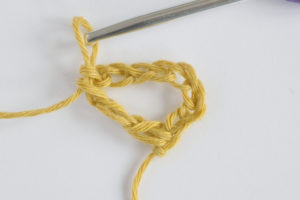
Row 2:


Row 3:
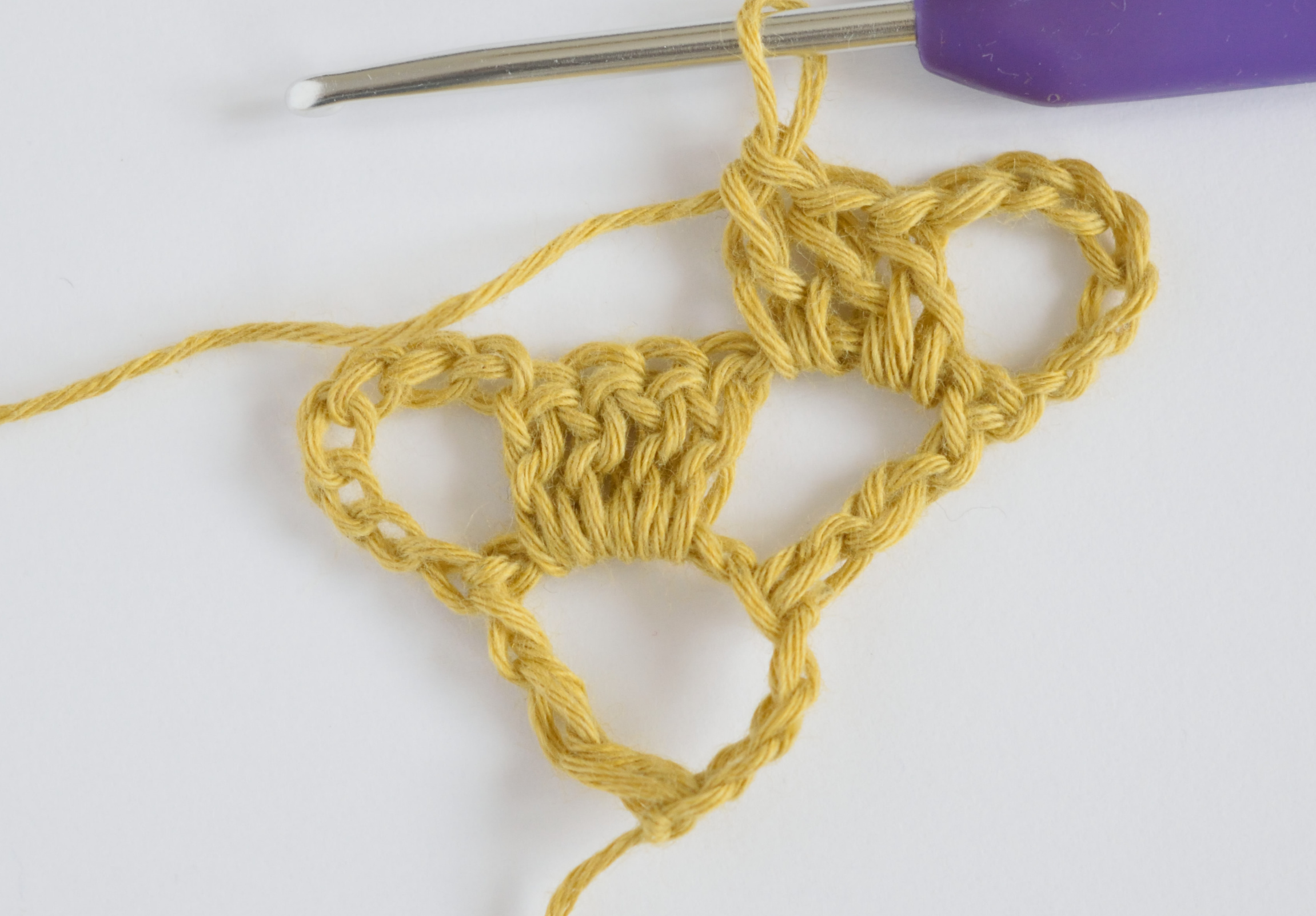
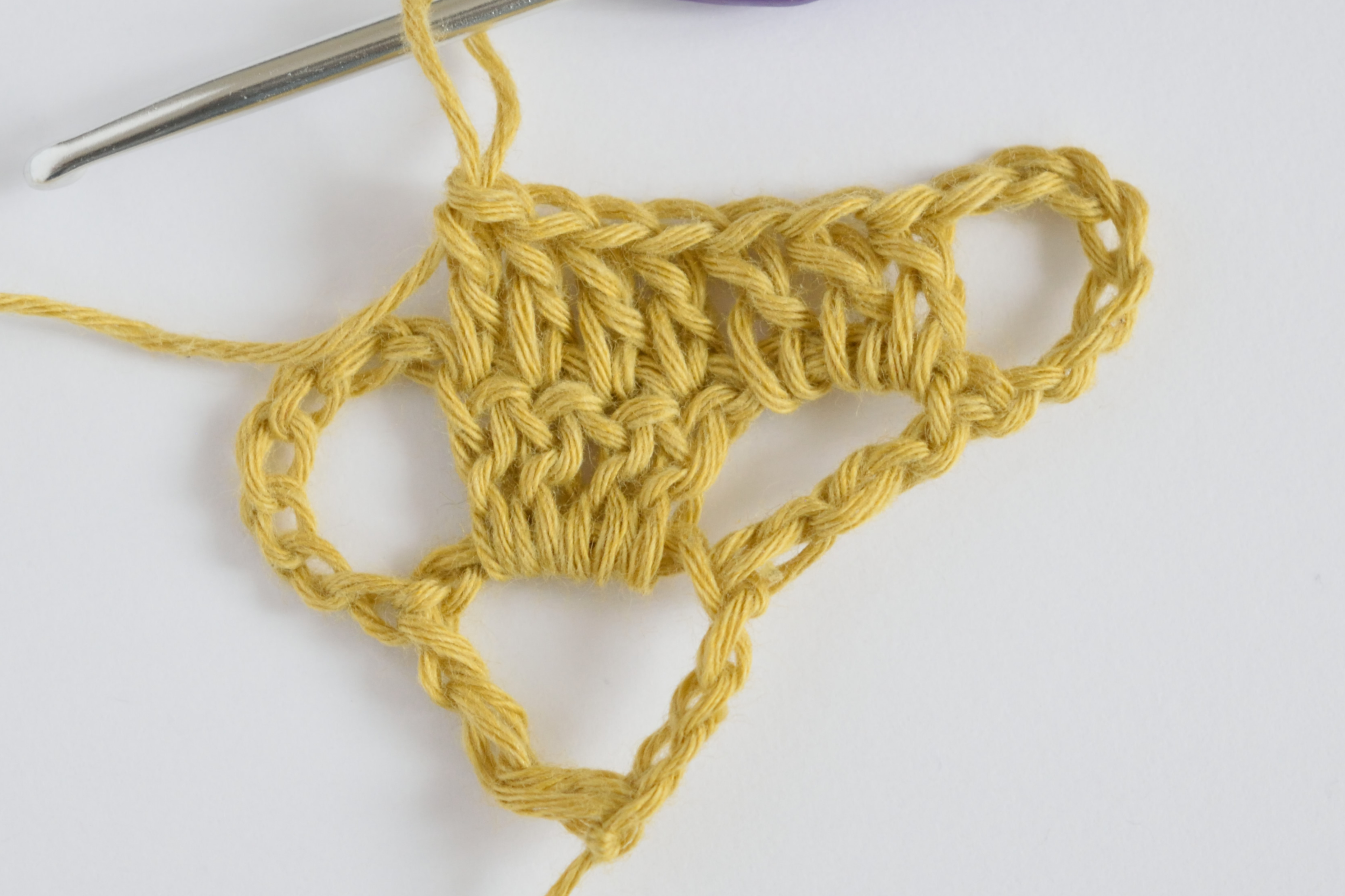
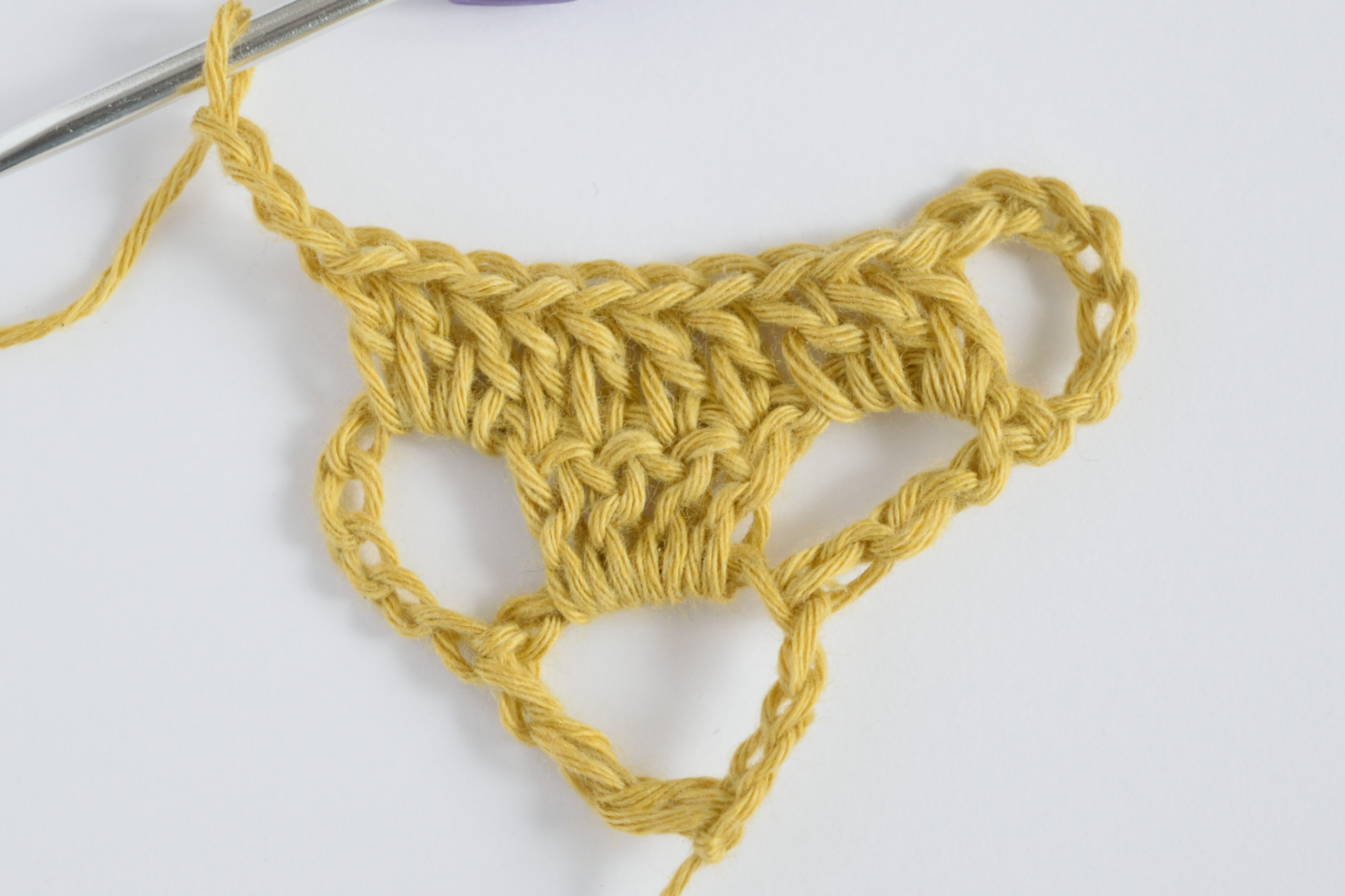
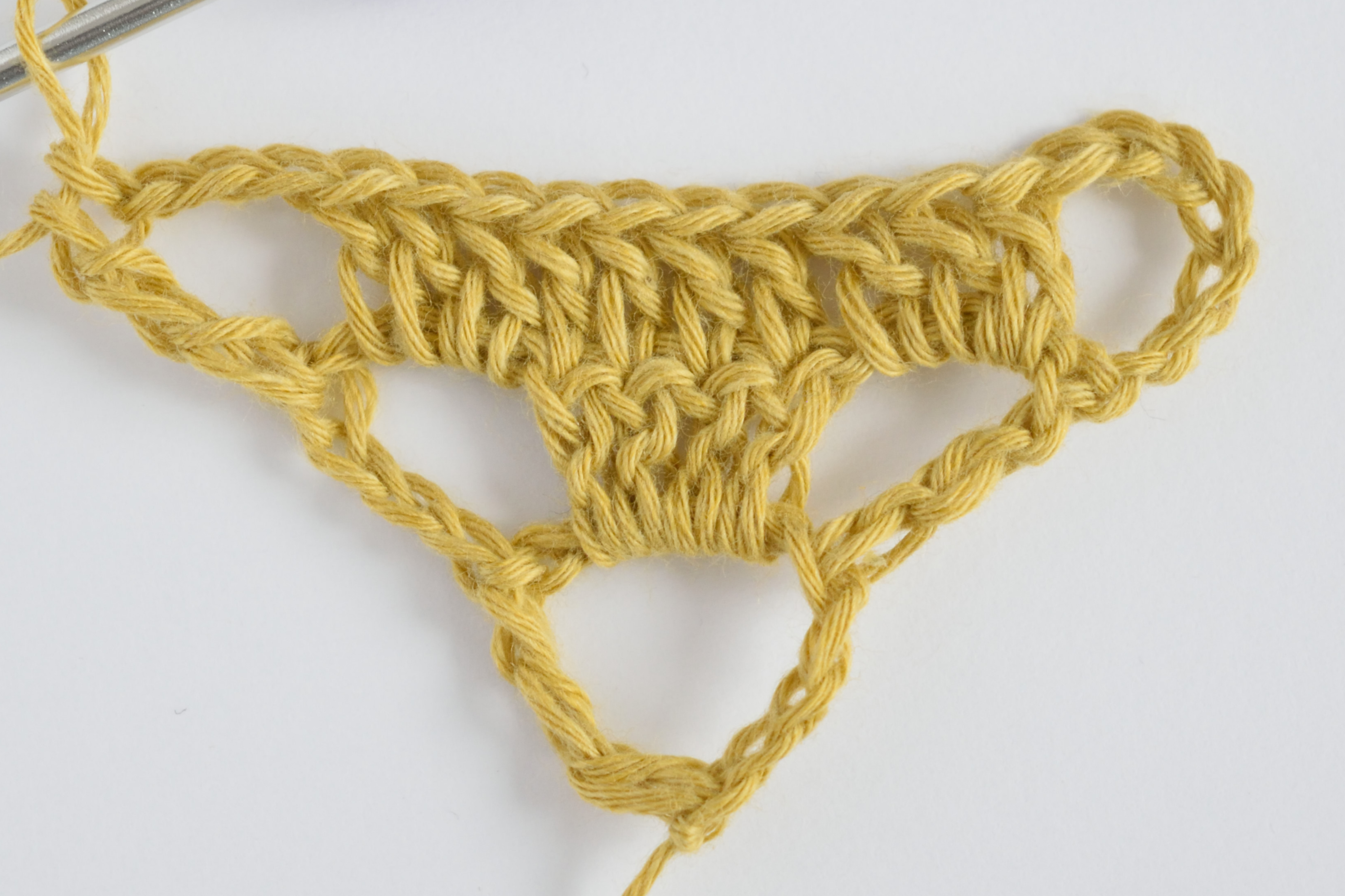
Row 4:


Row 5:


Row 6:


Row 7:


Row 8:


Row 9:


Row 10:


Row 11:


Finished your Sienna Shawl? I’d love to see it! Share it on Instagram or Facebook with #mycrochetory or #siennashawl, or tag me @mycrochetory.
More free crochet triangle shawl patterns
Loved making a triangle shawl? Here are four more of mine, each one with its own kind of lace.
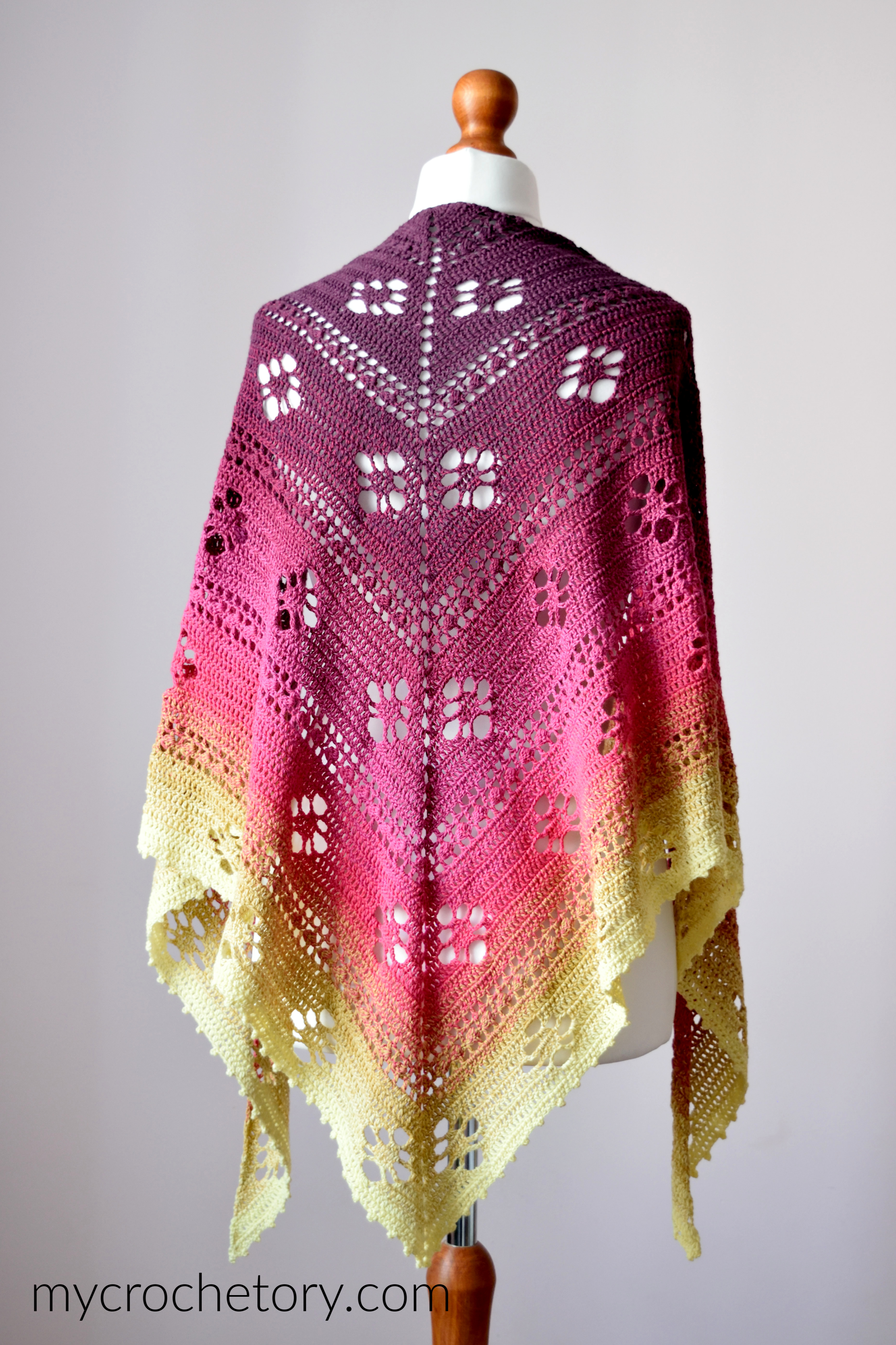

- Forsythia Shawl. Forsythia starts from a magic ring at the top and grows into a soft triangle with lace clusters and a picot edge. It’s friendly for adventurous beginners, and it makes a sweet gift too.
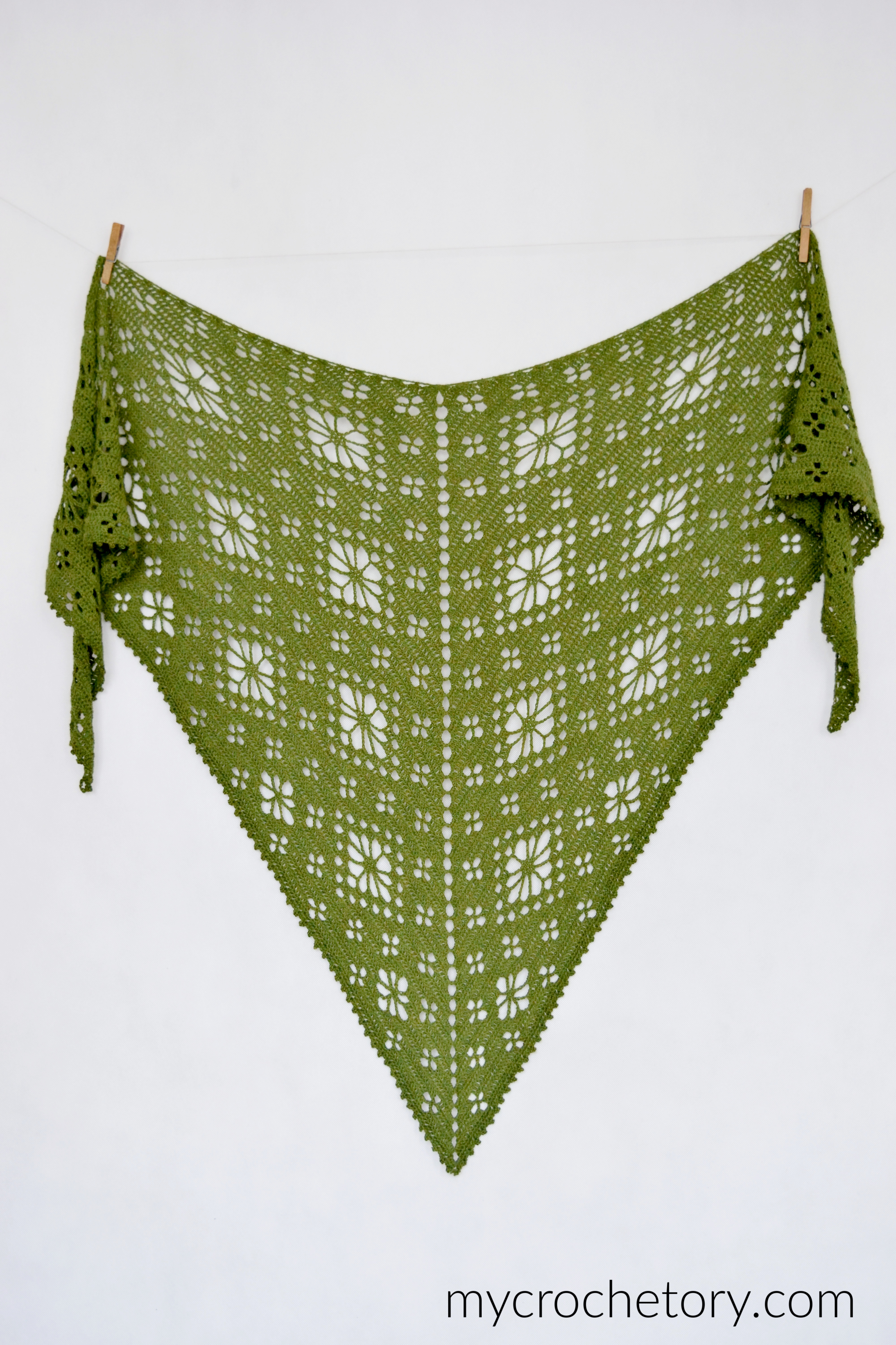
- Field of Flowers Shawl. Want flowers all over your shawl? Field of Flowers grows fast from the top down, with a floral lace motif that gets bigger with every repeat.
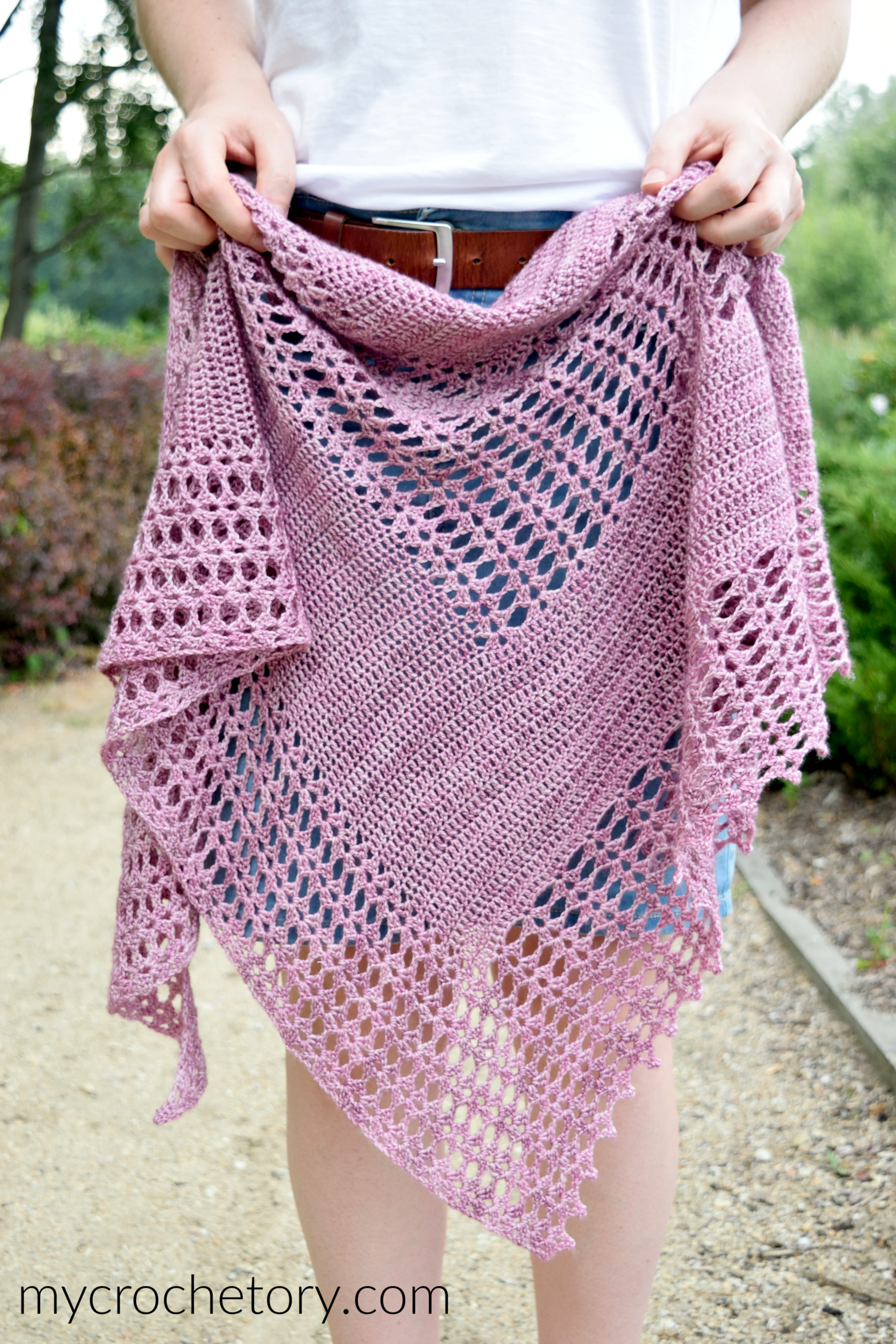
- Despina Shawl. Despina is worked sideways, so it ends up as an asymmetric triangle full of V-shell lace. Pick it if you want a change from the classic symmetrical triangle.
- Goldenrod Shawl. Love the mustard color of Sienna? Goldenrod is another gold lace triangle, with diagonal lace bands and an easy 4-row repeat.
More bottom-up lace shawls
Liked growing Sienna from the tip up? These three lace shawls start at the bottom point too.


- Nightfall Shawl. Nightfall is one of my oldest lace shawls, a soft purple triangle worked from the point up. Once the rows are done, an edging goes around it, just like on Sienna.
- Greta Shawl. Greta is made with lace weight yarn, which I find so satisfying to work with. Its lace uses dc2tog clusters too, so you’ll feel at home after Sienna.
- Sarin Shawl. Sarin is a red alpaca and silk triangle with big dc5tog lace motifs. Its repeat is long, so pick it when you want a proper lace project.
New to triangle shawls?
If this is your first triangle shawl, start with my guide on how to crochet a shawl. It shows the main ways to build a triangle, bottom up included, so Sienna’s start will make sense right away.
Crochet triangle shawl FAQ
How long does it take to crochet the Sienna Shawl?
Plan for a big project! When I was looking for testers, I estimated about 35 hours for the whole shawl. Spread over a few evenings a week, it goes faster than it sounds.
What does “ch3, cluster” mean in this pattern?
It means you chain 7 and then work a dc2tog in the 4th chain from your hook. So the ch3 and the ch4 of the cluster are made in one go. If it still looks strange, check the Row 4 and Row 5 photos in the tutorial.
Can I make this crochet triangle shawl bigger or smaller?
Yes, and that’s the nice thing about a bottom-up shawl. Its length is easy to adjust, because you simply stop earlier or keep going before the border. Just remember that a bigger shawl needs more yarn.
Can I use a different yarn?
Sure! Pick a fingering weight yarn with about the same yardage, around 900 yards. Then check your gauge after Row 13, where the triangle should be about 5.5 inches high.

Leave a Reply