
Updated: 25 July 2026 by Sylwia (MyCrochetory)
How many shawls have you started, only to never actually wear them? Mine used to pile up the same way. Cute for about a week, then folded into a drawer because they never quite worked with real clothes.
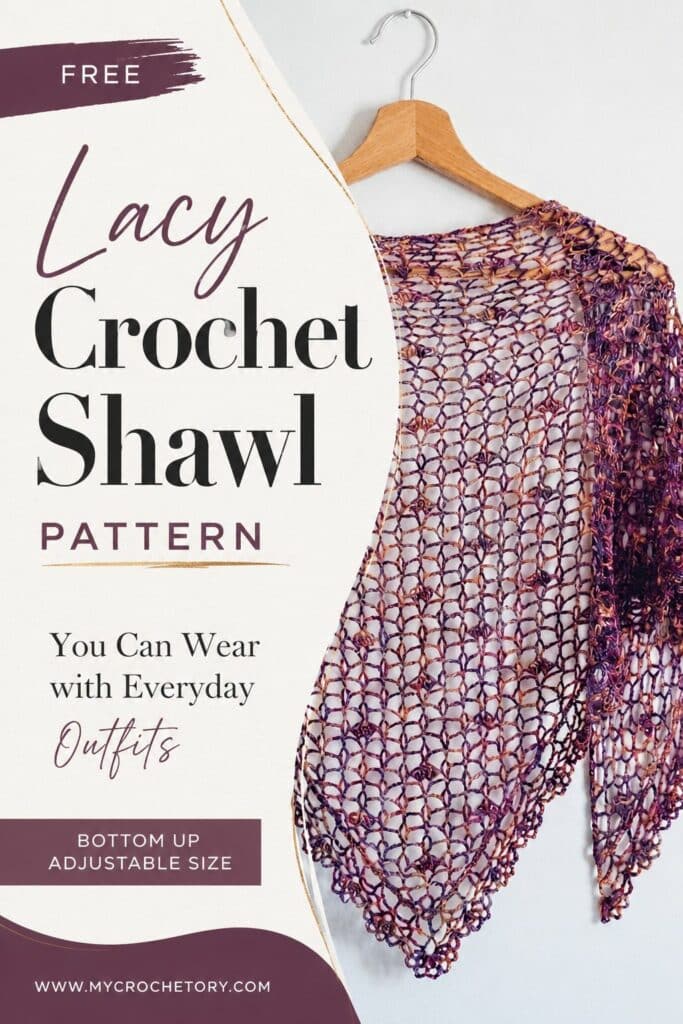
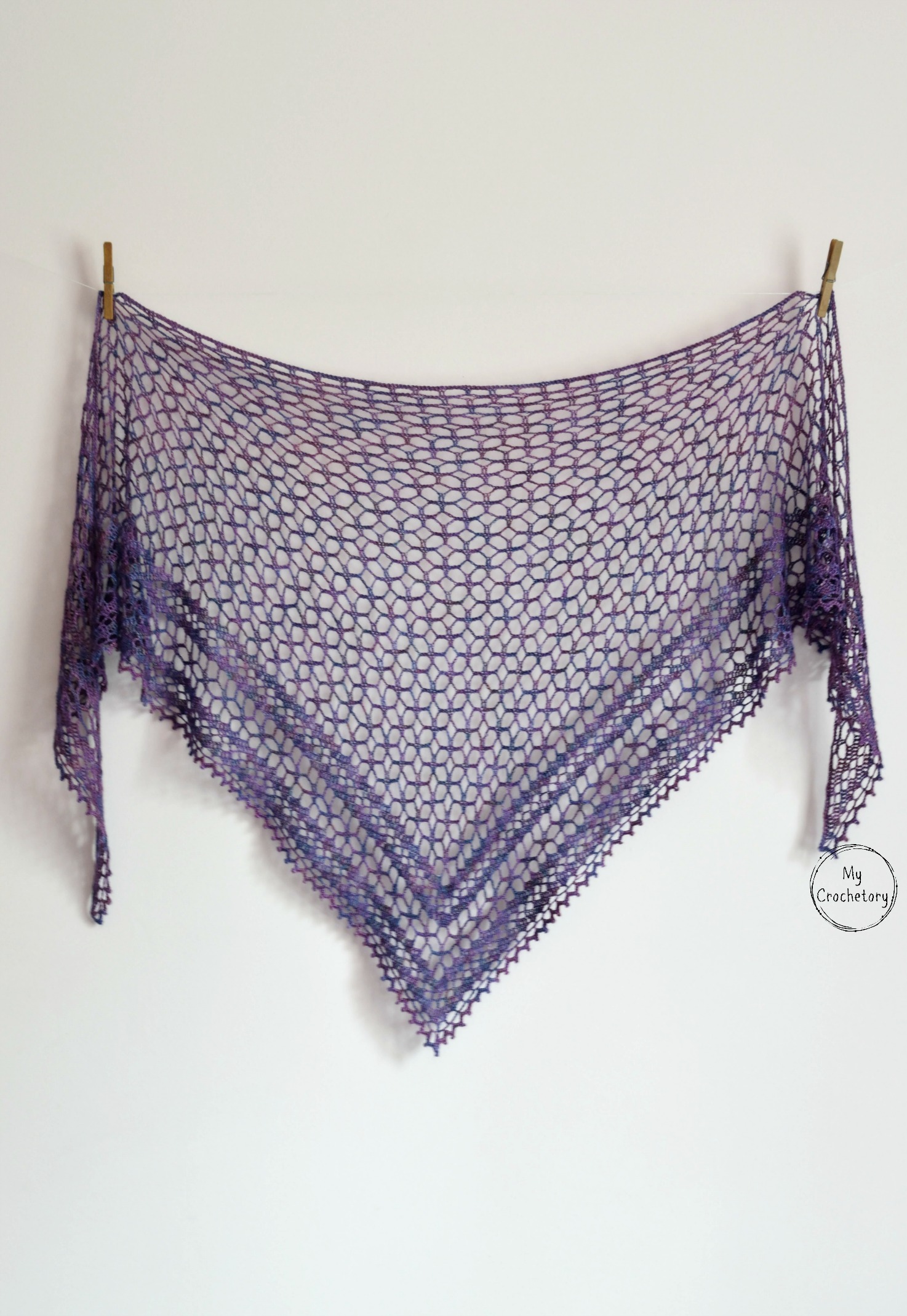
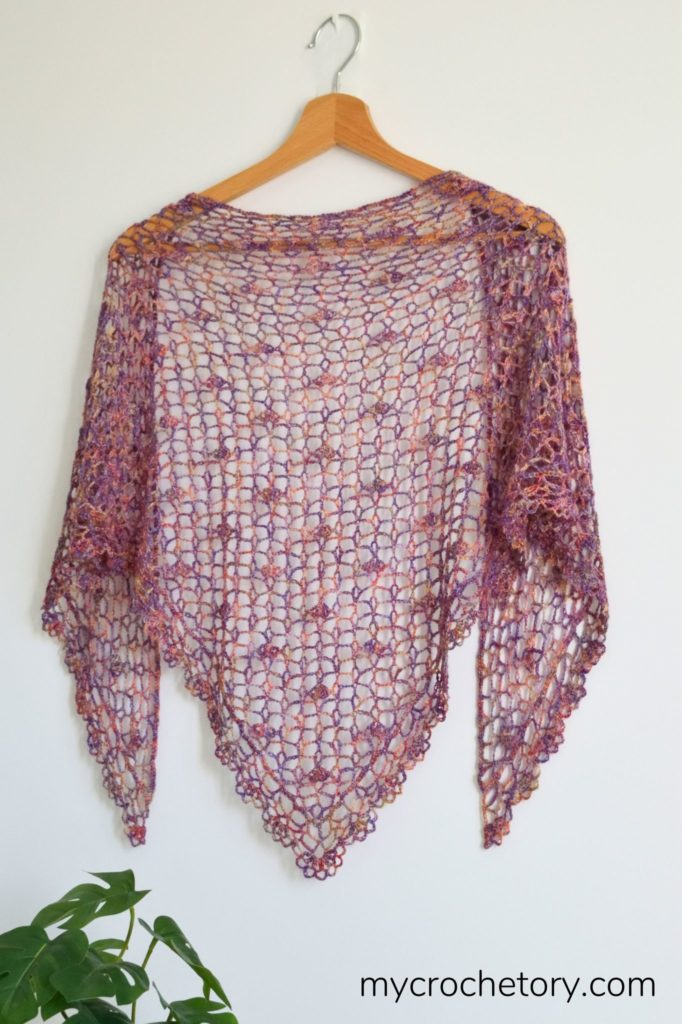
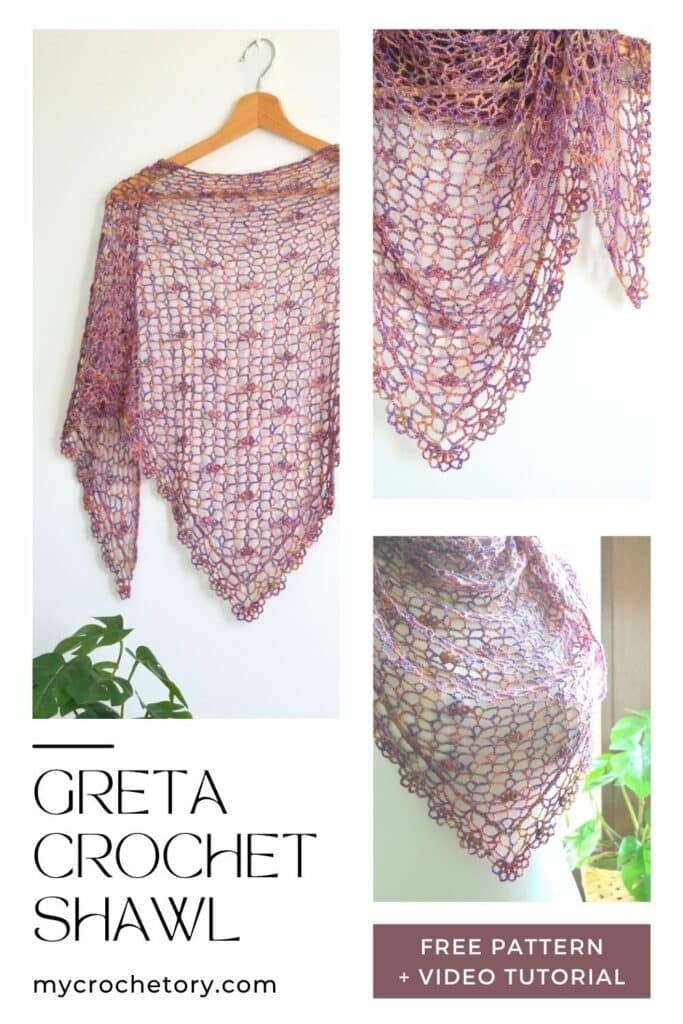
Greta grows bottom up in one piece. Add or leave out pattern repeats to make it as long as you like, no guesswork, no committing to a size before you’ve even started.
Smart, repeatable stitches build a soft triangular drape, with a full video tutorial for every row. Keep scrolling for the free version, or grab the ad-free, printable PDF with the stitch chart over on Etsy or Ravelry.
Designing Another Lacy Crochet Shawl Pattern (Almost Didn’t Happen)
I wasn’t planning on designing another lacy crochet shawl pattern this year. I’d already made a dozen versions of the same idea in my head, and none of them felt worth starting.
Most lace patterns I’d tried lately followed the same formula. Pretty stitch repeat, complicated enough to look impressive, completely impractical the second you tried to wear it with anything other than a fancy dress.
Then one quiet Sunday I pulled out a skein of lace weight yarn that had been sitting in my stash for months, half forgotten. Three hours later I had a shape I couldn’t put down. That’s how Greta happened, completely by accident, right when I’d decided I was done with shawls for a while.
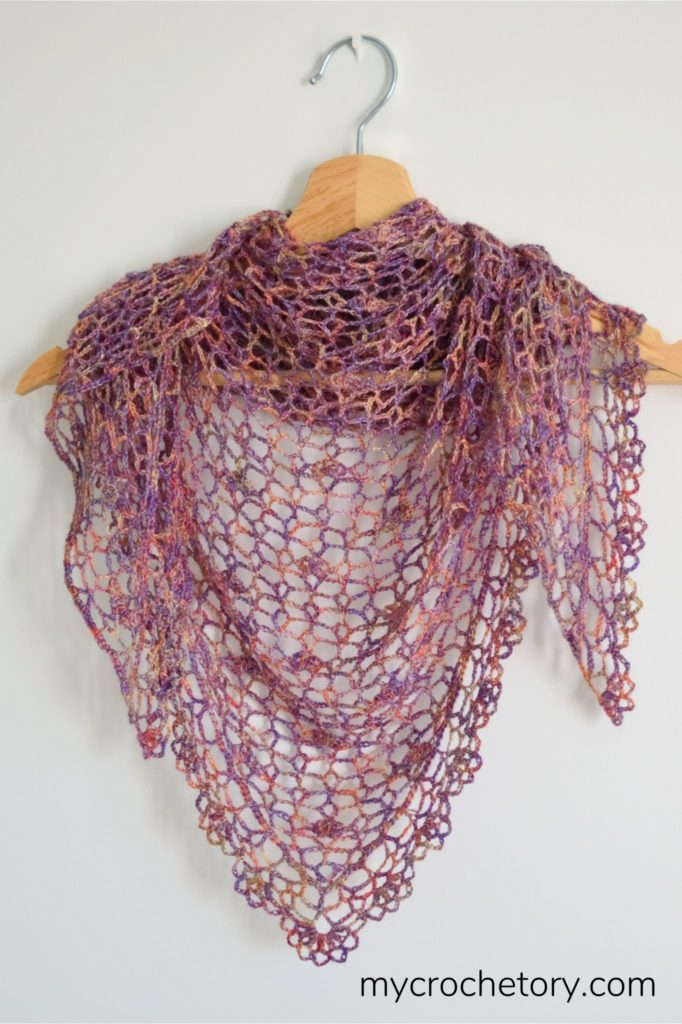
What Makes This Lacy Crochet Shawl Pattern Different
There’s a specific kind of guilt that comes from finishing a project and knowing you’ll never wear it. Before committing to any new pattern now, I ask myself one question: will this get worn on a random Tuesday, or end up folded in a drawer looking pretty and doing nothing?
Greta had to pass that test before I finished the first repeat. The rules were simple. Flatter more than one body shape, work up without constant recounting, and look elegant even made with whatever lace weight yarn happened to be in my stash that week.
Curious what makes a shawl work in general? Here’s a breakdown worth reading before you dive into any pattern.
This Lacy Crochet Shawl Pattern, No Fuss
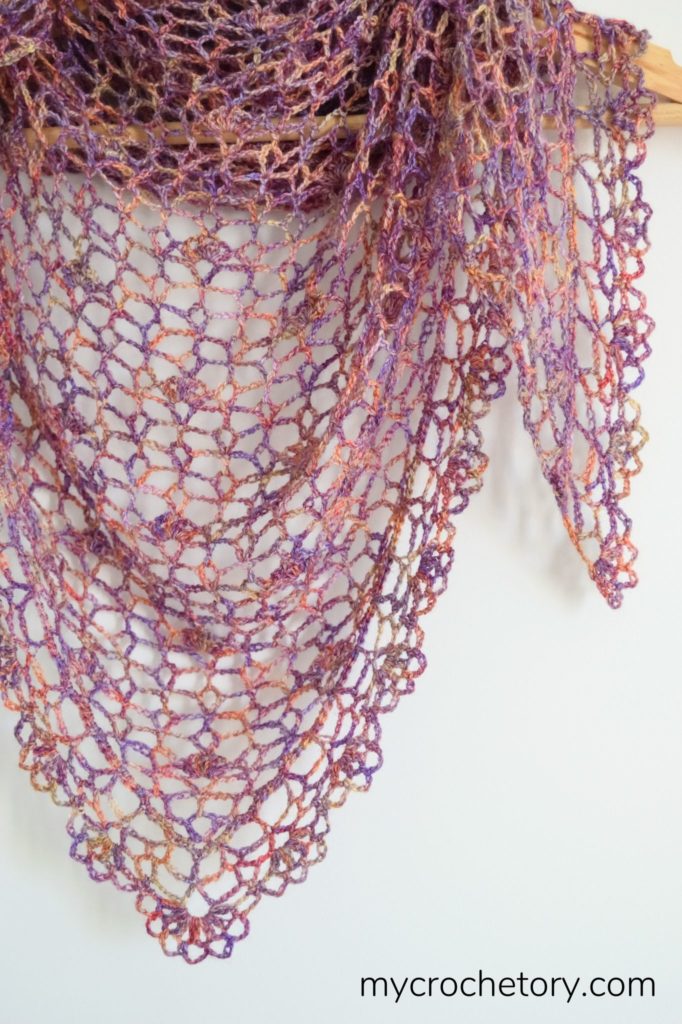
Ever started a shawl that felt like a punishment halfway through? Same. Greta stays clean and rhythmic, built mostly from single crochet, double crochet, chains, and simple shaping.
The first few rows feel like you’re checking the pattern after every stitch, and honestly, that’s normal. Somewhere around row five or six though, something clicks. You stop counting under your breath and just start moving, and that’s usually when I know I’m going to actually finish a project instead of shoving it in a bag under the couch.
A full video tutorial covers every row, so if you do lose count or aren’t sure your stitches match up, you’ve got something to check against instead of just guessing and hoping for the best.
A Crochet Shawl Pattern for Every Day
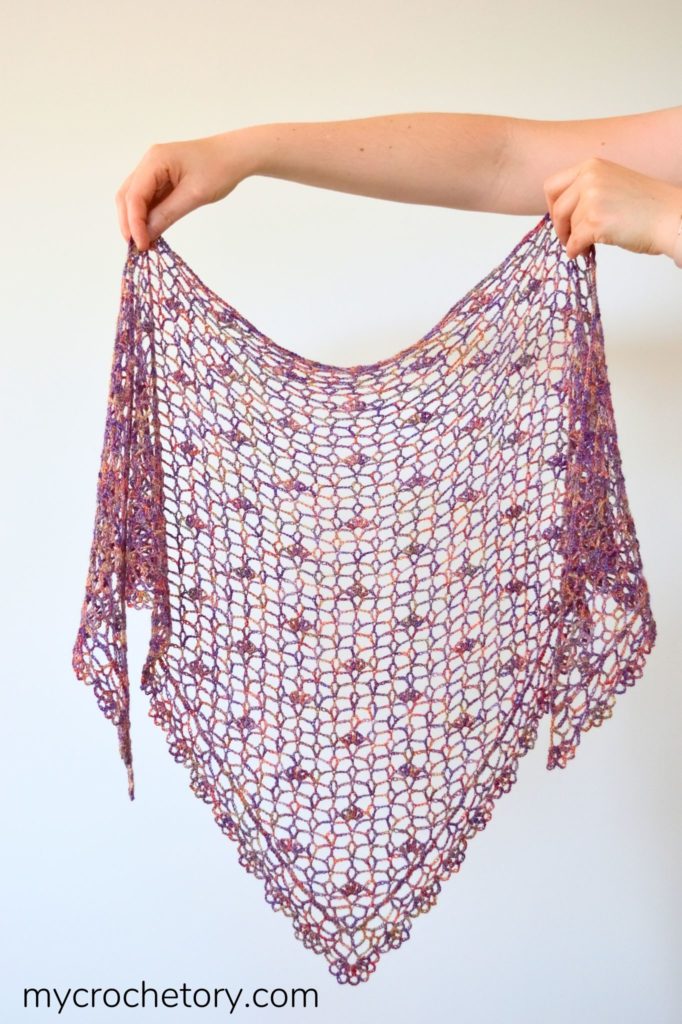
Not a shawl built for styled photoshoots. Lightweight enough for warm days, cozy enough for cold mornings, dressy enough that people will ask where you got it. Pair it with jeans, a dress, a cardigan, whatever’s already in your closet.
Want the same daily-wear feel in a smaller project? The Tonnta lightweight scarf follows the same idea.
They’ll be shocked when you say you made it.
What Makes This Free Pattern Worth Making
What makes Greta work:
- A polished, modern edge with no extra frills
- Full control over the finished size, just repeat rows for bigger or smaller
- Works beautifully in lace weight or fingering weight yarn
- Great for finally using that gradient yarn you’ve been hoarding (joining in new skeins included)
- One of those free patterns you’ll actually finish
Make it once, then again in a different color. Tag me when you finish yours, even if it comes out a little wonky. Especially then.
Prefer a clean, ad-free page with a printed stitch chart next to you? That version’s on Etsy and Ravelry, handy for following along on paper instead of your phone.
Lacy Crochet Shawl Pattern FAQ
Q: Is the Greta Lacy Crochet Shawl Pattern suitable for beginners? A: No, Greta is designed for intermediate crocheters due to its more intricate stitches and construction. A determined beginner can still give it a try with the video tutorial for backup.
Q: Can I resize the Greta Lacy Crochet Shawl Pattern? A: Yes. Adjust how many pattern repeats you work to make it bigger or smaller.
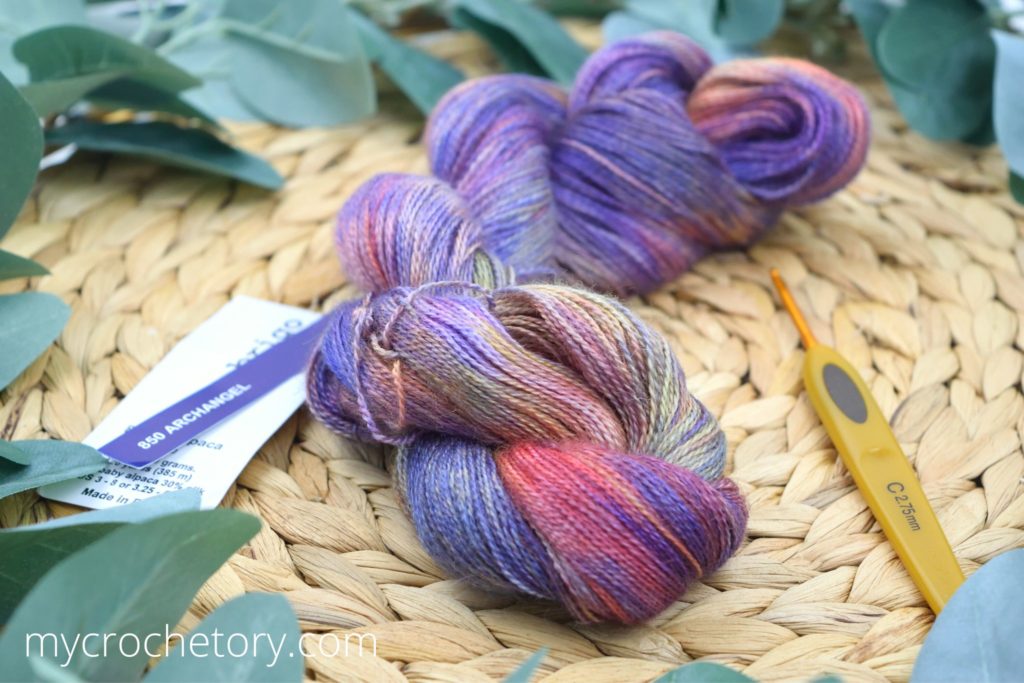
Q: What yarn works best for the Greta lacy crochet shawl pattern? A: Lace weight yarn, around 384m. Malabrigo Silkpaca (70% alpaca, 30% silk) gives that soft, elegant drape, though other lace or fingering weight yarns work too, just expect some difference in yardage and finished size.
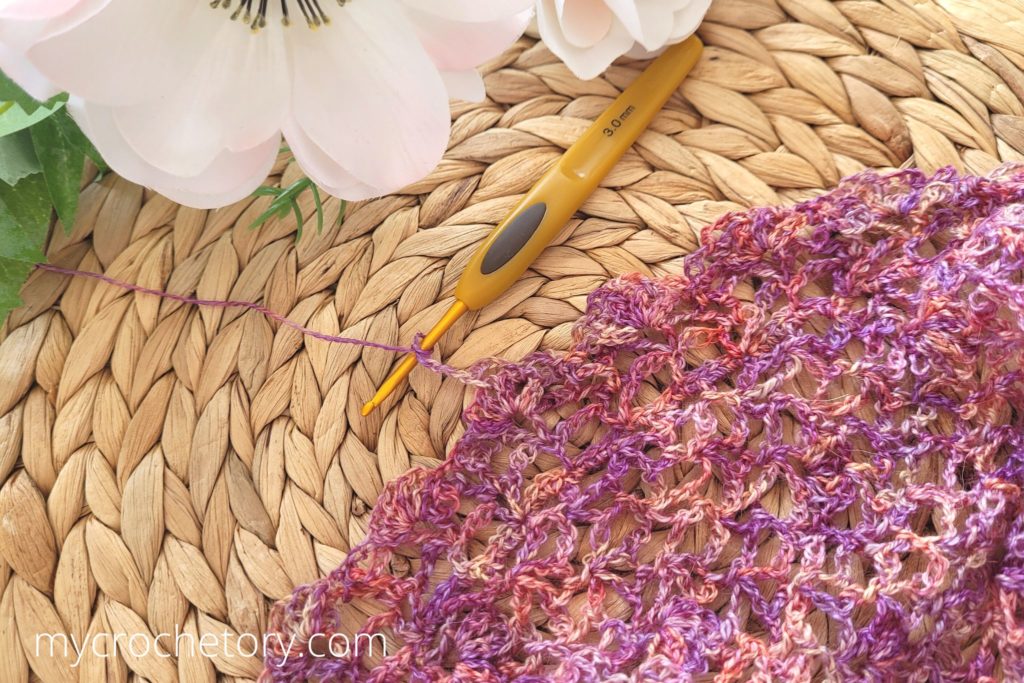
Q: What hook size do I need for this lacy shawl pattern? A: 2.75mm to start. Gauge isn’t crucial here, so adjust hook size up or down if your stitches come out tighter or looser than expected.
Q: How long does the Greta shawl take to crochet? A: Depends on how many repeats you work. The written pattern goes up to row 54, but stop earlier or keep going for a bigger wrap.
Q: Is this pattern written in US or UK crochet terms? A: US terms. Stitch names like “double crochet” and “treble crochet” refer to different stitches in the UK system, so keep that in mind if you’re used to switching between the two.
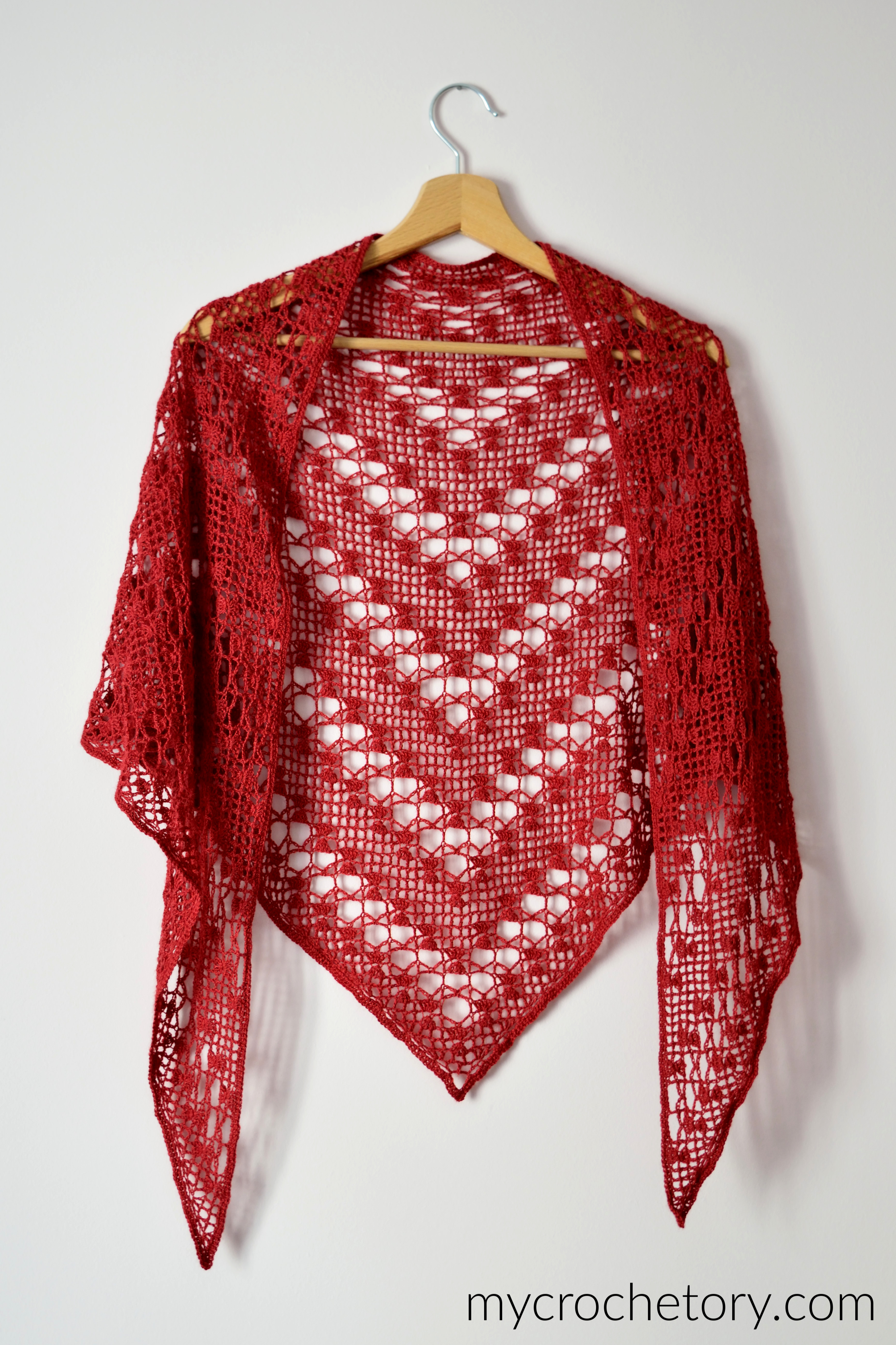
OTHER LACY CROCHET SHAWL PATTERNS YOU MIGHT LOVE
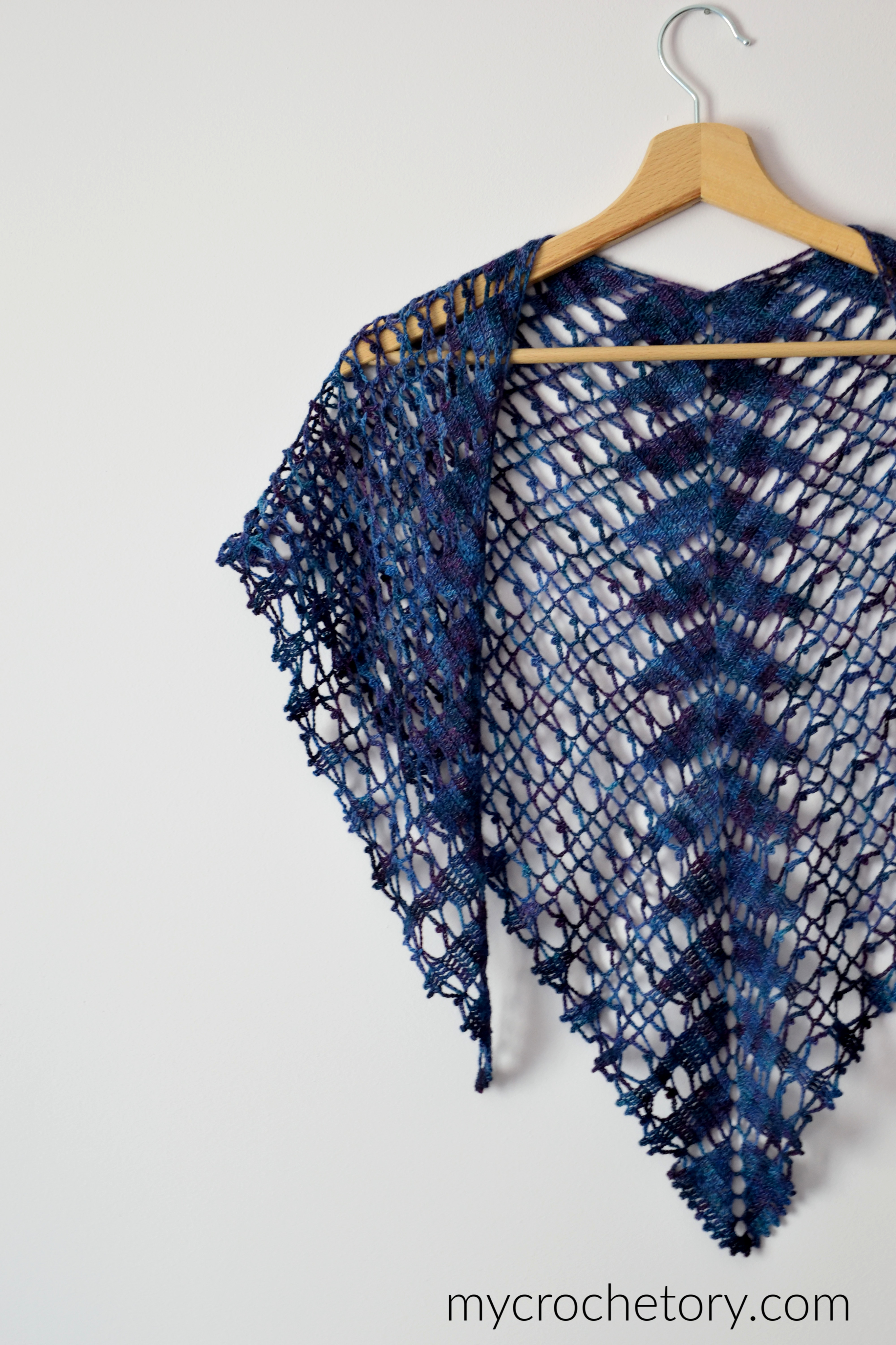
GRETA FREE LACY CROCHET SHAWL PATTERN
- Keep scrolling for the FREE version of the Greta Shawl + helpful VIDEO TUTORIAL.
- Purchase the ad-free, printable PDF with a stitch charts here on ETSY or here on Ravelry.
- Add this pattern to your Ravelry Queue HERE.
- Pin it for later.
Copyright 2023 – 2026 MyCrochetory. All rights reserved. This pattern is the property of Sylwia Kawczyńska @MyCrochetory. Please do not sell the pattern and claim it as your own. It’s for personal use only and may not be translated or reproduced in another language. Please respect these rights and do not share or publish this pattern anywhere without permission.
The shawl you make following this pattern is yours to sell, as long as you credit MyCrochetory as the original designer. For more information, read the Terms Page.
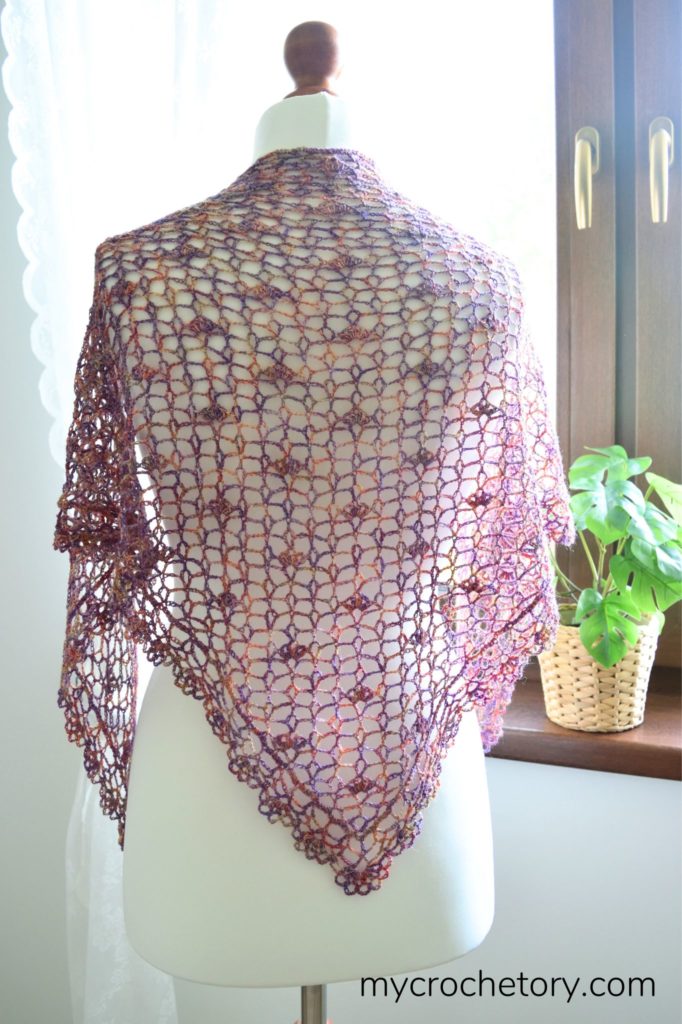
Sharing WIPs or finished projects on social media? Use the hashtag #mycrochetory.
As a bonus I have included a stitch chart for main body of the shawl and for edging in the ad-free, printable PDF crochet pattern for anyone, who want to support my work and purchase this crochet pattern HERE on ETSY or HERE on Ravelry.
Materials & Tools:
- Yarn Requirements: Lace weight yarn, approx. 384m.
Suggested Yarn: Malabrigo Yarn Silkpaca, 70% camelid-alpaca, 30% silk.
- Hook size 2.75mm. Adjust hook size if necessary to obtain correct gauge.
- Tapestry needle (to weave and hide yarn ends).
- Scissors.
- Stitch markers.
Level:
Intermediate.
Gauge after blocking:
After 9 rows triangle is aprrox. 10cm/4’’ high.
Gauge is not crucial for this project. However, changes might result in a different yardage requirements and the finished size.
Size after blocking:
One size, adjustable: 140cm x 58cm (55”x23”).
Notes:
- This pattern uses US terminology.
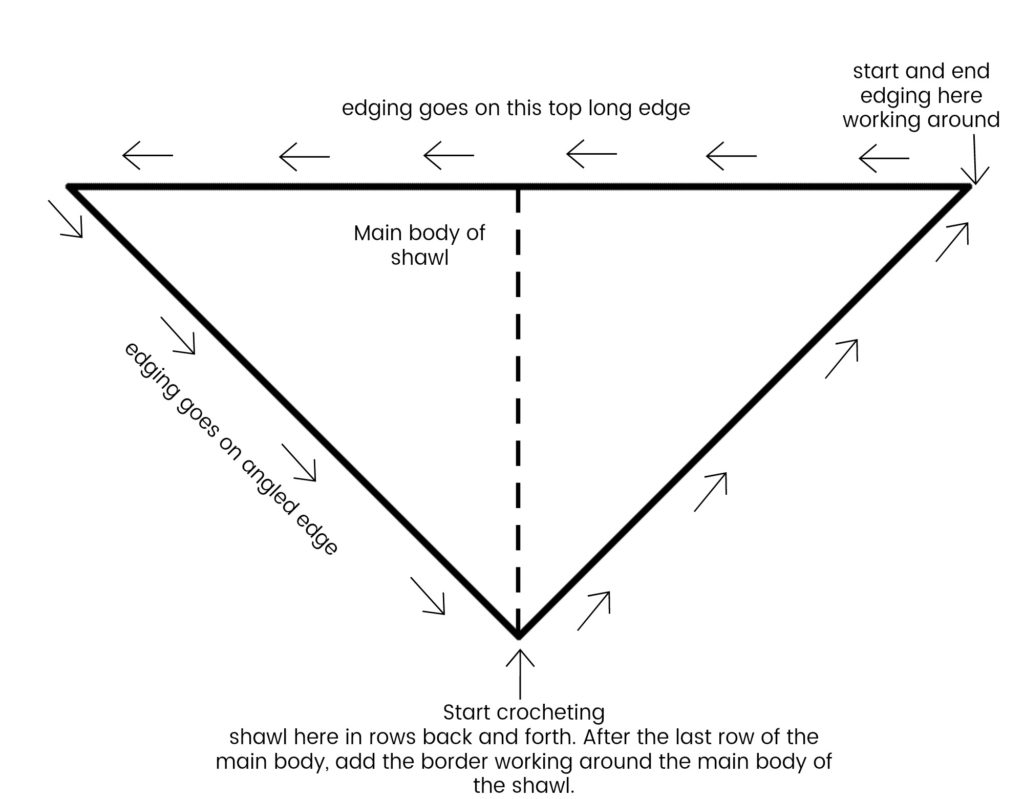
- Worked back and forth, in rows.
- The shawl is worked bottom-up in one piece, with a continuous border added in the round. Increases happen at the start and end of rows.
- When instructed to place a marker, place it on the last stitch worked unless otherwise noted. It should sit on a stitch, not between stitches.
- Make the shawl as long as you like by adding or subtracting pattern repeats.
- Different yarn weights can be used, but measurements will vary depending on your gauge.
Stitches & Abbreviations (US terms):
st – stitch
yo – yarn over
sk – skip
beg – beginning
prev – previous
rep – repeat
sp – space
M – marker
PM – place marker
RM – remove marker
Instructions in square brackets […] are worked as many times as indicated.
dc2tog (double crochet 2 together) – [yo, insert hook in indicated st, yo, draw up a loop, yo, pull through 2 loops] rep […] twice, yo, pull through all 3 loops on hook.
GRETA LACY CROCHET SHAWL PATTERN VIDEO TUTORIAL
Would you like a little help along the way? Use this video tutorial and make your Greta Lace Crochet Shawl successfully.
PATTERN
Read all Notes before you start.
Row 1: ch6, (dc, ch3, dc, ch1, tr) in 6th ch from hook. Turn.
Row 2: ch5, dc in first st, ch3, sk next ch-1sp, sk next dc, dc in next ch-3sp, ch3, sk next dc, (dc, ch1, tr) in 5th ch of ch6 at beg of prev row. Turn.
Row 3: ch7, sk first st, dc in next ch-1sp, ch3, sk next dc, sk next ch-3sp, (dc, ch3, dc) in next dc, ch3, sk next ch-3sp, sk next dc, dc around ch-5sp created at the beg of prev row, ch3, tr in 4th ch of ch5 at beg of prev row. Turn.
Row 4: ch5, dc in first st, ch3, sk next ch-3sp, (dc, ch3, dc) in next dc, sk next ch-3sp, sk next dc, (dc2tog, ch2, dc2tog, ch2, dc2tog, ch2, dc2tog) in next ch-3sp, sk next dc, sk next ch-3sp, (dc, ch3, dc) in next dc, ch3, (dc, ch1, tr) in 4th ch of ch7 at beg of prev row. Turn.
Row 5: ch7, sk next ch-1sp, (dc, ch3, PM, dc) in next dc, ch3, sk next ch-3sp, sk next dc, dc in next ch-3sp, ch3, sk next dc, sk next dc2tog, sk next ch-2sp, sk next dc2tog, (dc, ch3, dc) in next ch-2sp, ch3, sk next dc2tog, sk next ch-2sp, sk next dc2tog, sk next dc, dc in next ch-3sp, ch3, sk next dc, sk next ch-3sp, (dc, ch3, dc) in next dc, ch3, tr in 4th ch of ch5 at beg of prev row. Turn.
Row 6: ch5, (dc, ch3, PM dc) in first st, ch3, sk next ch-3sp, sk next dc, dc in next ch-3sp, [ch3, sk next dc, sk next ch-3sp, (dc, ch3, dc) in next dc, ch3, sk next ch-3sp, sk next dc, dc in next ch-3sp] rep […] until M, RM ch3, sk next ch-3sp, (dc, ch3, dc, ch1, tr) in 4th ch of ch7 at beg of prev row. Turn.
Row 7: ch5, dc in first st, sk next ch-1sp, sk next dc, (dc2tog, ch2, dc2tog, ch2, PM, dc2tog, ch2, dc2tog) in next ch-3sp, [sk next ch-3sp, (dc, ch3, dc) in next dc, ch3, sk next ch-3sp, sk next dc, dc in next ch-3sp, ch3, sk next dc, sk next ch-3sp, (dc, ch3, dc) in next dc, ch3, sk next ch-3sp, sk next dc, dc in next ch-3sp, ch3, sk next dc, sk next ch-3sp, (dc, ch3, dc) in next dc, sk next ch-3sp, sk next dc, (dc2tog, ch2, dc2tog, ch2, dc2tog, ch2, dc2tog) in next ch-3sp] rep […] until M, RM, (dc, ch1, tr) in 4th ch of ch5 at beg of prev row. Turn.
Row 8: ch7, dc in ch-1sp, PM, ch3, sk next dc, sk next dc2tog, sk next ch-2sp, sk next dc2tog, (dc, ch3, dc) in next ch-2sp, [ch3, sk next dc2tog, sk next ch-2sp, sk next dc2tog, sk next dc, dc in next ch-3sp, ch3, sk next dc, sk next ch-3sp, (dc, ch3, dc) in next dc, ch3, sk next ch-3sp, sk next dc, dc in next ch-3sp, ch3, sk next dc, sk next ch-3sp, (dc, ch3, dc) in next dc, ch3, sk next ch-3sp, sk next dc, dc in next ch-3sp, ch3, sk next dc, sk next dc2tog, sk next ch-2sp, sk next dc2tog, (dc, ch3, dc) in next ch-2sp] rep […] until M, RM, ch3, sk next dc2tog, sk next ch-2sp, sk next dc2tog, sk next dc, dc around ch-5 sp created at the beg of prev row, ch3, tr in 4th ch of ch5 at beg of prev row. Turn.
Row 9: ch5, dc in first st, PM, ch3, sk next ch-3sp, (dc, ch3, dc) in next dc, [ch3, sk next ch-3sp, sk next dc, dc in next ch-3sp, ch3, sk next dc, sk next ch-3sp, (dc, ch3, dc) in next dc] rep […] until M, RM, ch3, (dc, ch1, tr) in 4th ch of ch7 at beg of prev row. Turn.
Row 10: ch7, sk next ch-1sp, (dc, ch3, PM, dc) in next dc, [ch3, sk next ch-3sp, sk next dc, dc in next ch-3sp, ch3, sk next dc, sk next ch-3sp, (dc, ch3, dc) in next dc] rep […] twice in total, [sk next ch-3sp, sk next dc, (dc2tog, ch2, dc2tog, ch2, dc2tog, ch2, dc2tog) in next ch-3sp, sk next dc, sk next ch-3sp, (dc, ch3, dc) in next dc, ch3, sk next ch-3sp, sk next dc, dc in next ch-3sp, ch3, sk next dc, sk next ch-3sp, (dc, ch3, dc) in next dc, ch3, sk next ch-3sp, sk next dc, dc in next ch-3sp, ch3, sk next dc, sk next ch-3sp, (dc, ch3, dc) in next dc] rep […] until M, RM, ch3, tr in 4th ch of ch5 at beg of prev row. Turn.
Row 11: ch5, (dc, ch3, PM, dc) in first st, ch3, sk next ch-3sp, sk next dc, dc in next ch-3sp, [ch3, sk next dc, sk next ch-3sp, (dc, ch3, dc) in next dc, ch3, sk next ch-3sp, sk next dc, dc in next ch-3sp] rep […] twice in total, [ch3, sk next dc, sk next dc2tog, sk next ch-2sp, sk next dc2tog, (dc, ch3, dc) in next ch-2sp, ch3, sk next dc2tog, sk next ch-2sp, sk next dc2tog, sk next dc, dc in next ch-3sp, ch3, sk next dc, sk next ch-3sp, (dc, ch3, dc) in next dc, ch3, sk next ch-3sp, sk next dc, dc in next ch-3sp, ch3, sk next dc, sk next ch-3sp, (dc, ch3, dc) in next dc, ch3, sk next ch-3sp, sk next dc, dc in next ch-3sp] rep […] until M, RM, ch3, (dc, ch3, dc, ch1, tr) in 4th ch of ch7 at beg of prev row. Turn.
Row 12: ch5, dc in first st, ch3, sk next ch-1sp, sk next dc, dc in next ch-3sp, PM, [ch3, sk next dc, sk next ch-3sp, (dc, ch3, dc) in next dc, ch3, sk next ch-3sp, sk next dc, dc in next ch-3sp] rep […] until M, RM, ch3, (dc, ch1, tr) in 4th ch of ch5 at beg of prev row. Turn.
Row 13: ch7, dc in next ch-1sp, PM, ch3, sk next dc, sk next ch-3sp, (dc, ch3, dc) in next dc, [ch3, sk next ch-3sp, sk next dc, dc in next ch-3sp, ch3, sk next dc, sk next ch-3sp, (dc, ch3, dc) in next dc, sk next ch-3sp, sk next dc, (dc2tog, ch2, dc2tog, ch2, dc2tog, ch2, dc2tog) in next ch-3sp, sk next dc, sk next ch-3sp, (dc, ch3, dc) in next dc, ch3, sk next ch-3sp, sk next dc, dc in next ch-3sp, ch3, sk next dc, sk next ch-3sp, (dc, ch3, dc) in next dc] rep […] until M, RM, ch3, sk next ch-3sp, sk next dc, dc around ch-5 sp created at the beg of prev row, ch3, tr in 4th ch of ch5 at beg of prev row. Turn.
Row 14: ch5, dc in first st, PM, ch3, sk next ch-3sp, (dc, ch3, dc) in next dc, ch3, sk next ch-3sp, sk next dc, dc in next ch-3sp, ch3, sk next dc, sk next ch-3sp, (dc, ch3, dc) in next dc, [ch3, sk next ch-3sp, sk next dc, dc in next ch-3sp, ch3, sk next dc, sk next dc2tog, sk next ch-2sp, sk next dc2tog, (dc, ch3, dc) in next ch-2sp, ch3, sk next dc2tog, sk next ch-2sp, sk next dc2tog, sk next dc, dc in next ch-3sp, ch3, sk next dc, sk next ch-3sp, (dc, ch3, dc) in next dc, ch3, sk next ch-3sp, sk next dc, dc in next ch-3sp, ch3, sk next dc, sk next ch-3sp, (dc, ch3, dc) in next dc] rep […] until M, RM, ch3, (dc, ch1, tr) in 4th ch of ch7 at beg of prev row. Turn.
Row 15: ch7, sk next ch-1sp, (dc, ch3, PM, dc) in next dc, [ch3, sk next ch-3sp, sk next dc, dc in next ch-3sp, ch3, sk next dc, sk next ch-3sp, (dc, ch3, dc) in next dc] rep […] until M, RM, ch3, tr in 4th ch of ch5 at beg of prev row. Turn.
Row 16: ch5, (dc, ch3, PM, dc) in first st, ch3, sk next ch-3sp, sk next dc, dc in next ch-3sp, ch3, sk next dc, sk next ch-3sp, (dc, ch3, dc) in next dc, sk next ch-3sp, sk next dc, (dc2tog, ch2, sc2tog, ch2, dc2tog, ch2, dc2tog) in next ch-3sp, sk next dc, sk next ch-3sp, (dc, ch3, dc) in next dc, ch3, sk next ch-3sp, sk next dc, dc in next ch-3sp, [ch3, sk next dc, sk next ch-3sp, (dc, ch3, dc) in next dc, ch3, sk next ch-3sp, sk next dc, dc in next ch-3sp, ch3, sk next dc, sk next ch-3sp, (dc, ch3, dc) in next dc, sk next ch-3sp, sk next dc, (dc2tog, ch2, sc2tog, ch2, dc2tog, ch2, dc2tog) in next ch-3sp, sk next dc, sk next ch-3sp, (dc, ch3, dc) in next dc, ch3, sk next ch-3sp, sk next dc, dc in next ch-3sp] rep […] until M, RM, ch3, (dc, ch3, dc, ch1, tr) in 4th ch of ch7 at beg of prev row. Turn.
Row 17: ch5, dc in first st, ch3, sk next ch-1sp, sk next dc, dc in next ch-3sp, PM, [ch3, sk next dc, sk next ch-3sp, (dc, ch3, dc) in next dc, ch3, sk next ch-3sp, sk next dc, dc in next ch-3sp, ch3, sk next dc, sk next dc2tog, sk next ch-2sp, sk next dc2tog, (dc, ch3, dc) in next ch-2sp, ch3, sk next dc2tog, sk next ch-2sp, sk next dc2tog, sk next dc, dc in next ch-3sp, ch3, sk next dc, sk next ch-3sp, (dc, ch3, dc) in next dc, ch3, sk next ch-3sp, sk next dc, dc in next ch-3sp] rep […] until M, RM, ch3, (dc, ch1, tr) in 4th ch of ch5 at beg of prev row. Turn.
Row 18: ch7, dc in next ch-1sp, PM, ch3, sk next dc, sk next ch-3sp, (dc, ch3, dc) in next dc, [ch3, sk next ch-3sp, sk next dc, dc in next ch-3sp, ch3, sk next dc, sk next ch-3sp, (dc, ch3, dc) in next dc] rep […] until M, RM, ch3, sk next ch-3sp, sk next dc, dc around ch-5 sp created at the beg of prev row, ch3, tr in 4th ch of ch5 at beg of prev row. Turn.
Row 19: ch5, dc in first st, PM, ch3, sk next ch-3sp, (dc, ch3, dc) in next dc, sk next ch-3sp, sk next dc, (dc2tog, ch2, dc2tog, ch2, dc2tog, ch2, dc2tog) in next ch-3sp, sk next dc, sk next ch-3sp, (dc, ch3, dc) in next dc, [ch3, sk next ch-3sp, sk next dc, dc in next ch-3sp, ch3, sk next dc, sk next ch-3sp, (dc, ch3, dc) in next dc, ch3, sk next ch-3sp, sk next dc, dc in next ch-3sp, ch3, sk next dc, sk next ch-3sp, (dc, ch3, dc) in next dc, sk next ch-3sp, sk next dc, (dc2tog, ch2, dc2tog, ch2, dc2tog, ch2, dc2tog) in next ch-3sp, sk next dc, sk next ch-3sp, (dc, ch3, dc) in next dc] rep […] until M, RM, ch3, (dc, ch1, tr) in 4th ch of ch7 at beg of prev row. Turn.
Row 20: ch7, sk next ch-1sp, (dc, ch3, PM, dc) in next dc, ch3, sk next ch-3sp, sk next dc, dc in next ch-3sp, ch3, sk next dc, sk next dc2tog, sk next ch-2sp, sk next dc2tog, (dc, ch3, dc) in next ch-2sp, ch3, sk next dc2tog, sk next ch-2sp, sk next dc2tog, sk next dc, dc in next ch-3sp, ch3, sk next dc, sk next ch-3sp, (dc, ch3, dc) in next dc, [ch3, sk next ch-3sp, sk next dc, dc in next ch-3sp, ch3, sk next dc, sk next ch-3sp, (dc, ch3, dc) in next dc, ch3, sk next ch-3sp, sk next dc, dc in next ch-3sp, ch3, sk next dc, sk next dc2tog, sk next ch-2sp, sk next dc2tog, (dc, ch3, dc) in next ch-2sp, ch3, sk next dc2tog, sk next ch-2sp, sk next dc2tog, sk next dc, dc in next ch-3sp, ch3, sk next dc, sk next ch-3sp, (dc, ch3, dc) in next dc] rep […] until M, RM, ch3, tr in 4th ch of ch5 at beg of prev row. Turn.
Next, repeat Rows 6 – 20 until row 54 or until repeat of row 9 or row 14.
Don’t break the yarn and work the edging of the shawl.
EDGING
For the edging, turn your work after the last row and you will be crocheting around the main body of the shawl across the top long edge and both angled edges.
Edging Setup Round (start working across the top long edge): ch1, 2sc in first st, sc in next ch-1sp, sc in next dc, [3sc in next ch-3sp, sc in next dc] rep […] until ch-5sp remain, 3sc in ch-5sp, PM, 4sc in the same ch-5sp, [4sc around tr, 4sc around ch-4sp] rep […] until last tr before bottom corner, (sc, ch1, sc) in ch-1 bottom corner, [4sc around ch-4sp, 4sc around tr] rep […] until first sc of this round, slst in first sc. Turn.
Edging Row 1: ch3, dc in first st, ch3, sk 4sts, (dc, ch3, dc) in next st, [ch3, sk next 4sts, dc in next st, ch3, sk next 4sts, (dc, ch3, dc) in next st] rep […] until 2sts remain before ch-1sp bottom corner, ch4, sk 2sts, dc in ch-1sp, ch4, sk next 2sts, (dc, ch3, PM, dc) in next st, ch3, sk next 4sts, dc in next st, [ch3, sk next 4sts, (dc, ch3, dc) in next st, ch3, sk next 4sts, dc in next st] rep […] until M, remove M, Turn.
Edging Row 2: ch6, dc in first st, ch1, sk next ch-3sp, sk next dc, (dc, ch3, dc) in next ch-3sp, [ch1, sk next ch-3sp, (dc, ch3, dc) in next dc, ch1, sk next ch-3sp, sk next dc, (dc, ch3, dc) in next ch-3sp)] rep […] until next M, remove M, ch5, sk next dc, sk next ch-4sp, (dc, ch5, dc) in next dc, ch5, sk next ch-4sp, sk next dc, (dc, ch3, PM, dc) in next ch-3sp, ch1, sk next dc, sk next ch-3sp, (dc, ch3, dc) in next dc, [ch1, sk next ch-3sp, sk next dc, (dc, ch3, dc) in next ch-3sp, ch1, sk next dc, sk next ch-3sp, (dc, ch3, dc) in next dc] rep […] until last dc. Turn.
Edging Row 3: ch3, (dc, ch2, sc2tog, ch2, sc2tog, ch2, dc2tog) in next ch-3sp, ch2, sk next dc, sk next ch-1sp, sk next dc, sc in next ch-3sp, [ch2, sk next dc, sk next ch-1sp, sk next dc, (dc2tog, ch2, dc2tog, ch2, dc2tog, ch2, dc2tog) in next ch-3sp, ch2, sk next dc, sk next ch-1sp, sk next dc, sc in next ch-3sp] rep […] until next M, remove M, ch2, sk next dc, sk next ch5-sp, sk next dc, (dc2tog, ch2, dc2tog, ch2, dc2tog, ch2, dc2tog, ch2, dc2tog, ch2, dc2tog, ch2, dc2tog) in next ch-5sp, ch2, sk next dc, sk next ch-5sp, sk next dc, sc in next ch-3sp, ch2, sk next dc, sk next ch-1sp, sk next dc, (dc2tog, ch2, dc2tog, ch2, dc2tog, ch2, dc2tog) in next ch-3sp, [ch2, sk next dc, sk next ch-1sp, sk next dc, sc in next ch-3sp, ch2, sk next dc, sk next ch-1sp, sk next dc, (dc2tog, ch2, dc2tog, ch2, dc2tog, ch2, dc2tog) in next ch-3sp] rep […] until last ch-6sp. Turn.
Edging Row 4: slst in ch-2sp, ch1, sc in same ch-2sp, [ch4, sc in next ch-2sp] rep until last ch-2sp.
Fasten off yarn, weave in all ends and block to shape.
If you have any suggestions or have detected any mistakes, please feel free to email me at mycrochetory@gmail.com
Don’t forget to save this Pin for easy reference: 📌
I’d love to hear about your crochet adventures and see your beautiful creations.
Drop a comment below sharing your thoughts, questions, or your favorite crochet tips.
Subscribe to my newsletter for exclusive content straight to your inbox.
You can also follow along on Instagram, Facebook, and Pinterest.
Happy crocheting, and may your yarn always be tangle-free!
Keep scrolling for the FREE version of the Greta Shawl + helpful VIDEO TUTORIAL.
I find no link to the “helpful Video Tutorial”, where might that be located.
Thank you for your comment! The video tutorial for the Greta Shawl is available within the blog post, right before the written instructions. Please make sure to scroll down and you’ll find it there. If you’re experiencing any difficulties viewing the video, it’s possible that an ad blocker might be causing the issue. You can try disabling the ad blocker temporarily or accessing the blog post from a different device or browser. If you have any further questions or need assistance, feel free to let me know.!
Dear Sylwia
Thanks for the response – I thought perhaps you had invented a new stitch! Other than that, I thought I was going mad,
I did purchase he yarn recommended for the shawl e.g. malabrigo silkpaca but I am finding it very difficult to crochet with – I see in the video tutorial you use a different yarn which seems easier to crochet with.
Kind regards
Lynne
Hi Sylwia
Can you please tell me why the dc2tog written instruction states to repeat twice and why you pull through 4 loops when the tutorial only repeats once and you then pull through 3 loops not 4!
dc2tog (double crochet 2 together) – [yo, insert hook in indicated st, yo, draw up a loop, yo, pull through 2 loops] rep […] twice, yo, pull through all 4 loops on hook.
Thanks for pointing out the mistake in the dc2tog (double crochet 2 together) instructions. You’re correct that it should be 3 loops on the hook, not 4. I’m sorry for the confusion. I’ll fix the instructions. If you have any more questions, just let me know.
Hi Sylwia, I am currently working this pattern, edging row 3 appears to have an error in the starting stitch sequence, as it is the only place sc2tog is mentioned and is not repeated at the other side. I presume this should be dc2tog as the patterns are usually symmetrical from the center point and there are no other sc’s in the pattern?
thanks! love the pattern, basic stitches, and a hidden simple 3 row repeat aside from the starting and ending stiches per row which extends – though paying attention to the row ends is important 😉 just what I needed when I began it, beautiful but fairly easy, and just enough to keep my attention. almost done!
Hi Sylwia,
I’ve just made your shawl and I’m very pleased with it.The yarn is also very beautiful and soft (I used Fuchsia colour).Thank you for a lovely pattern.
Can you please tell me if I need to do the blocking every time I wash the shawl?