Updated: 6 August 2026 by Sylwia (MyCrochetory)
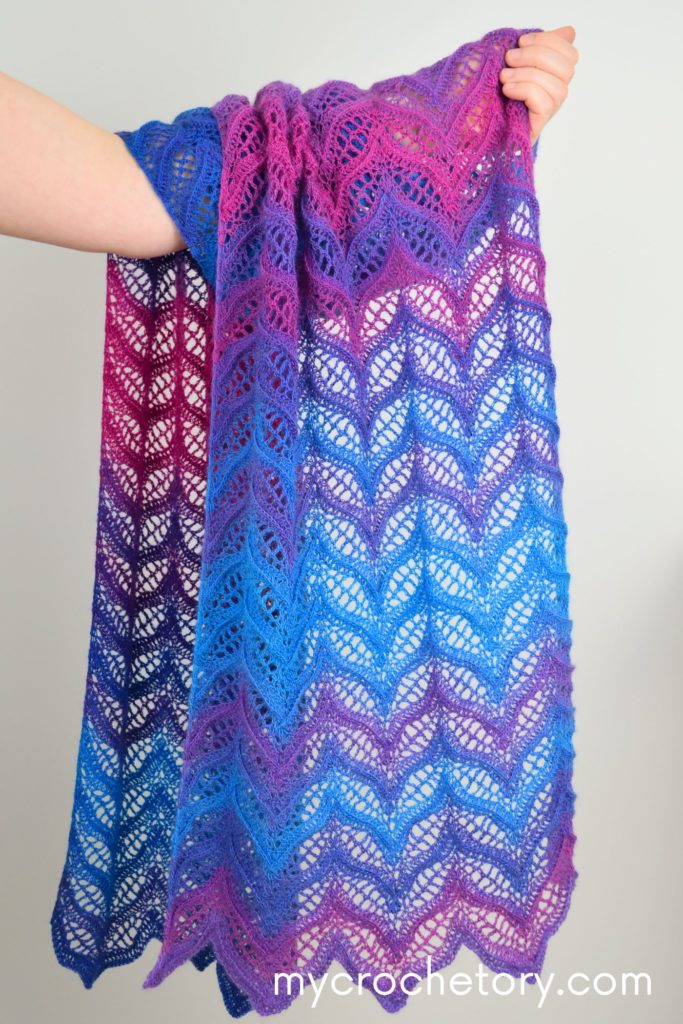
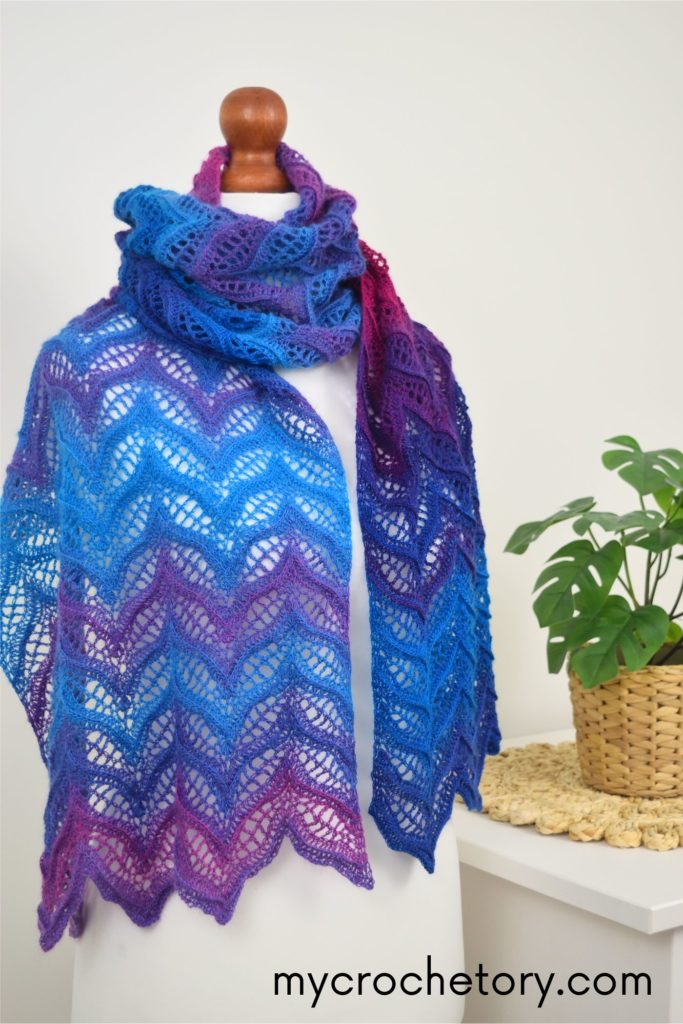
Ok, so this lightweight crochet scarf pattern kind of happened by accident. I’d just finished my Tonnta Blanket and couldn’t stop staring at that chevron stitch. I kept thinking, what if this was a scarf instead? Turns out, it’s even better as a scarf.
The stitch repeats every four rows. Your hands get the hang of it fast. This is a great pick if you want to try lace crochet without losing your mind over it.
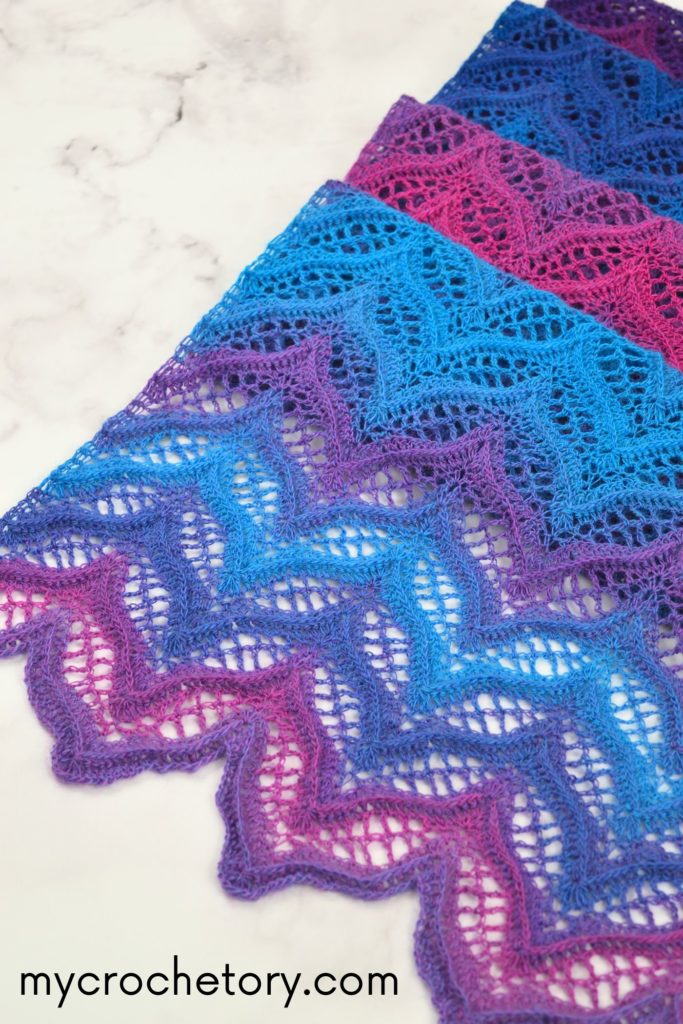
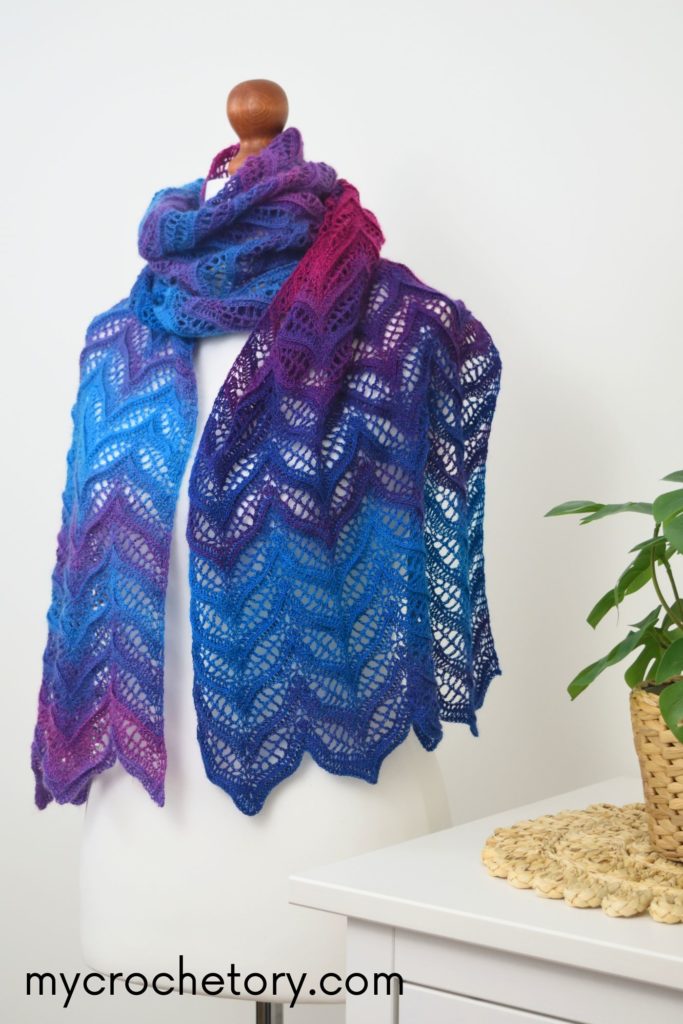
Self-striping yarn makes this pattern pop. Every color change shows up in the chevron rows like it was made for it. Once you block this scarf, you’re going to want one in every color, trust me.
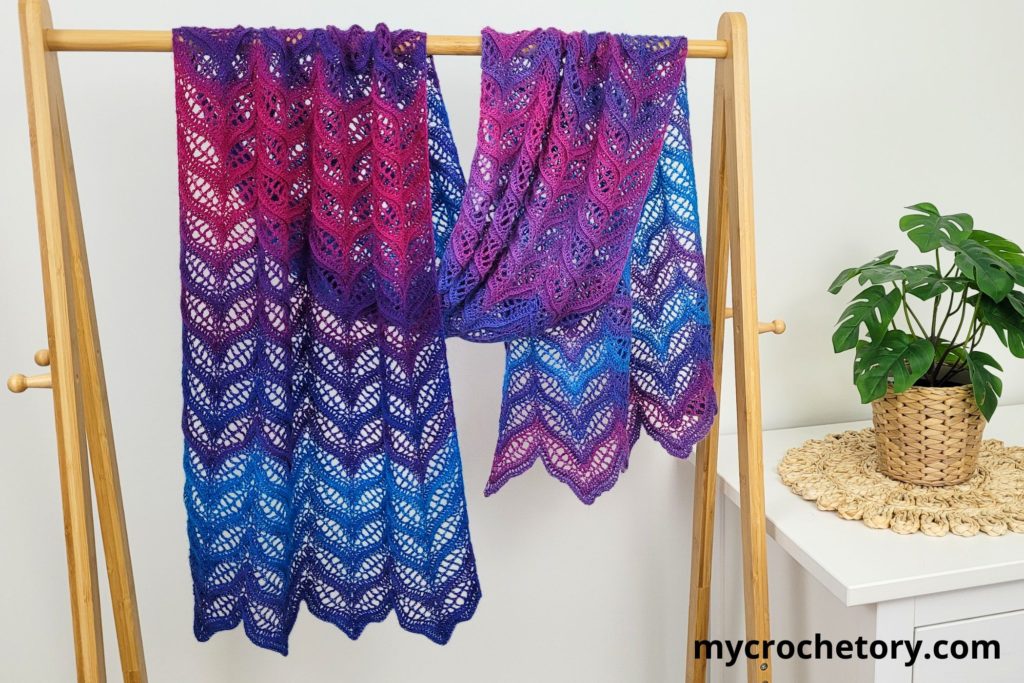
It’s light enough for spring mornings. Long enough to loop twice when it gets chilly. Grab your hook, pick your yarn, and scroll down for the free pattern plus a video tutorial.
Want the ad-free, printable PDF with a full stitch chart? Grab it on Etsy or on Ravelry.
Why You’ll Love This Scarf
Lace scares people off. I get it. All those chart symbols look like a secret code.
But this one’s different. Four rows, then you repeat. Your hands learn it fast, and soon you’re not even looking at the pattern anymore.
Here’s the fun part: use self-striping yarn and the stripes turn into these wavy chevron shapes. It looks fancy. It’s not. Solid yarn works too, if you’re not a stripes person.
Easy enough for your first lace project. Pretty enough that nobody has to know that.
Yarn, Fit & Customization
Want it wider? Add more starting chains, in multiples of 40 plus 5. Want it longer? Add more rows. Done. That’s the whole system.
Lace weight yarn is the go-to here, but fingering weight works in a pinch. Just know your finished size and yardage will move around a bit.
One thing though, don’t skip blocking. This scarf looks fine unblocked. It looks amazing blocked. Pick a yarn that blocks and drapes well, and future you will thank you.
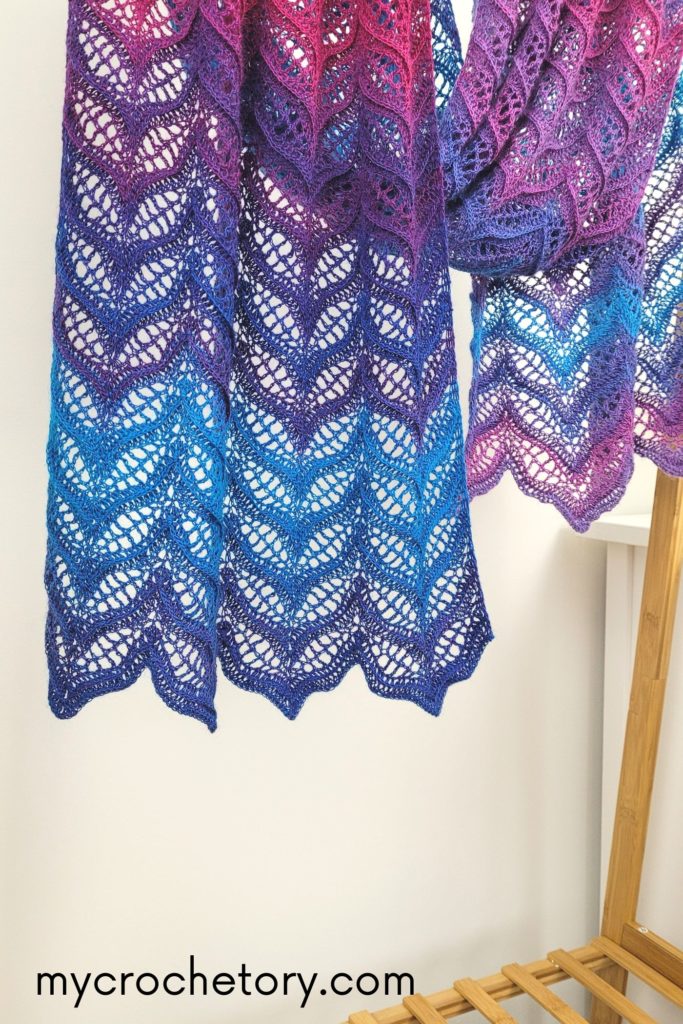
More Lightweight Scarf Patterns You’ll Love
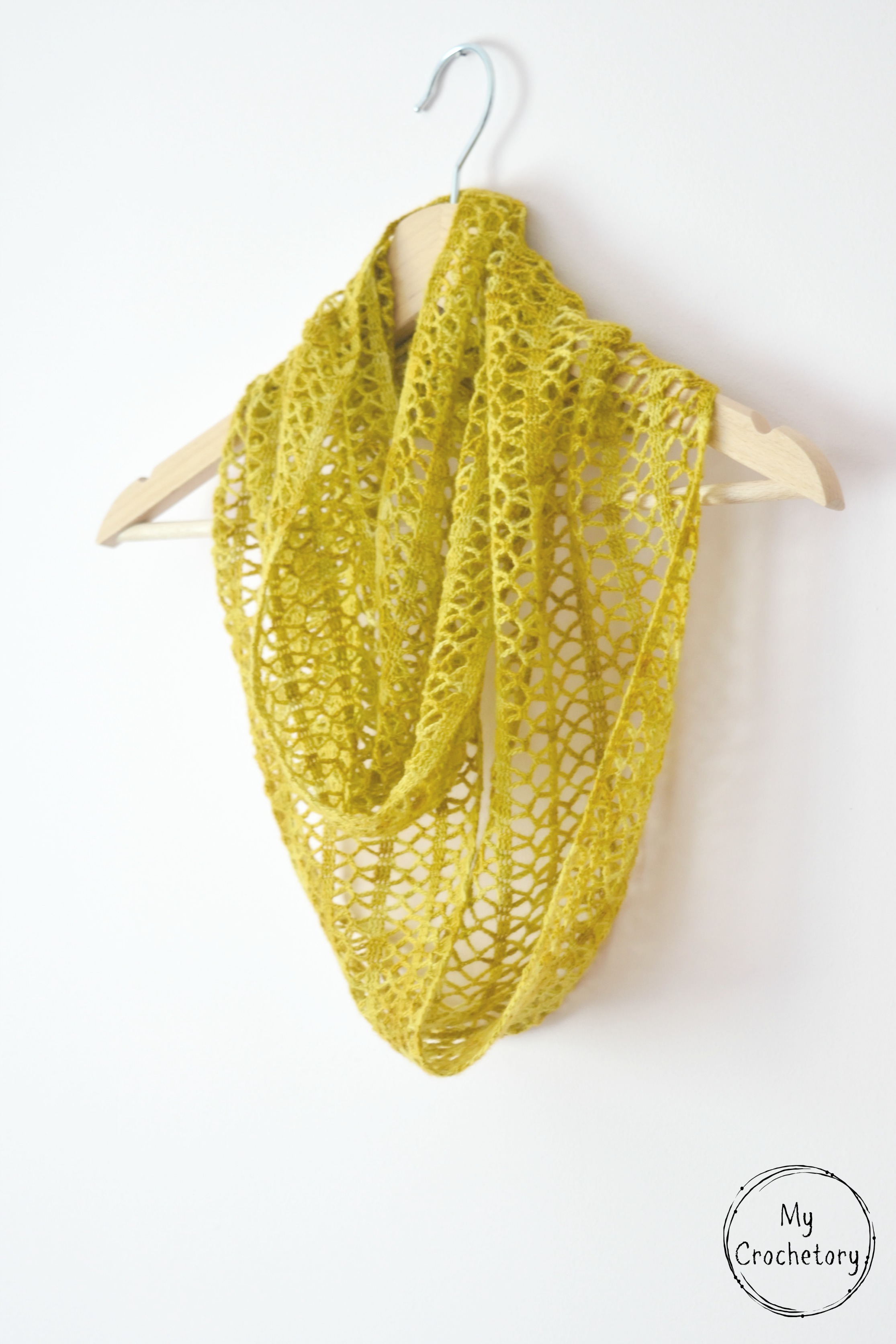
- Sunny Lace Cowl isn’t a scarf exactly, it’s a cowl, but it’s basically the lazy version of a scarf. No ends to weave in a mile long, no worrying about it slipping off. Just one skein of yarn and a quick, easy lace project that’s perfect if you’re new to lace altogether.
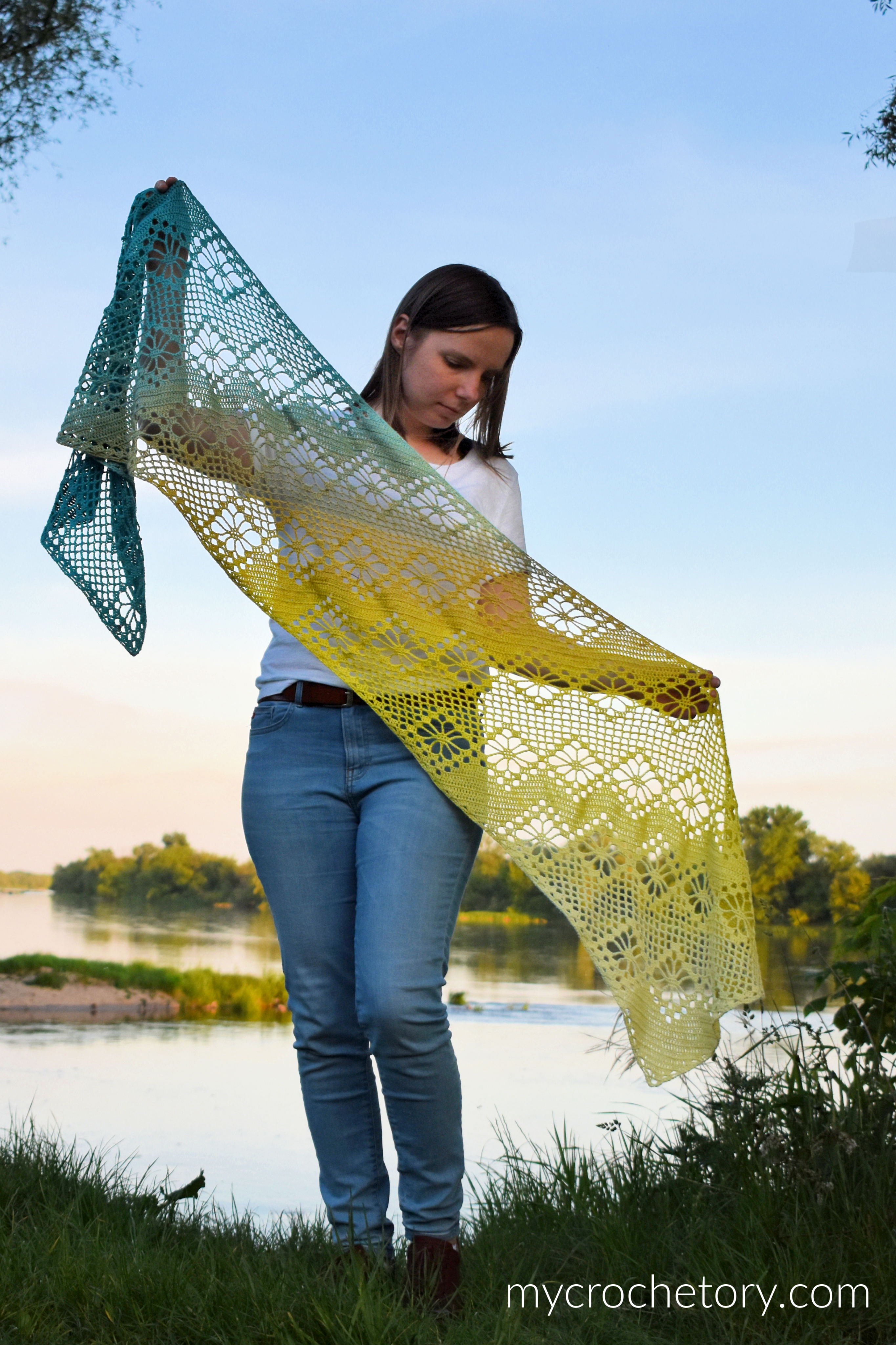
- Zarina Diagonal Scarf goes at everything sideways, literally. It’s worked corner to corner, so if you’ve got a cake of gradient yarn sitting in your stash, this is where it finally gets to shine.
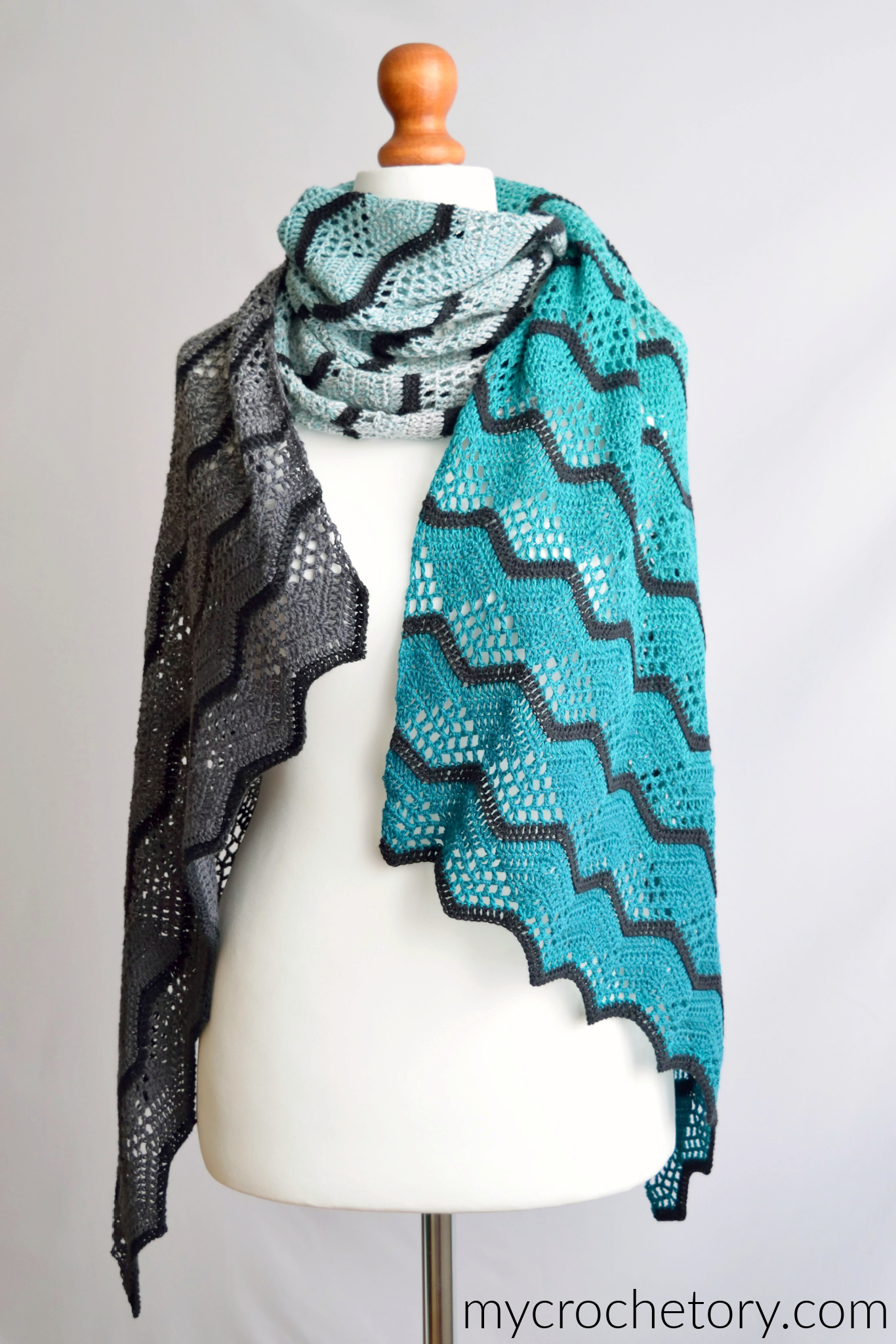
- Havra Wrap brings back that chevron texture, but bigger and looser. It’s worked on the bias, which sounds fancy but just means the fabric grows diagonally as you go. Adjust the length and width however you want, no math degree required.
If you want to share your wips and finished Tonnta Lightweight Crochet Scarf on social media, use hashtag #mycrochetory. I love to see your finished projects!
TONNTA LIGHTWEIGHT SCARF CROCHET FREE PATTERN
- Purchase the ad-free, printable PDF with STITCH CHART here on ETSY or here on Ravelry.
- Add this pattern to your Ravelry Queue HERE.
- Pin it for later.
Copyright 2023 – 2026 MyCrochetory. All right reserved. This pattern is property of Sylwia Kawczyńska @MyCrochetory. Please DO NOT sell the pattern and claim this pattern as your own. The pattern is for personal use only and may not be translated or reproduced in another language. Please respect my rights, DO NOT share or publish this pattern anywhere without my permission.
The lightweight crochet scarf you make following this pattern is yours you are free to sell it, as long as you credit MyCrochetory as original designer. For more information, please, read Terms Page.
Materials & Tools:
- Yarn: Lace weight yarn, approx. 1470m. Suggested: Lace Ball 100 by Schoppel-Wolle, colorway Early Flowering, 100% merino wool. If you’re not familiar with merino, it’s warm and cozy without the itch of regular sheep wool.
- Hook size: 2.5mm. Adjust as needed for gauge.
- Tapestry needle (to weave and hide yarn ends).
- Scissors.
Level:
Intermediate.
Gauge After Blocking:
For a swatch of 85 chains and 24 rows: length 22.5cm/8.9″, width 20cm/7.9″. Gauge isn’t critical for this project, but changes will affect your yardage and finished size.
Size After Blocking:
One size, adjustable: 176cm x 39cm (69.3″ x 15.4″).
Notes:
- Pattern uses US terminology.
- The scarf is worked back and forth, in rows.
- Pattern is a multiple of 40 plus 5 stitches. Add chains to widen, remove chains to narrow.
- Make it as long as you like by adding or removing pattern repeats.
- Different yarn weights will change your finished measurements.
STITCHES & ABBREVIATIONS (US TERMS):
st – stitch
FPdc – front post double crochet
yo – yarn over
sk – skip
beg – beginning
prev – previous
rep – repeat
sp – space
Fsc – foundation single crochet
Instructions in square brackets […] are worked as many times as indicated.
dc3tog (double crochet 3 together) – [yo, insert hook in indicated st, yo, draw up a loop, yo, pull through 2 loops] three times, yo, pull through all 4 loops on hook.
dc5tog (double crochet 5 together) – [yo, insert hook in indicated st, yo, draw up a loop, yo, pull through 2 loops] five times, yo, pull through all 6 loops on hook.
FPdc3tog (front post double crochet 3 together) – [yo, insert hook from the front to the back and back to the front, around indicated st, yo, draw up a loop, yo, pull through 2 loops] three times, yo, pull through all 4 loops on hook.
FPdc5tog (front post double crochet 5 together) – [yo, insert hook from the front to the back and back to the front, around indicated st, yo, draw up a loop, yo, pull through 2 loops] five times, yo, pull through all 6 loops on hook.
TONNTA LIGHTWEIGHT CROCHET SCARF VIDEO TUTORIAL
Would you like a little help along the way? Use this video tutorial and make your Tonnta Lightweight Crochet Scarf successfully.
TIP: To view these video tutorials properly, please disable any ad-blocker you have running.
PATTERN
Read all Notes before you start.
Chain 166 or any other multiple of 40 plus 6 chains.
You can also start with Fsc 165 (or any other multiple of 40 plus 5) and skip to Row 2.
Row 1: sc in 2nd ch from hook, sc in each ch across to end. Turn.
Row 2: ch3 (counts as dc), dc in next st, dc3tog, dc in next 17sts, (2dc, ch1, 2dc) in next st, dc in next 17sts, [dc5tog, dc in next 17sts, (2dc, ch1, 2dc) in next st, dc in next 17sts] rep […] across until 5sts remain, dc3tog, dc in next 2sts. Turn.
Row 3: ch3 (counts as dc), FPdc in next st, FPdc3tog, FPdc in next 17sts, (2dc, ch1, 2dc) in next ch-1sp, FPdc in next 17sts, [FPdc5tog, FPdc in next 17sts, (2dc, ch1, 2dc) in next ch-1sp, FPdc in next 17sts] rep […] across until 5sts remain, FPdc3tog, FPdc in next st, dc in 3rd ch of ch3 at beg of prev row. Turn.
Row 4: ch1 (doesn’t count as st), sc in first st, sc in next 2sts, ch1, sk next 3sts, sc in next st, ch1, sk next st, sc in next st, ch1, sk next st, hdc in next st, ch1, sk next st, dc in next st, ch1, sk next st, tr in next st, ch1, sk next st, tr in next st, ch1, sk next st, dc in next st, ch1, sk next st, hdc in next st, ch1, sk next st, (sc, ch1, sc, ch1, sc) in next ch-1sp, ch1, sk next st, hdc in next st, ch1, sk next st, dc in next st, ch1, sk next st, tr in next st, ch1, sk next st, tr in next st, ch1, sk next st, dc in next st, ch1, sk next st, hdc in next st, ch1, sk next st, sc in next st, ch1, sk next st, sc in next st, ch1, sk next 3sts, [sc in next st, ch1, sk next 3sts, sc in next st, ch1, sk next st, sc in next st, ch1, sk next st, hdc in next st, ch1, sk next st, dc in next st, ch1, sk next st, tr in next st, ch1, sk next st, tr in next st, ch1, sk next st, dc in next st, ch1, sk next st, hdc in next st, ch1, sk next st, (sc, ch1, sc, ch1, sc) in next ch-1sp, ch1, sk next st, hdc in next st, ch1, sk next st, dc in next st, ch1, sk next st, tr in next st, ch1, sk next st, tr in next st, ch1, sk next st, dc in next st, ch1, sk next st, hdc in next st, ch1, sk next st, sc in next st, ch1, sk next st, sc in next st, ch1, sk 3sts] rep […] across until 3sts remain, sc in next 3sts. Turn.
Row 5: ch1 (doesn’t count as st), sc in first st, sc in next 2sts, ch1, sk next ch-1sp, sk next sc, sk next ch-1sp, sc in next sc, ch1, sk next ch-1sp, hdc in next hdc, ch1, sk next ch-1sp, dc in next dc, ch1, sk next ch-1sp, tr in next tr, ch1, sk next ch-1sp, tr in next tr, ch1, sk next ch-1sp, dc in next dc, ch1, sk next ch-1sp, hdc in next hdc, ch1, sk next ch-1sp, sc in next sc, ch1, sk next ch-1sp, (sc, ch1, sc, ch1, sc) in next sc, ch1, sk next ch-1sp, sc in next sc, ch1, sk next ch-1sp, hdc in next hdc, ch1, sk next ch-1sp, dc in next dc, ch1, sk next ch-1sp, tr in next tr, ch1, sk next ch-1sp, tr in next tr, ch1, sk next ch-1sp, dc in next dc, ch1, sk next ch-1sp, hdc in next hdc, ch1, sk next ch-1sp, sc in next sc, ch1, sk next ch-1sp, sk next sc, sk next ch-1sp, [sc in next sc, ch1, sk next ch-1sp, sk next sc, sk next ch-1sp, sc in next sc, ch1, sk next ch-1sp, hdc in next hdc, ch1, sk next ch-1sp, dc in next dc, ch1, sk next ch-1sp, tr in next tr, ch1, sk next ch-1sp, tr in next tr, ch1, sk next ch-1sp, dc in next dc, ch1, sk next ch-1sp, hdc in next hdc, ch1, sk next ch-1sp, sc in next sc, ch1, sk next ch-1sp, (sc, ch1, sc, ch1, sc) in next sc, ch1, sk next ch-1sp, sc in next sc, ch1, sk next ch-1sp, hdc in next hdc, ch1, sk next ch-1sp, dc in next dc, ch1, sk next ch-1sp, tr in next tr, ch1, sk next ch-1sp, tr in next tr, ch1, sk next ch-1sp, dc in next dc, ch1, sk next ch-1sp, hdc in next hdc, ch1, sk next ch-1sp, sc in next sc, ch1, sk next ch-1sp, sk next sc, sk next ch-1sp] rep […] across until 3sts remain, sc in next 3sts. Turn.
Row 6: ch3 (counts as dc), dc in next st, dc3tog (working 1st leg in next sc, 2nd leg in next ch-1sp and 3rd leg in next sc), dc in next 17sts*, (2dc, ch1, 2dc) in next sc, dc in next 17sts*, [dc5tog (1st leg in next sc, 2nd leg in next ch-1sp, 3rd leg in next sc, 4th leg in next ch-1sp and 5th leg in next sc), dc in next 17sts*, (2dc, ch1, 2dc) in next sc, dc in next 17sts*] rep […] across until 5sts remain, dc3tog (1st leg in next sc, 2nd leg in next ch-1sp, 3rd leg in next sc), dc in next 2sts. Turn.
*ch-1sp counts as a stitch
Next, repeat Rows 3 – 6 until row 186 or until desired length.
Next row: Rep Row 3.
Last row: ch1 (doesn’t count as st), sc in first st, sc in each st and ch-1sp across until last stitch remain, sc in 3rd ch of ch3 at beg of prev row.
Fasten off yarn, weave in all ends and block to shape.
If you have any suggestions or have detected any mistakes, please feel free to email me at mycrochetory@gmail.com
FAQ
Can I use Scheepjes Whirl for this scarf? Scheepjes Whirl is a fingering weight cake, and this pattern is written for lace weight yarn. You can still use it, but your finished scarf will come out bigger and use less yardage than the pattern states. Worth a swatch first so you know what you’re getting into. If you want a pattern actually written for Whirl, check out the Zarina Diagonal Scarf or Havra Wrap.
What yarn colorway is shown in the photos? This pattern uses Lace Ball 100 by Schoppel-Wolle in the Early Flowering colorway. If you can’t find that exact one, look for something in a similar tonal range from their current lineup.
Can I make this scarf wider or longer? Yes, both. Add starting chains in multiples of 40 plus 5 for width, add rows for length. It’s built to be adjusted either way.
Do I need to block this scarf? You really do. The lace pattern doesn’t fully open up until it’s blocked, so don’t skip this step no matter how tempting it is to just wear it off the hook.
A very beautiful scarf – Thank you for sharing!
that is gorgeous…
Beautiful shawl! Quick question – Do you think a Scheepjes Whirl would be ok for this letter not would it be too small?
I absolutely love the color of this scarf! Do you know the name of the color?
This is so beautiful and so much fun to make! Thank you for sharing this wonderful free pattern!
Absolutely beautiful shawl. Thanks for your work and sharing.