Updated: 6 November 2026 by Sylwia (MyCrochetory)
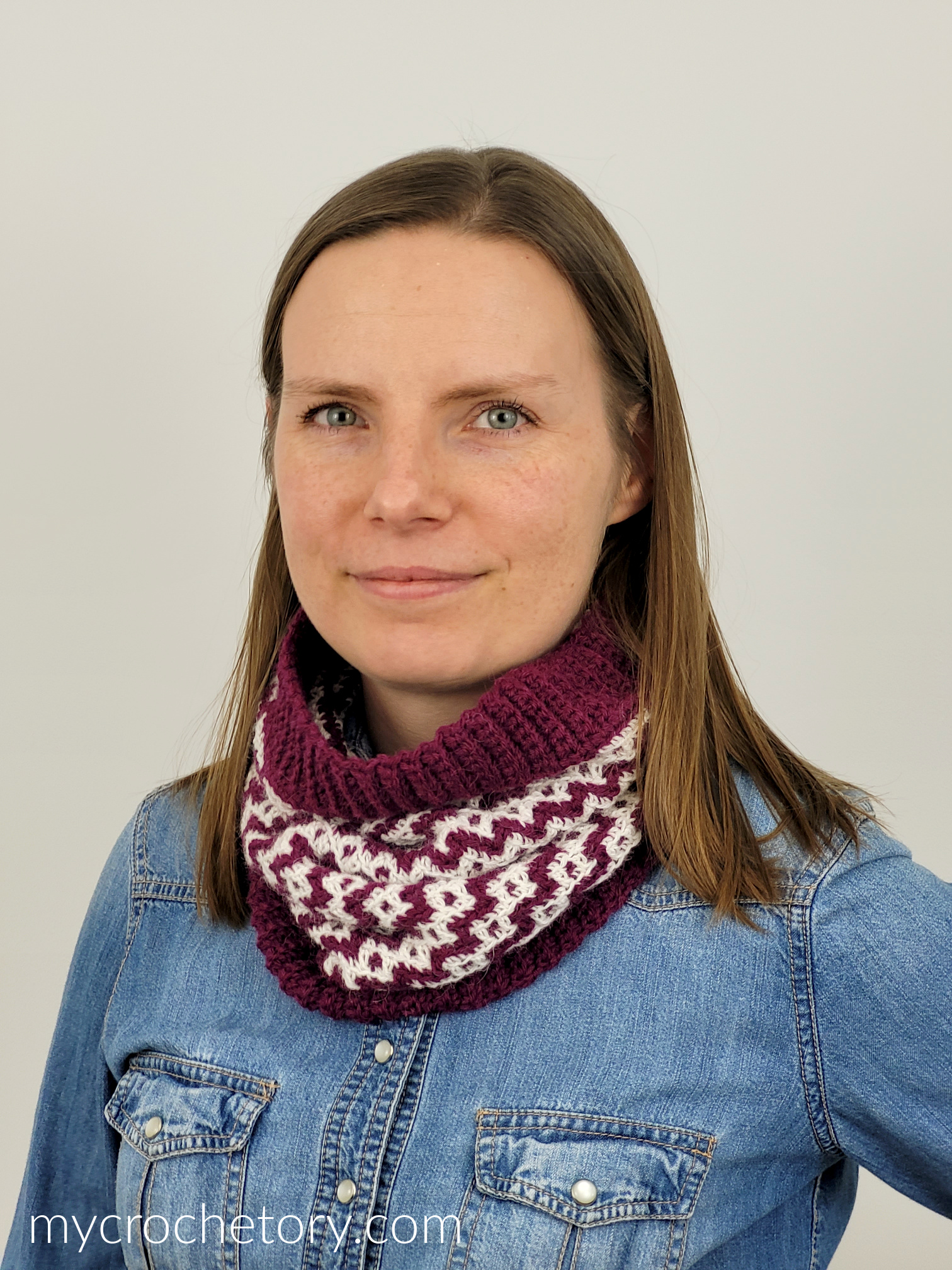
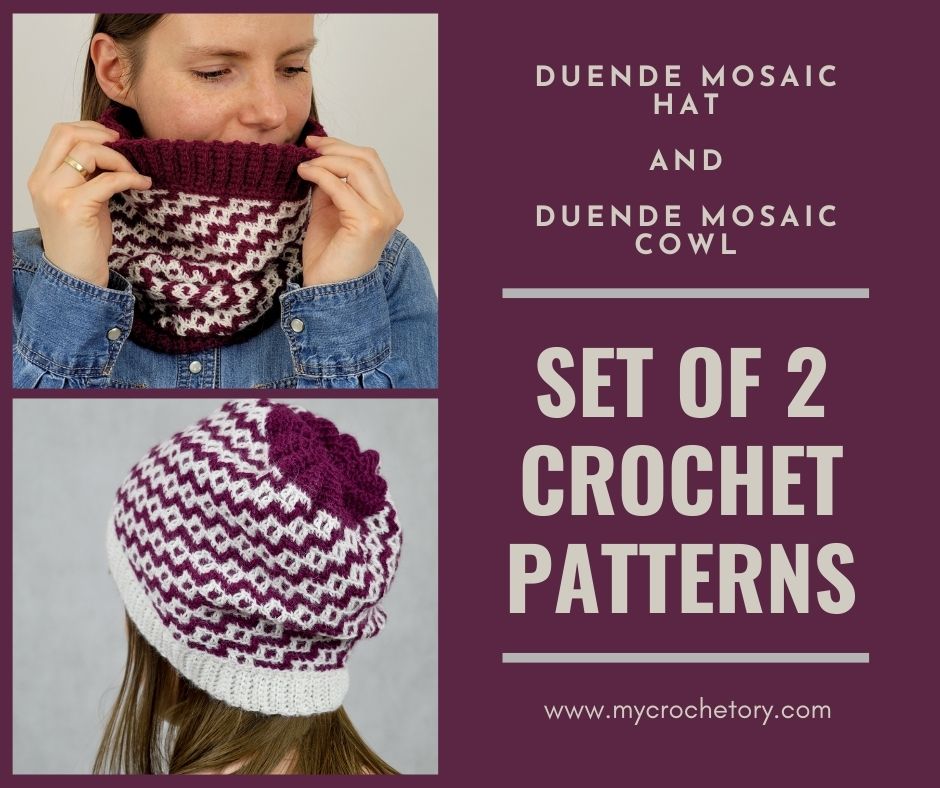
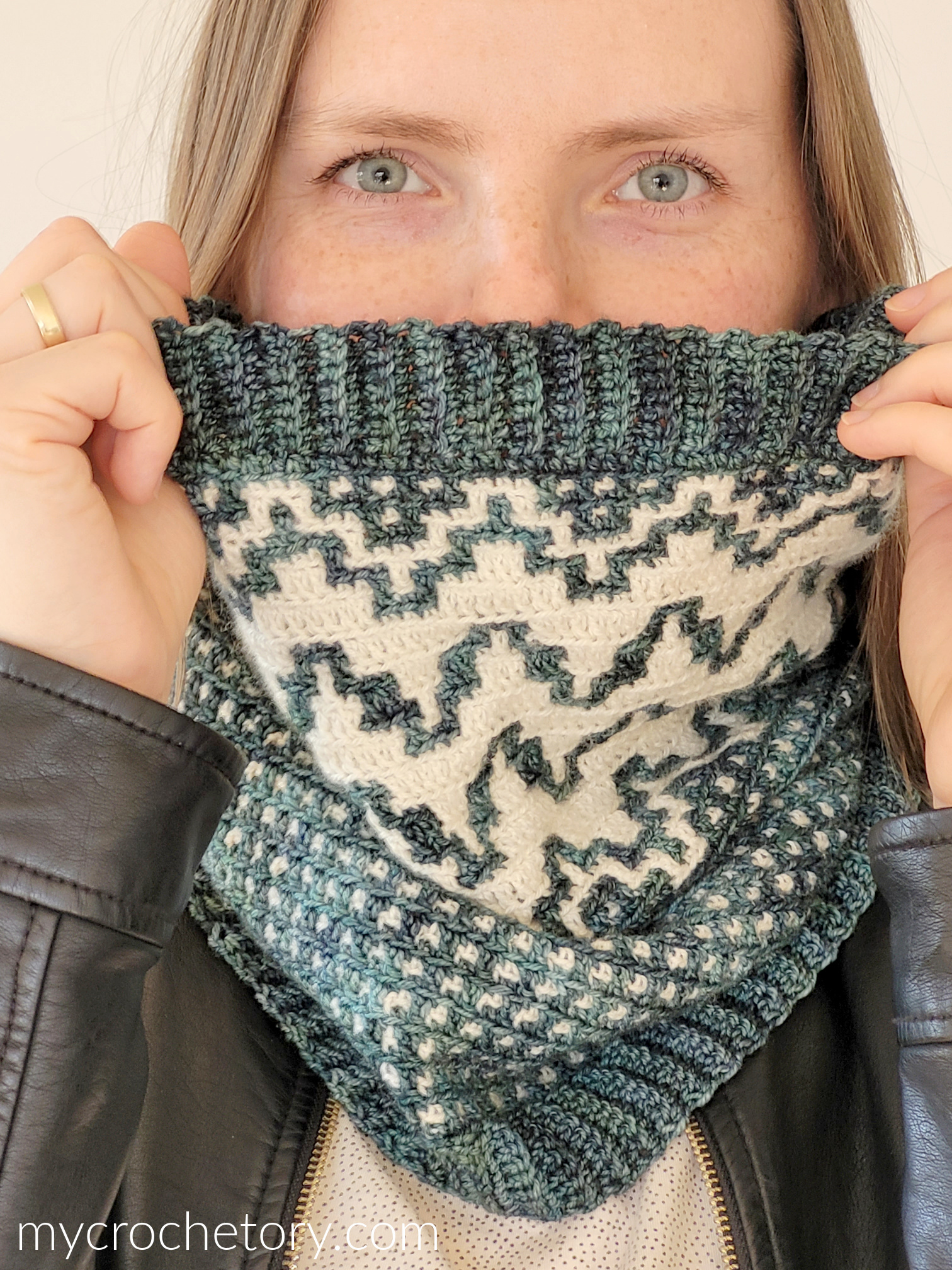
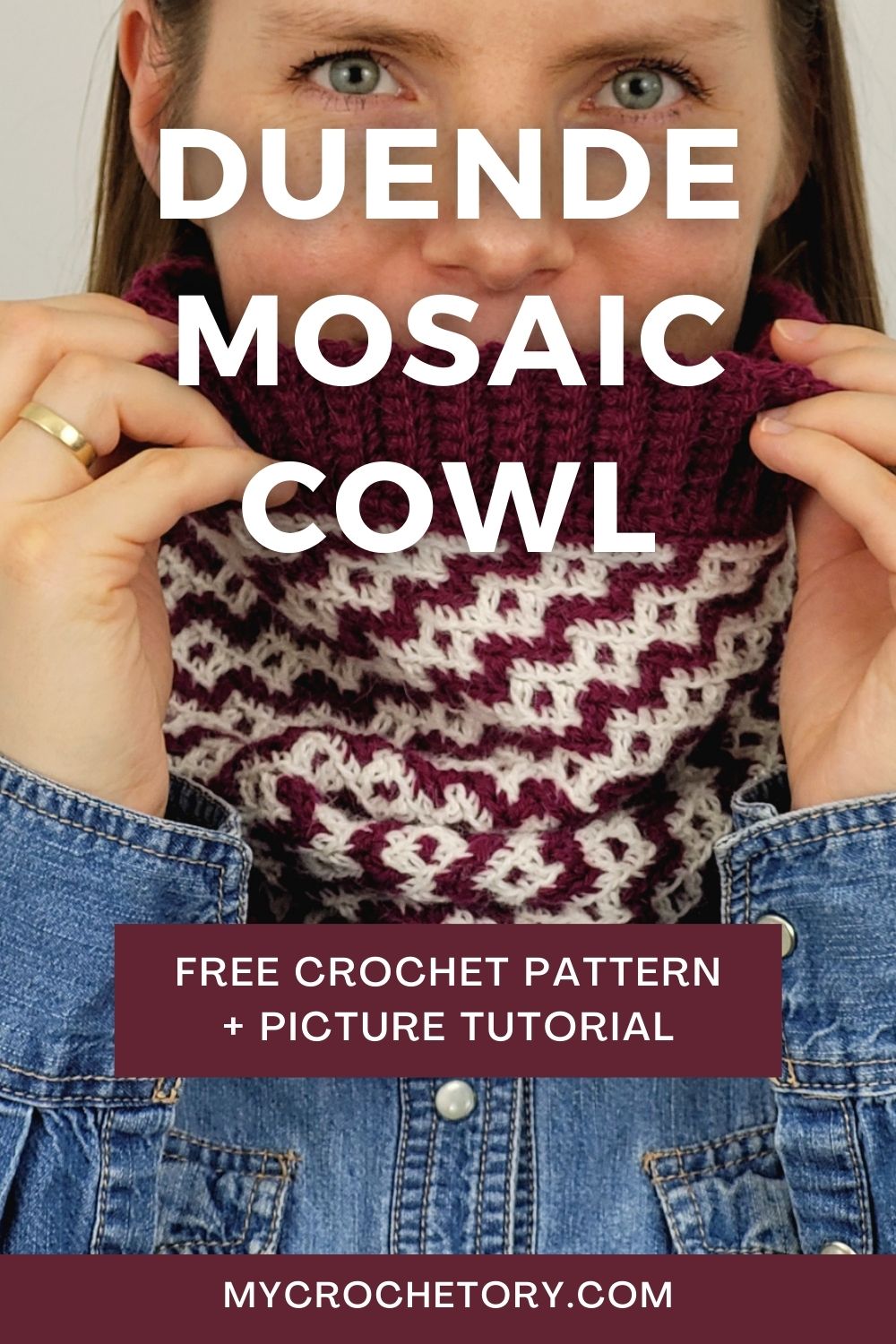
Some of my patterns start with a sketch. This mosaic crochet cowl started with a hat. My Duende Hat was inspired by a knitted hat by Andrea Mowry, and as soon as it was done, I wanted a cowl to go with it.
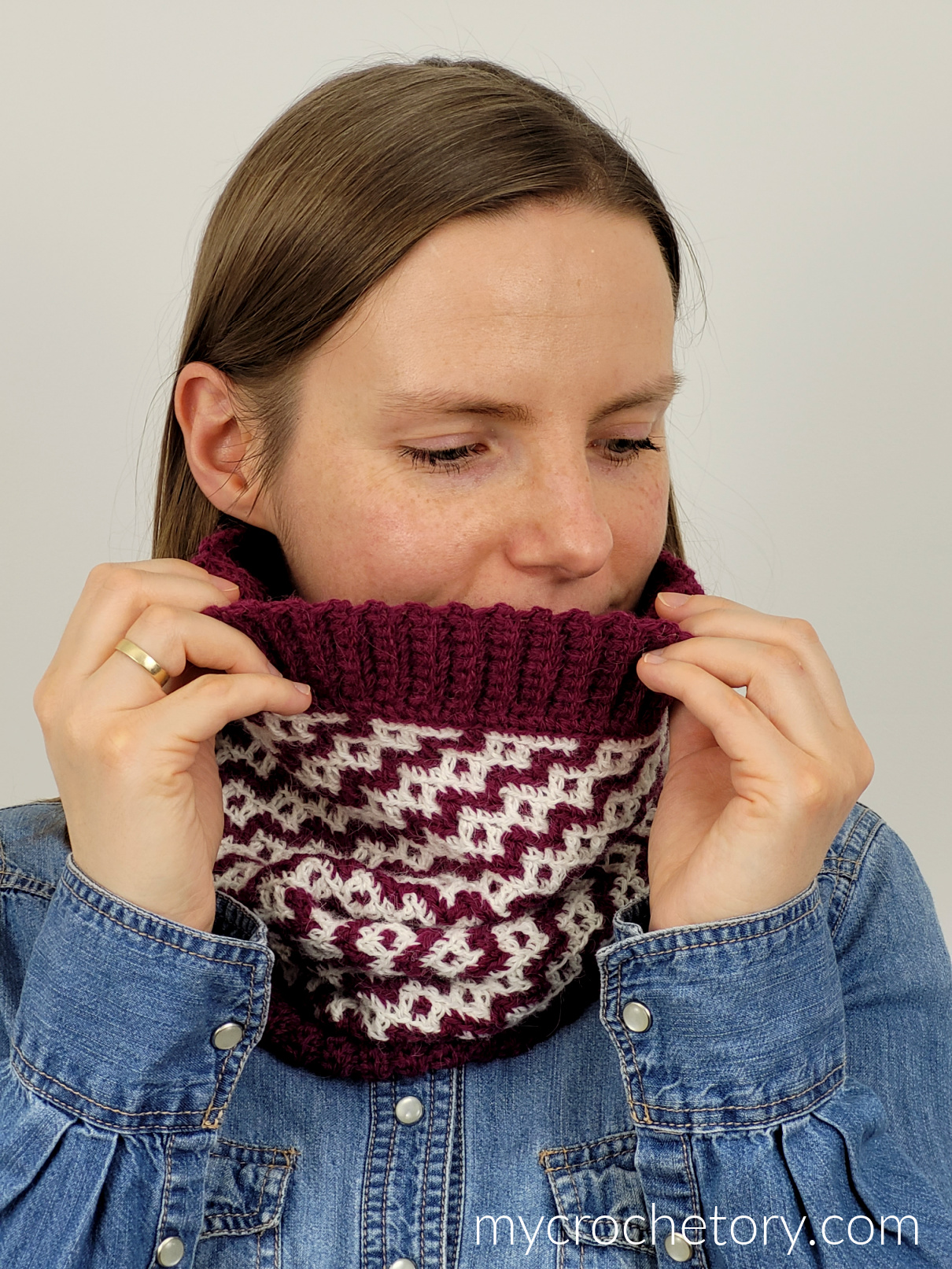
So the cowl got the same plum, the same off white and the same sharp zigzags. Wear them together and you’re one matching set from the top of your head down to your chin.
Now, about those zigzags. They look like hard colorwork, but you only ever crochet with one color per round, and the skipped stitches do the rest.
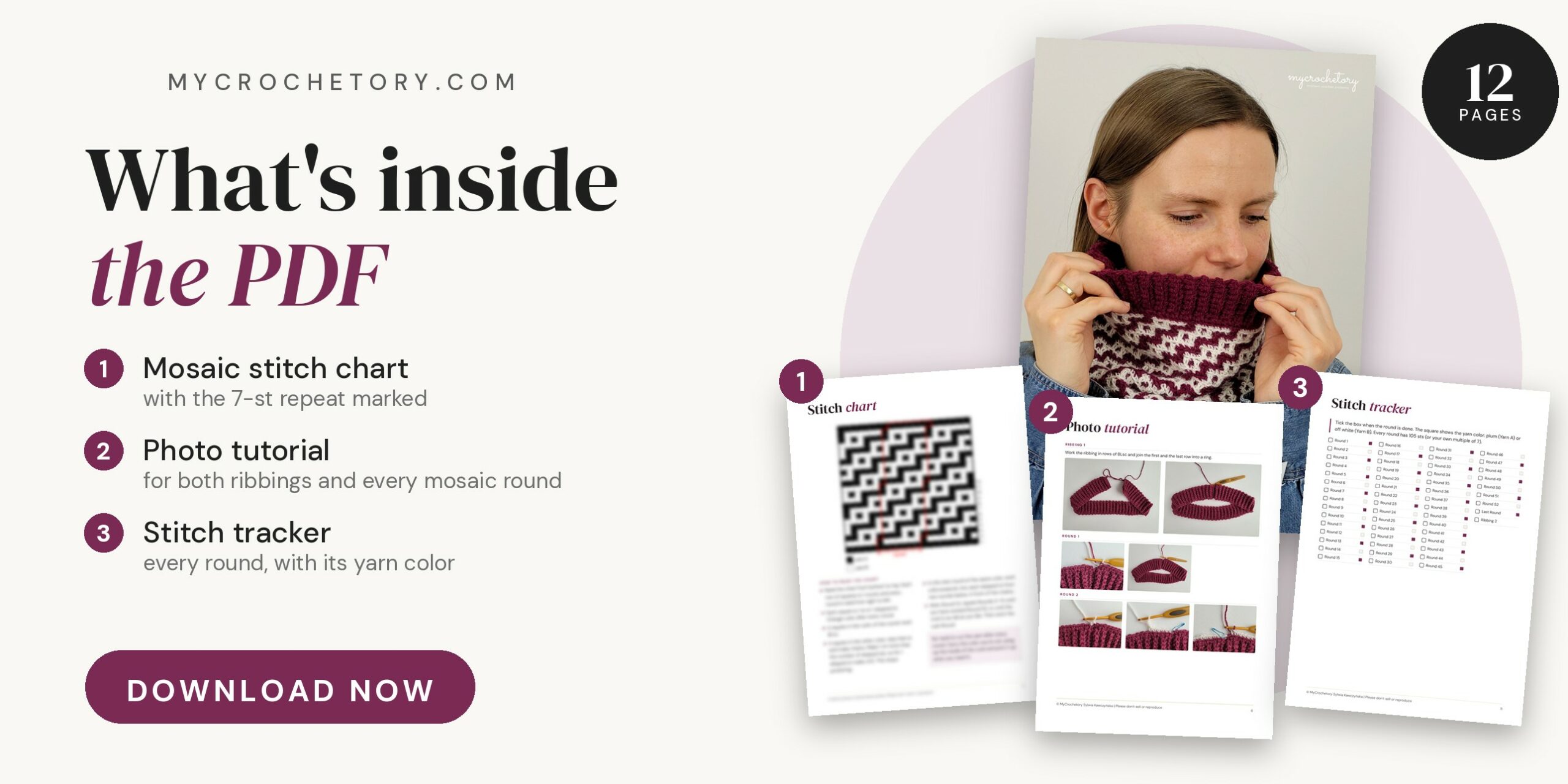
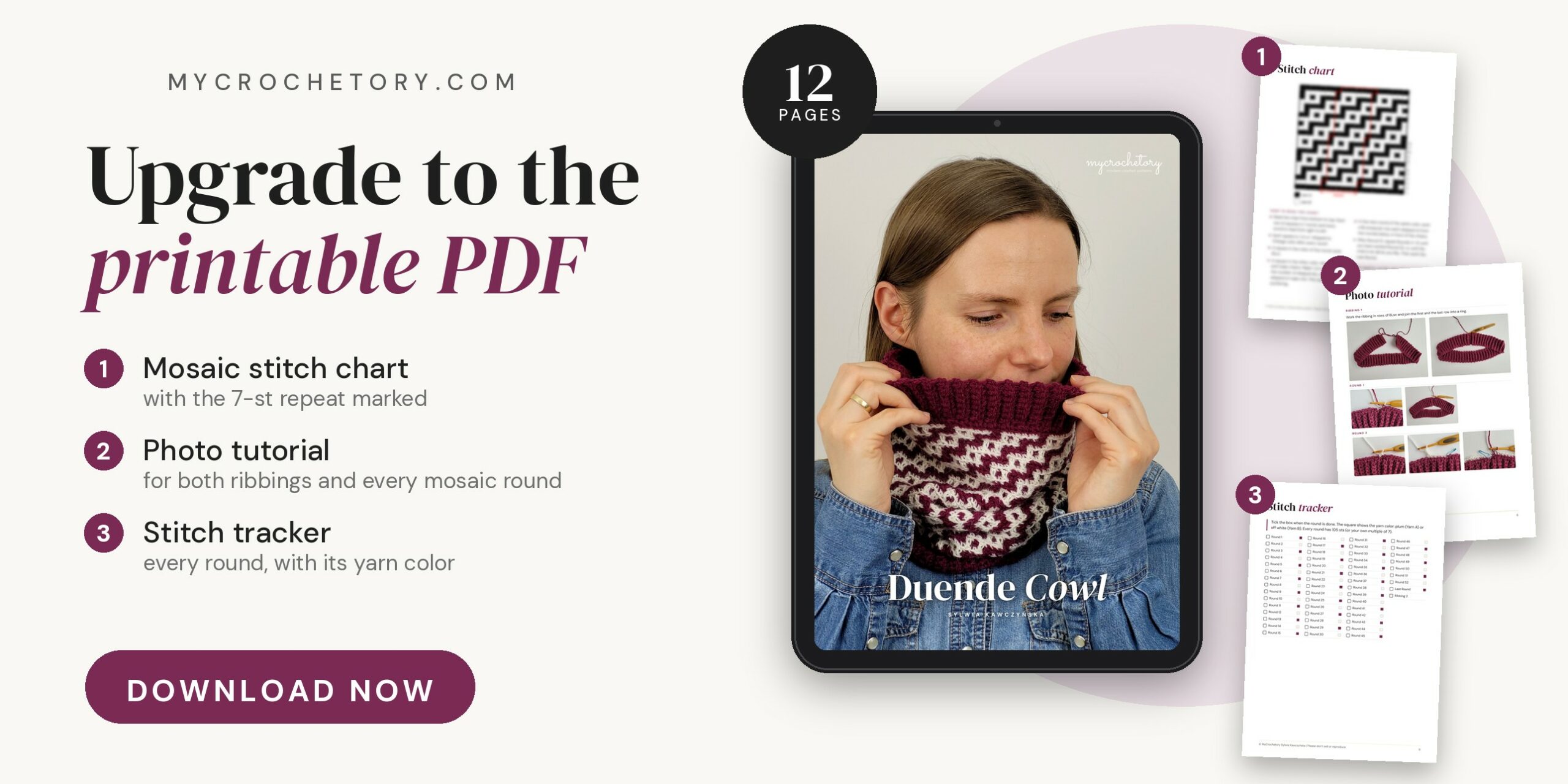
Jump to the free Duende Cowl pattern. Rather have it in one printable file? The ad-free PDF with the chart is on Etsy and Ravelry.
Join my Facebook Group and Ravelry Group to ask questions and share your work in progress. You can also follow me on Instagram, Facebook and Pinterest.
How this mosaic crochet cowl works
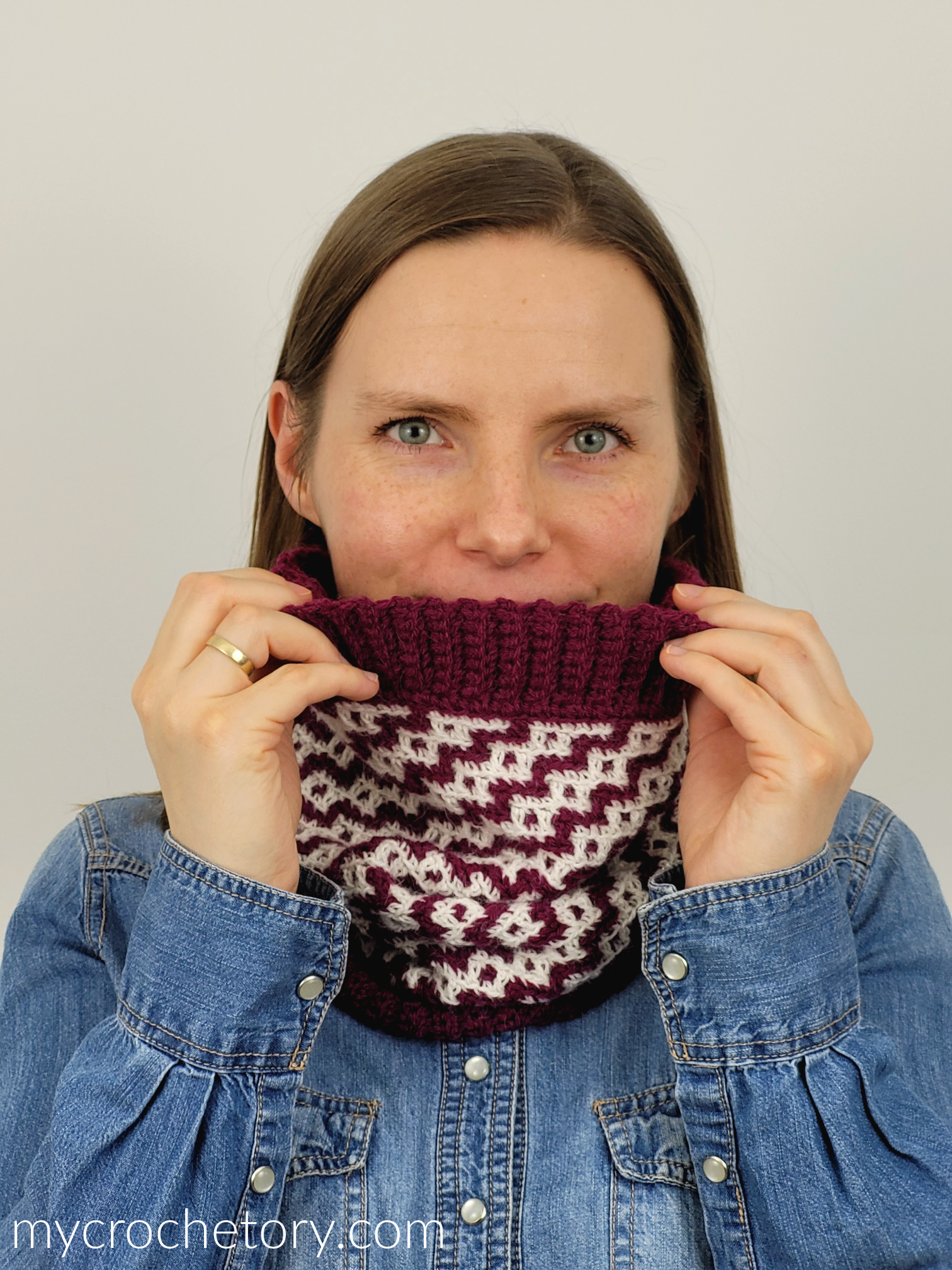
Here’s the secret of mosaic crochet. You never juggle two yarns at once, so in this mosaic crochet cowl you work one round in plum, the next one in off white, and just keep switching.
When the pattern wants the other color, you skip a stitch and chain over the gap. Two rounds later you come back and fill it with a BLmosaicdc, a back loop double crochet that sits in front of that chain.
That one long stitch drags the color from two rounds below up into your new round. Do it again and again, and the zigzags show up round by round.
A mosaic crochet cowl in one spiral, with no joins
You know that little line where each round of a cowl gets joined? The one you always turn to the back? This mosaic crochet cowl doesn’t have it, because the body is one long spiral.
A stitch marker shows you where each round begins, and you move it up as you go. Don’t worry about where it goes, because the pattern tells you in every single round.
And please don’t cut your yarn at every color change. Carry the color you’re not using up the inside of the cowl, grab it again when its turn comes, and you’ll have just a few ends to weave in, not dozens.
Two ribbings that hold the cowl in shape
A cowl needs firm edges, or it just slides down your neck. Both ribbings here are in back loop single crochet, which looks a lot like knitted rib.
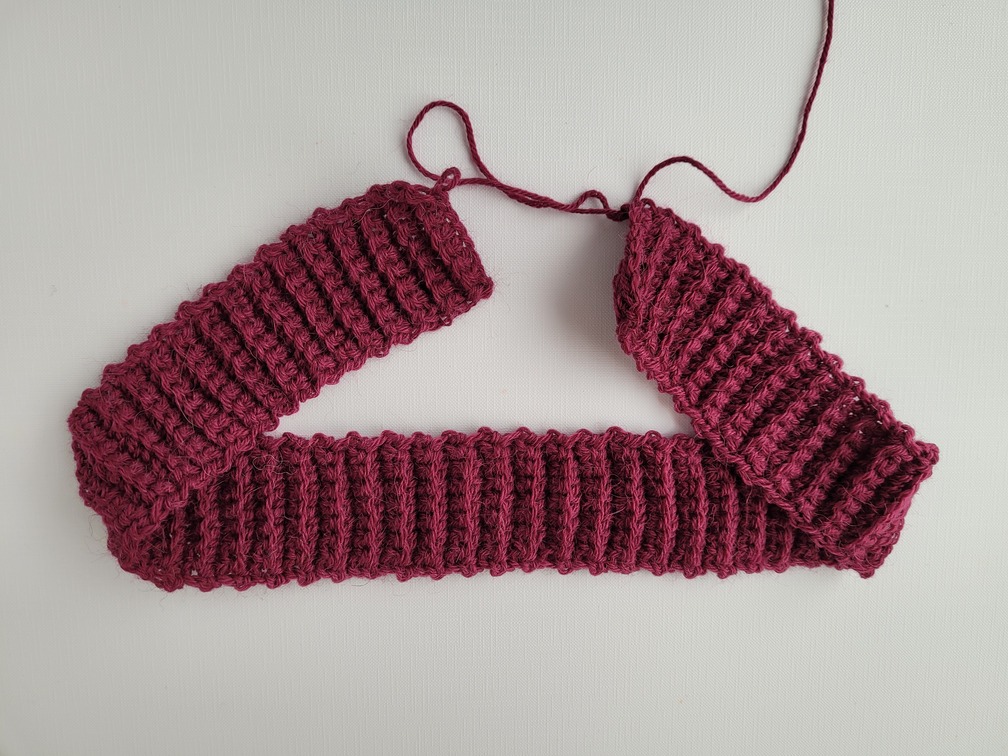
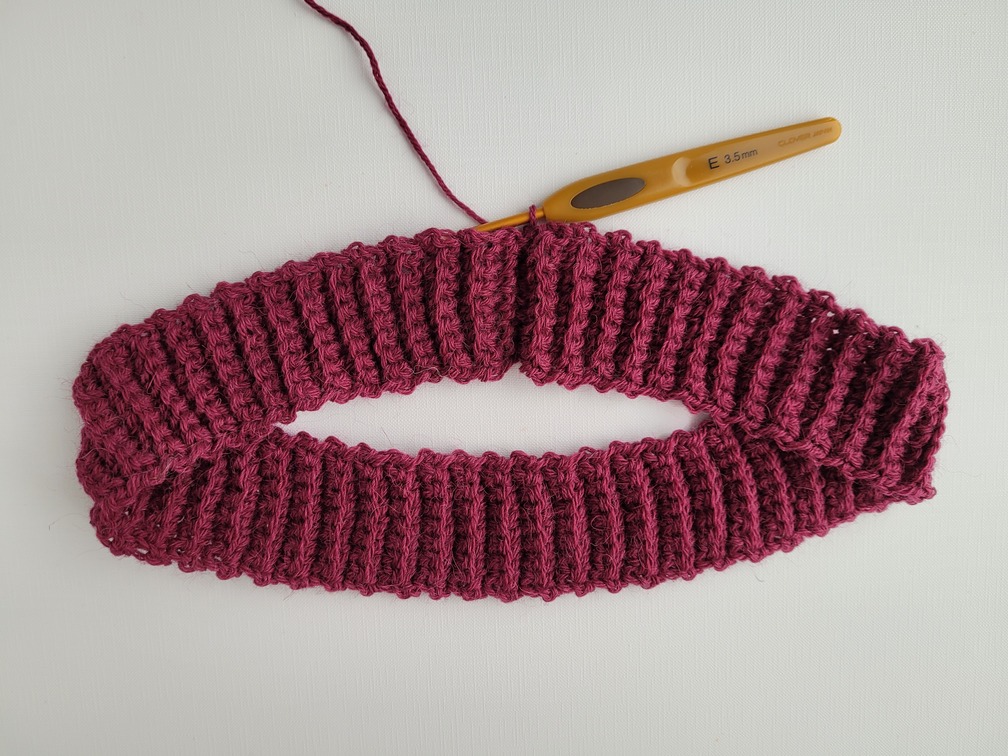
You start with Ribbing 1, worked flat and joined into a ring, and the mosaic grows right out of its edge. Ribbing 2 is worked sideways and attached to the last round as you go, so there’s nothing to sew at the end.
Never made crochet ribbing? My how to crochet ribbing tutorial shows three ways to do it.
Make your mosaic crochet cowl wider or taller
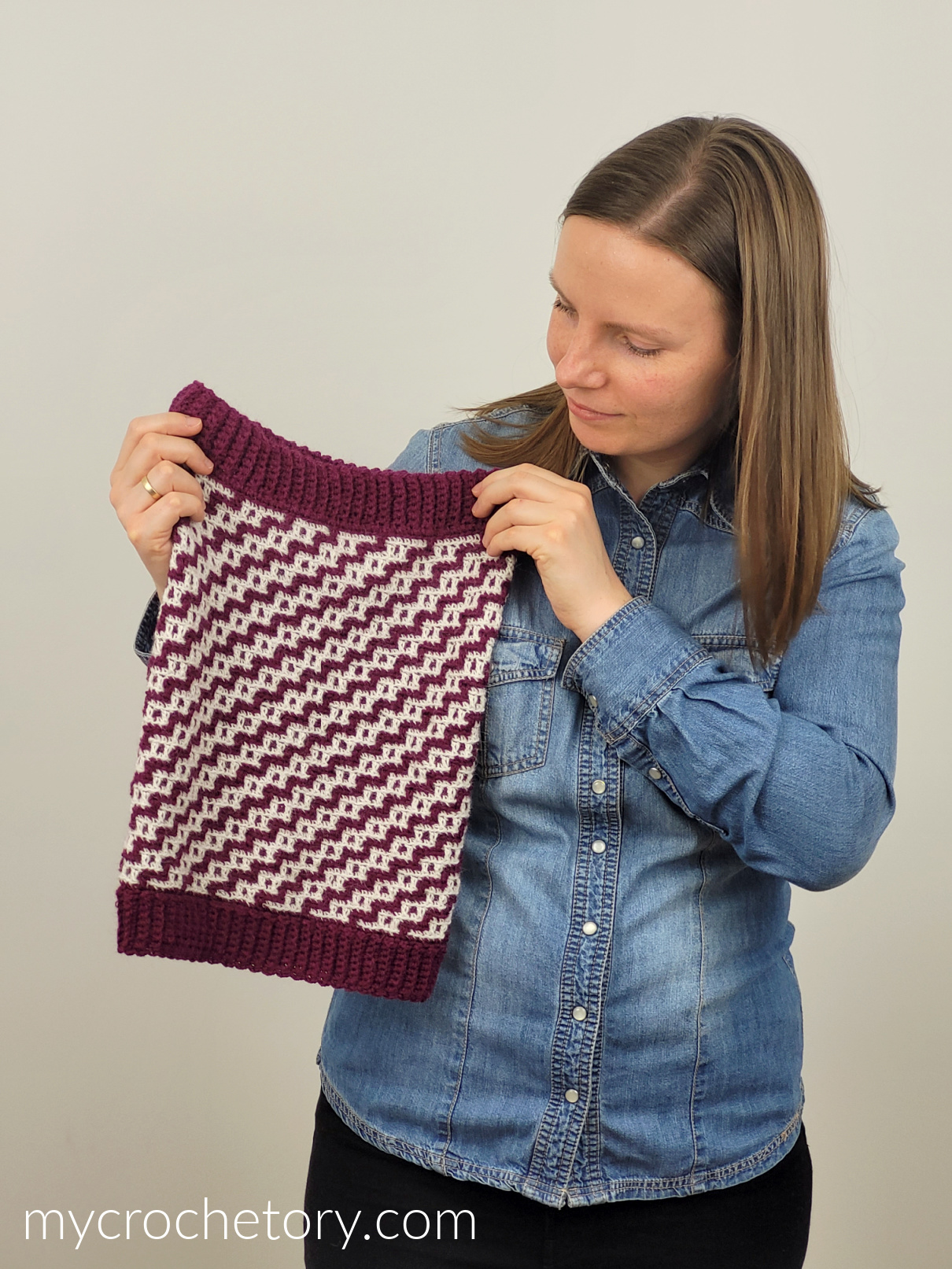
My mosaic crochet cowl is about 11.4 inches wide laid flat and 15.35 inches tall, tall enough to pull up over your chin on a windy day. Want yours wider or narrower? Change the number of rows in Ribbing 1, always in multiples of 7, because the mosaic is a 7-stitch repeat.
For a taller or shorter cowl, work more or fewer repeats of Rounds 3 to 12. The rest of the pattern stays the same.
Yarn for your mosaic crochet cowl
Itchy yarn and a cowl are a terrible match, because the whole thing sits right against your skin. For anything I wear on my neck, I always go for soft yarn.
That’s why I made mine in DROPS Nord, a soft mix of alpaca, polyamide and wool, and I still recommend it. You’ll need about 260 yards of plum and 161 yards of off white.
Picking your own colors? Go for strong contrast, because the zigzags only show when the two colors are really different. And since Nord has wool and alpaca in it, I wet block my cowl, so block your swatch the same way before you measure.
Not starting today? Save this mosaic crochet cowl to your Pinterest board for later.
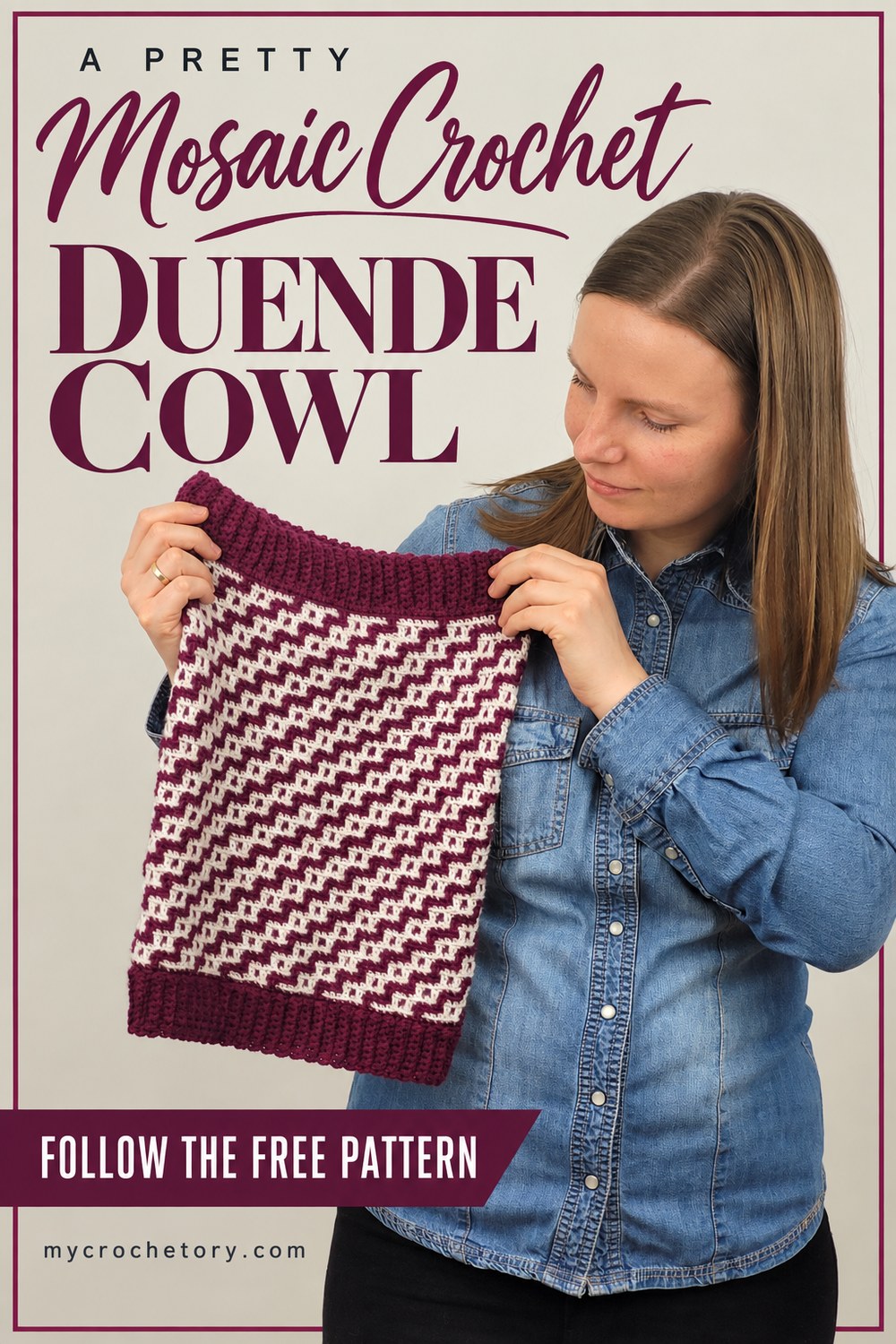
Duende mosaic crochet cowl free pattern
- Get the ad-free, printable PDF here on Etsy or here on Ravelry.
- Add this pattern to your Ravelry queue.
- Pin it for later.
Copyright 2021 – 2026 MyCrochetory. All rights reserved. This pattern is the property of Sylwia Kawczyńska @MyCrochetory. Please DO NOT sell the pattern or claim it as your own. The pattern is for personal use only and may not be translated or reproduced in another language. Please respect my rights and DO NOT share or publish this pattern anywhere without my permission.
The cowl you make following this pattern is yours, and you are free to sell it, as long as you credit MyCrochetory as the original designer. For more information, please read the Terms Page.
Materials & Tools
- Yarn: DROPS Nord (45% alpaca, 30% polyamide, 25% wool, 50 g/170 m/186 yd), in 2 colors.
Yarn A: plum (17), about 238 m (260 yd).
Yarn B: off white (01), about 147 m (161 yd).
- Hook: 3.5 mm (US E/4). Adjust the hook size if necessary to obtain the correct gauge.
- Tapestry needle (to weave in the yarn ends).
- Scissors.
- Stitch marker.
Level
Intermediate – mosaic crochet.
Size
One size, adjustable: approx. 29 cm (11.4″) wide when laid flat and 39 cm (15.35″) high.
Gauge after blocking
18 sts and 18 rows = 10 x 10 cm (4″ x 4″) in the main body pattern.
If necessary, adjust hook size to obtain the correct gauge.
Before you measure, please take the time to block your swatch in the same manner that you will block your cowl.
General notes
- The pattern uses US crochet terminology.
- The cowl, after the Ribbing 1, is worked in one continuous spiral of single crochet and BLmosaicdc stitches.
- Pattern for mosaic body is multiple of 7 stitches. To increase the circumference of the cowl, increase the number of rows in ribbing. To decrease the circumference of the cowl, decrease the number of rows in ribbing.
- To increase the height of the cowl, increase the repeats of Rounds 3 – 12. To decrease the height of the cowl, decrease the repeats of Rounds 3 – 12.
- STITCHES: When in the instructions you have a stitch followed by a number, eg sc14, this means you have to work 1sc stitch into each of the next 14 sts. When in the instructions you have a number followed by a stitch, eg 2sc, this means you have to work 2 sc stitches into the next (same) stitch.
- Instructions in square brackets […] are worked as many times as indicated.
Mosaic pattern notes
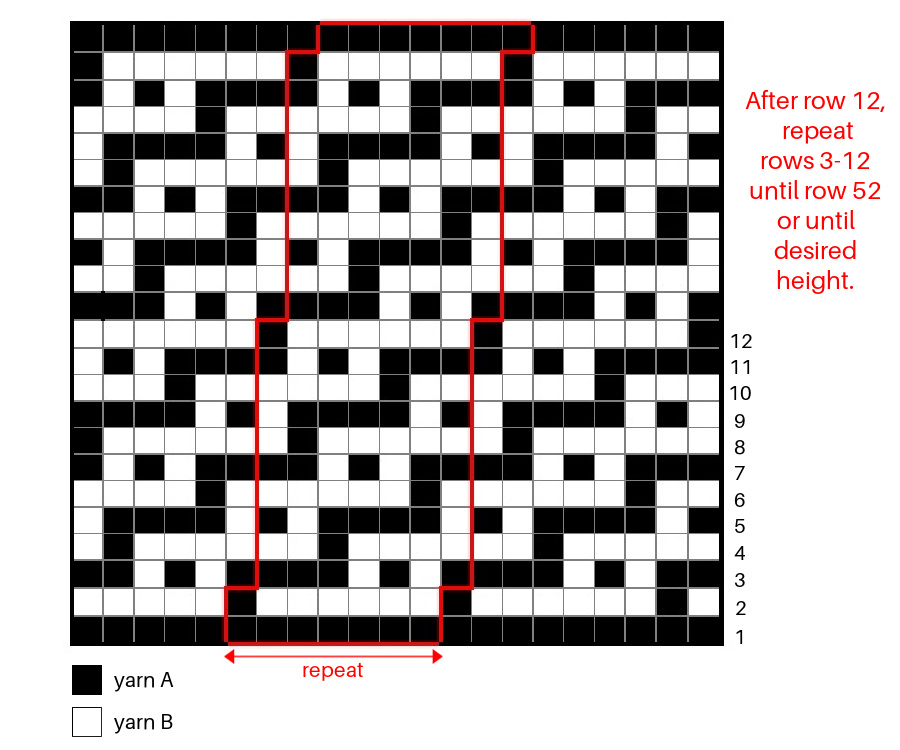
- You can either follow the chart or written
instructions. - Color is changed after every one round.
- You can avoid weaving in all those ends by
not cutting the yarn when you finish a round. Simply carry the other color
along the inside and pick it back up with your hook when you need to use it
again.
How to read the mosaic chart
- Chart is read from bottom to top and each
row of squares represents 1 round. - All rounds are read from right to left.
- Each square of the chart represents 1 stitch
or 1 skipped stitch. - Whenever you see a square of color
dedicated to that round, work single crochet. - Whenever you see a square of different
color in that round, skip that stitch (make chain). To prevent puckering, make the same number of chain as the number
of skipped sts plus ch1. For example, for 1 skipped st – make ch2, for 2
skipped sts – make ch3, for 3 skipped sts – make ch4, etc. - Pay special attention to number of skipped
stitches. - BLmosaicdc will be worked in these skipped
sts from two rounds below. Remember, BLmosaicdc are always worked in front
of chains of previous round.
Stitches & Abbreviations (US terms)
st(s) – stitch(es)
BLsc – back loop only single crochet
BLdc – back loop only double crochet
yo – yarn over
BLmosaicdc (back loop only mosaic double crochet) – work regular BLdc in unworked/skipped st of the same color two rounds below in front of chain space (in front of work). These chains will stay behind BLmosaicdc and will stay unworked.
M – marker
PM – place marker
BOR – beginning of the row/round
sp – space
sk – skip
beg – beginning
prev – previous
Mosaic crochet cowl pattern
Read all Notes before you start.
Ribbing 1
With 3.5 mm hook and Yarn A work ch8.
Row 1: sc in 2nd ch from hook, sc in each ch to end. Turn. (7 sts)
Row 2: ch1 (doesn’t count as a st), BLsc in each st across. Turn. (7 sts)
Repeat Row 2 another 103 times, for a total of 105 rows, or until the ribbing is as long as you like.
Then join your last row with the first row using the slip stitches.
Remember, this pattern is a multiple of 7 stitches, so in your Ribbing 1 section you should have multiple of 7 rows.
Don’t break the yarn.
Main Body
Round 1 (yarn A): ch1 (doesn’t count as a st), sc in first ribbing’s row, place BOR marker, sc in each ribbing’s rows until BOR. Don’t join the round. Change to Yarn B in final st. (105 sts)
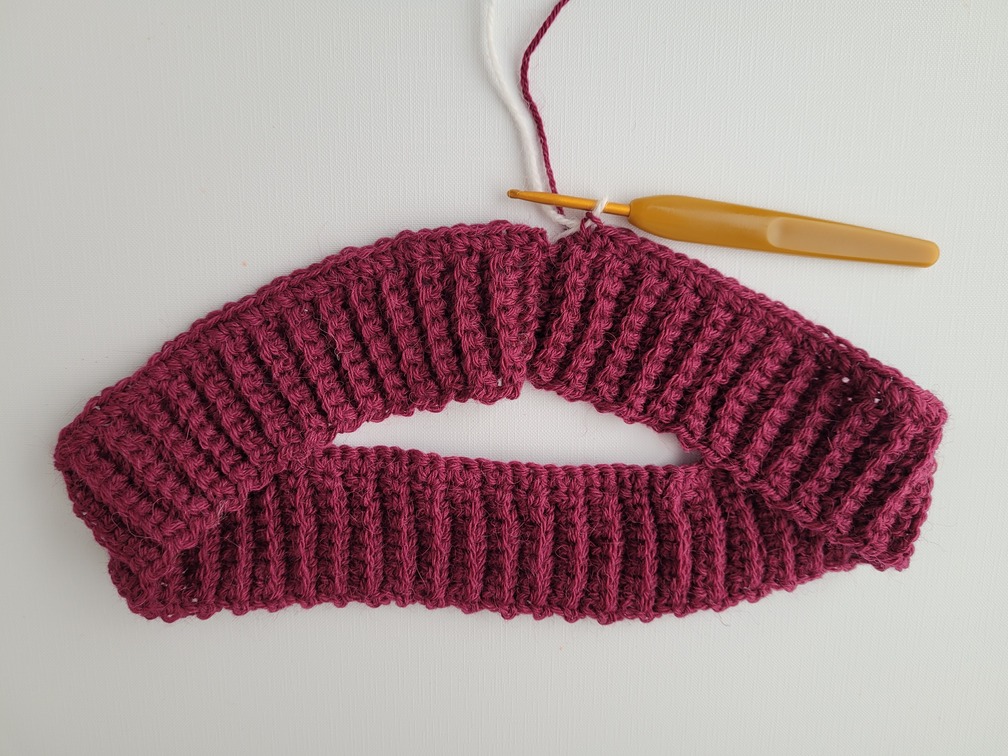
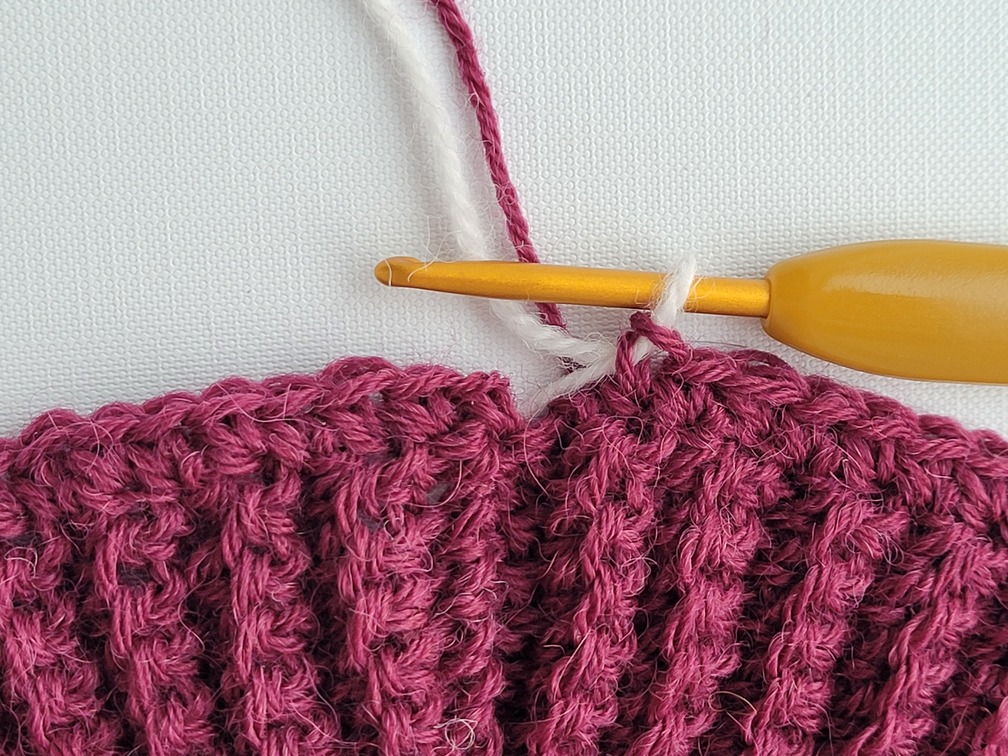
Round 2 (yarn B): BLsc in BOR (mark this st as a new BOR), BLsc5, [ch2, sk 1st, BLsc6] rep around until 1 st remains before BOR. Change to Yarn A in final st.
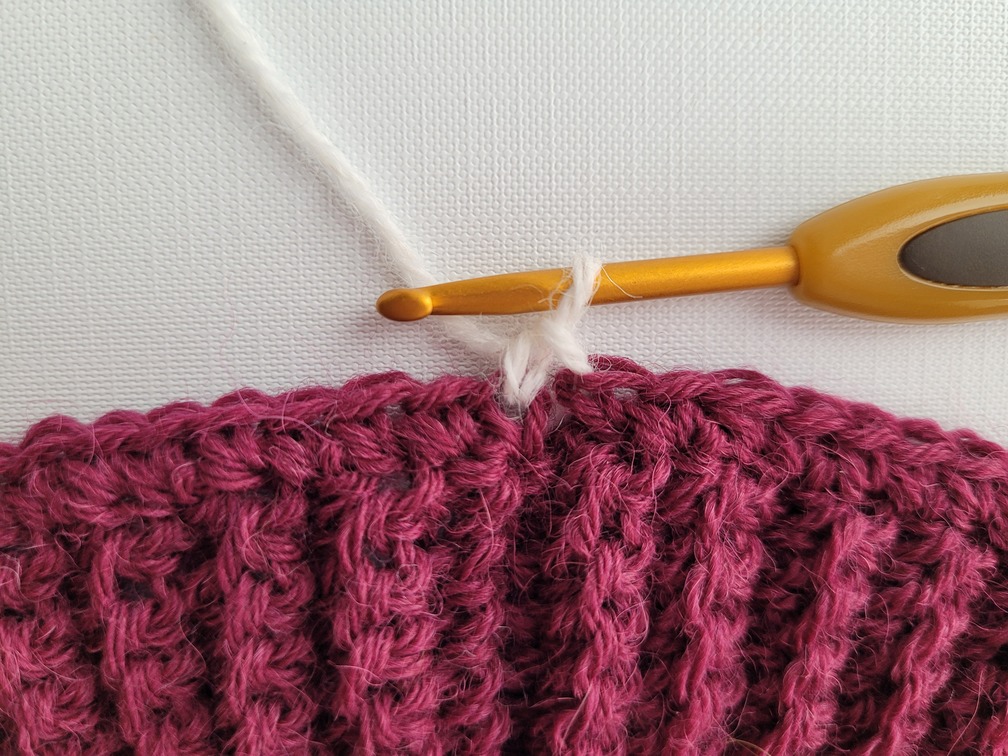
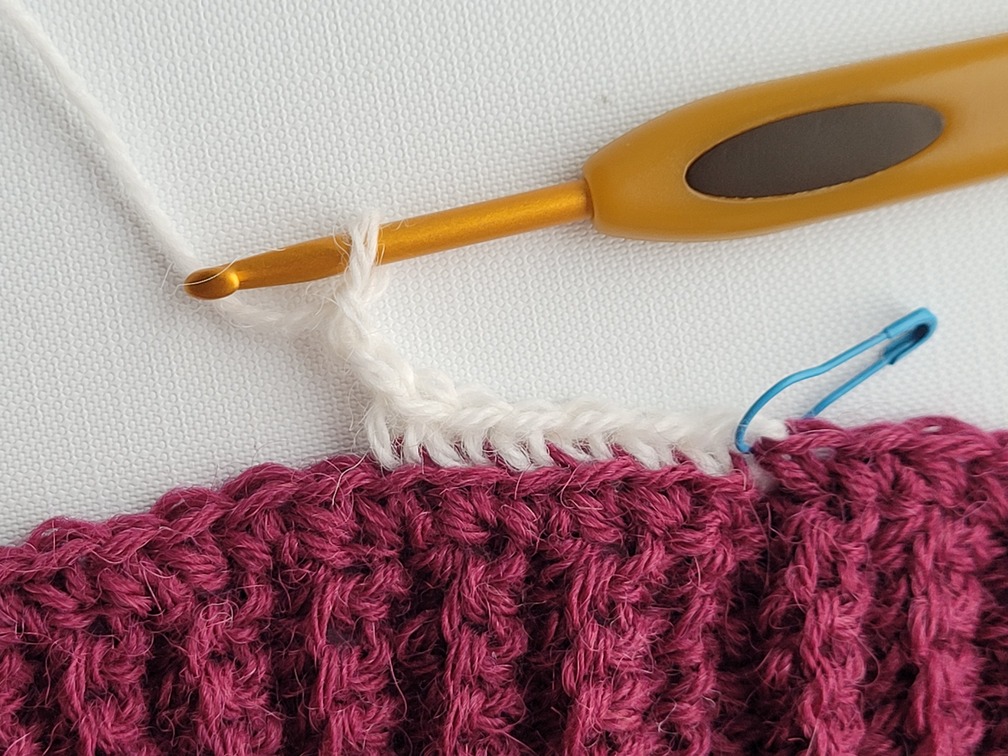
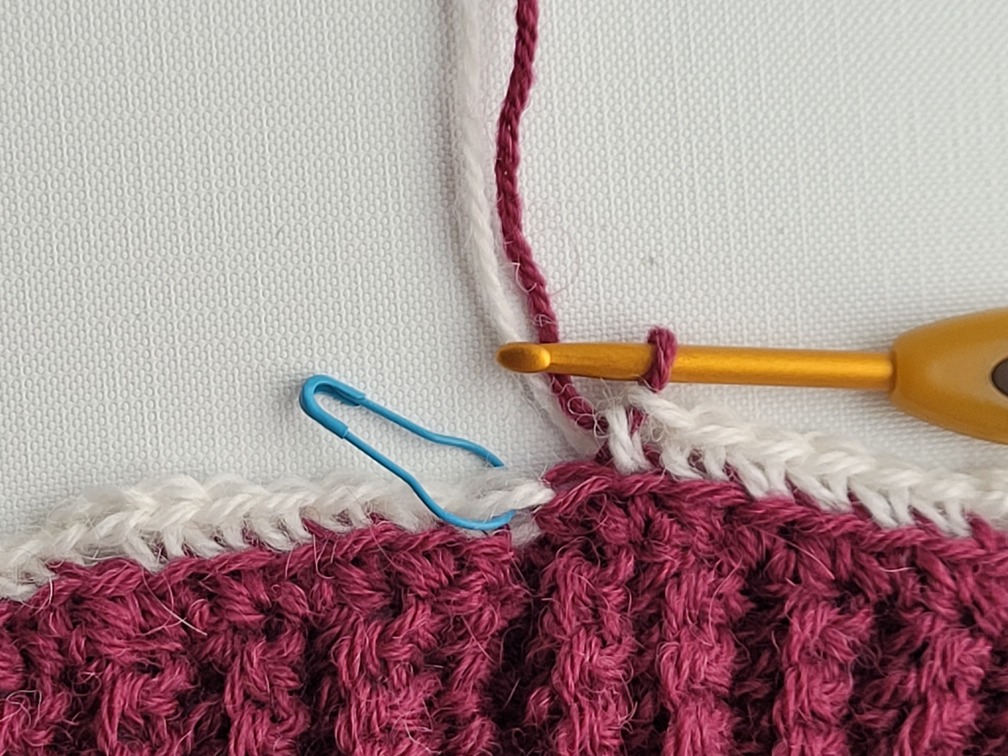
Round 3 (yarn A): BLmosaicdc1 in one st before BOR (mark this st as a new BOR), ch2, sk 1st, BLsc1, ch2, sk 1st, BLsc3, [BLmosaicdc1, ch2, sk 1st, BLsc1, ch2, sk 1st, BLsc3] rep around until BOR. Change to Yarn B in final st.
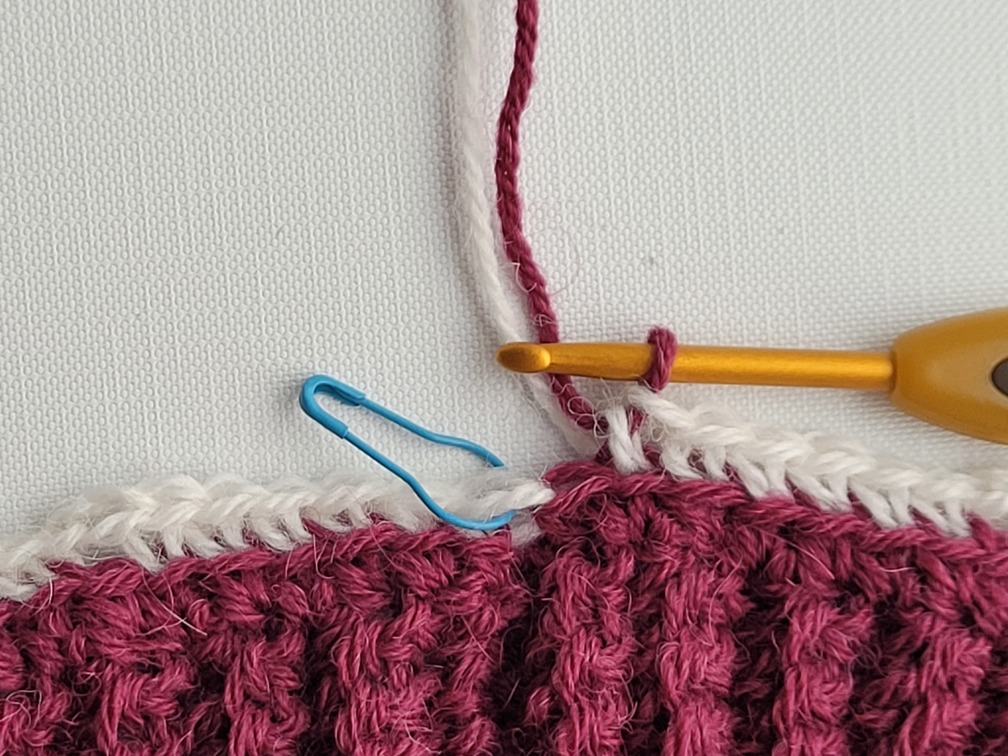
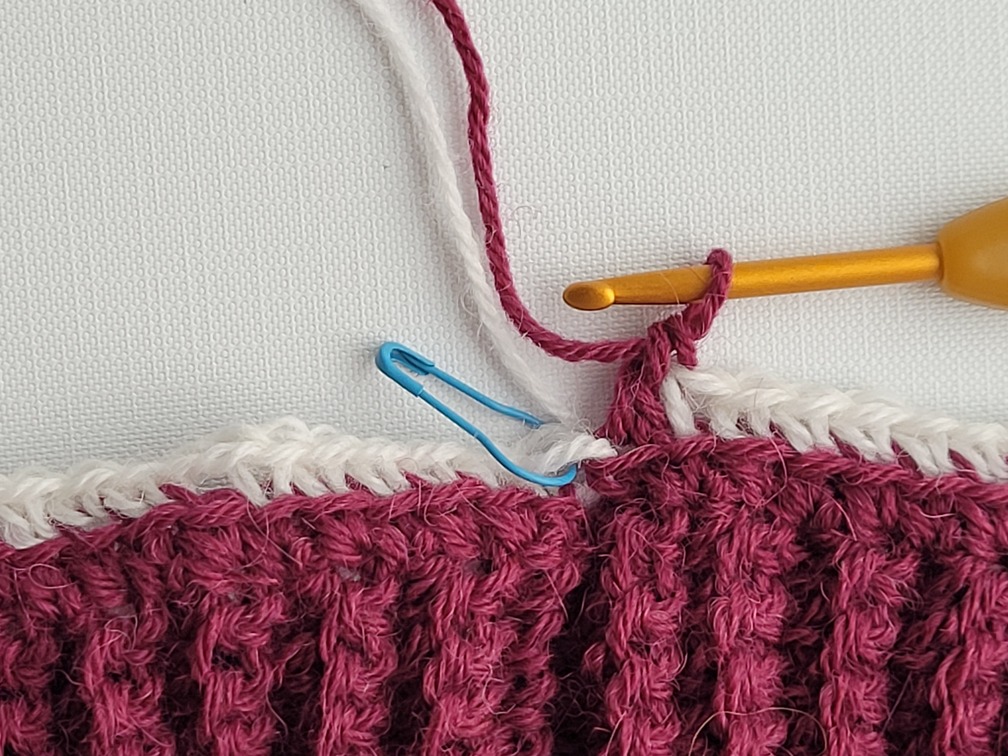
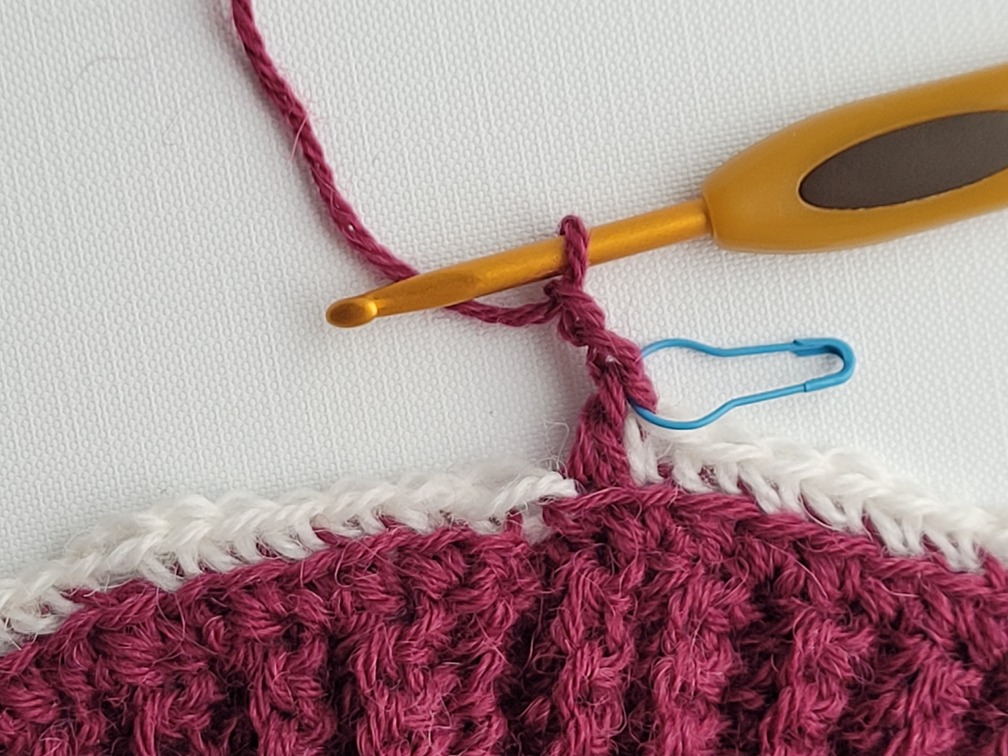
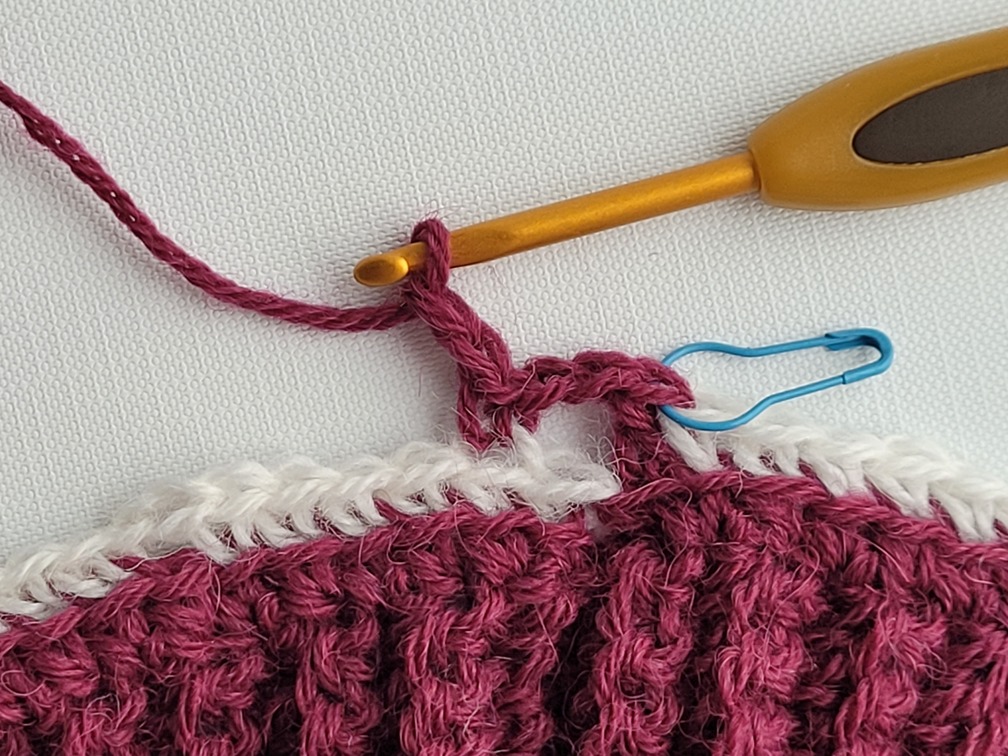
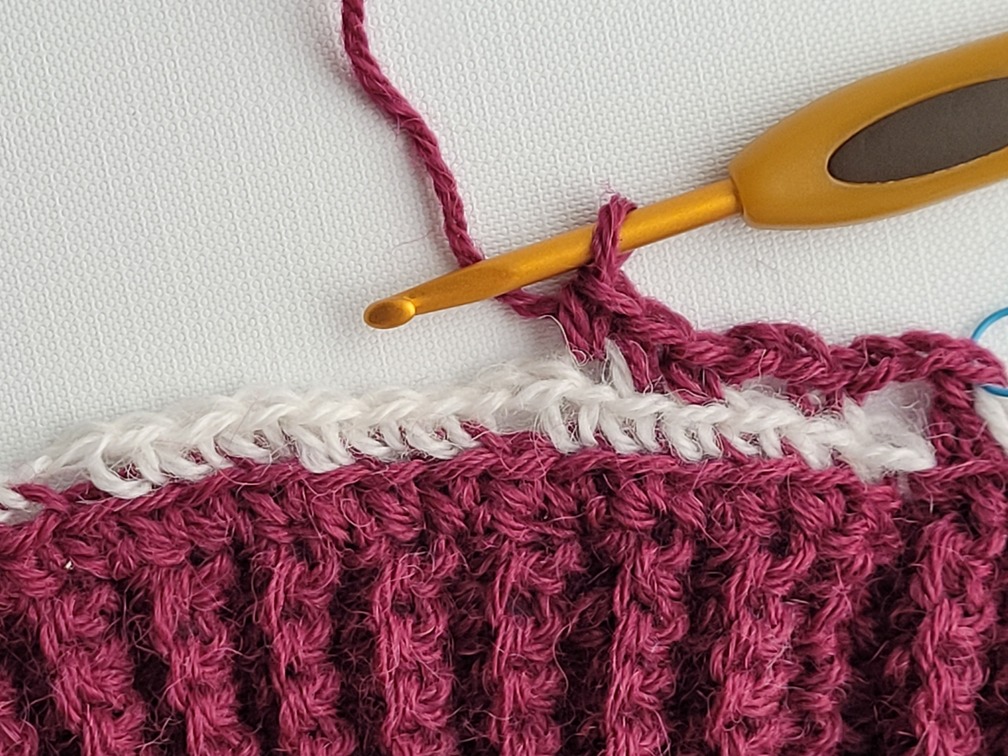
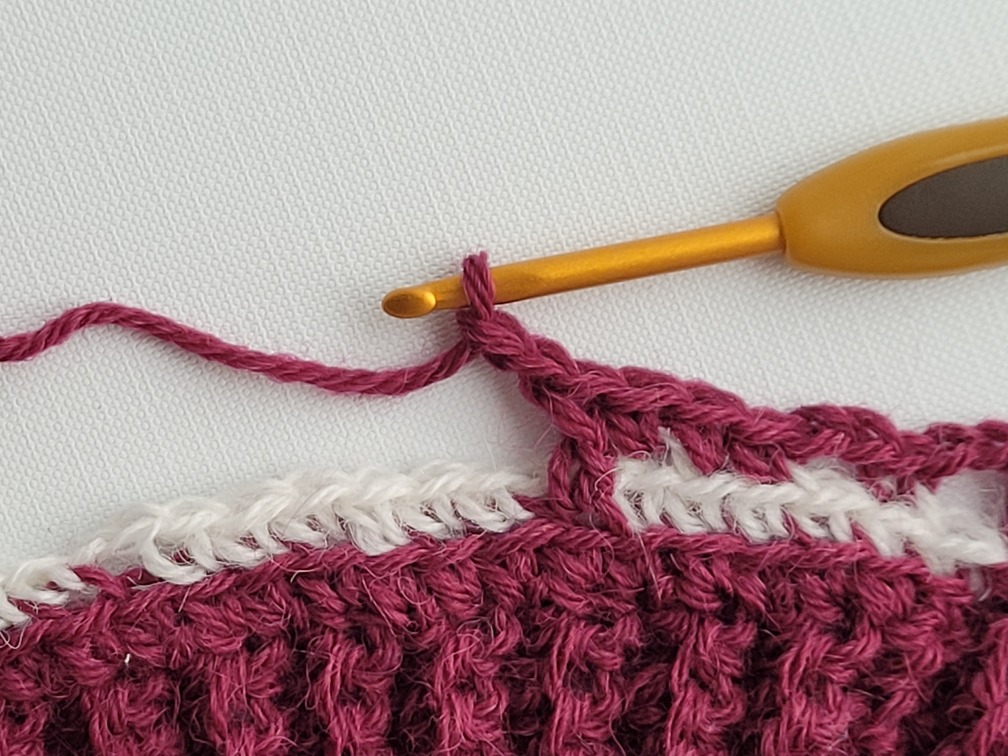
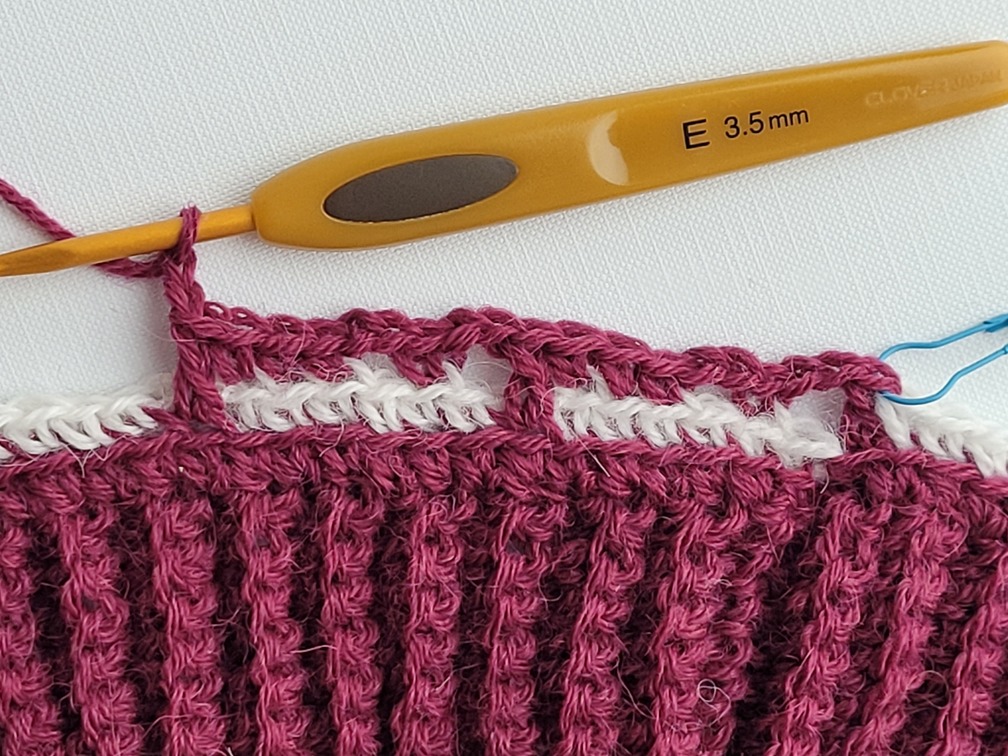
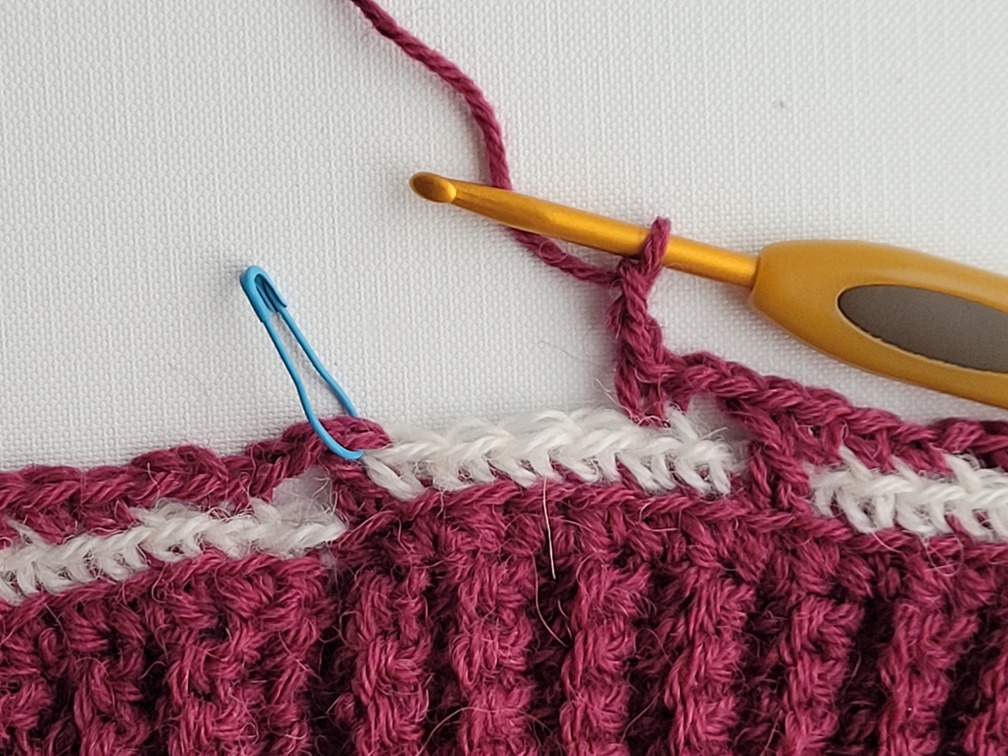
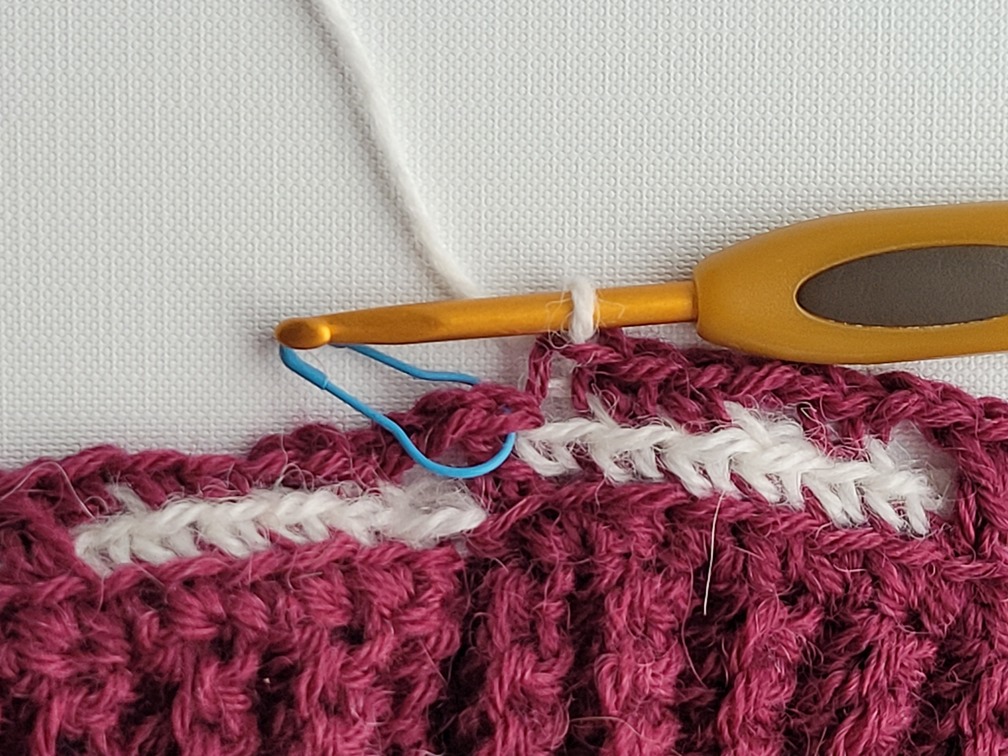
Round 4 (yarn B): BLsc1 in BOR (mark this st as a new BOR), BLmosaicdc1, BLsc1, BLmosaicdc1, ch2, sk 1st, BLsc2, [BLsc1, BLmosaicdc1, BLsc1, BLmosaicdc1, ch2, sk 1st, BLsc2] rep around until BOR. Change to Yarn A in final st.
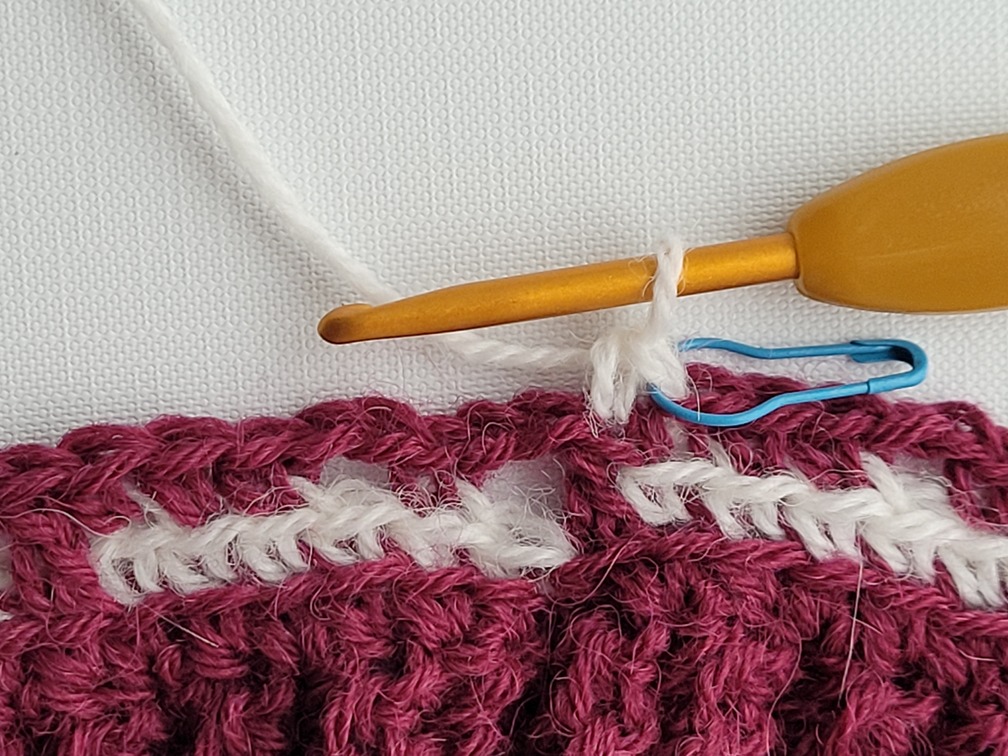
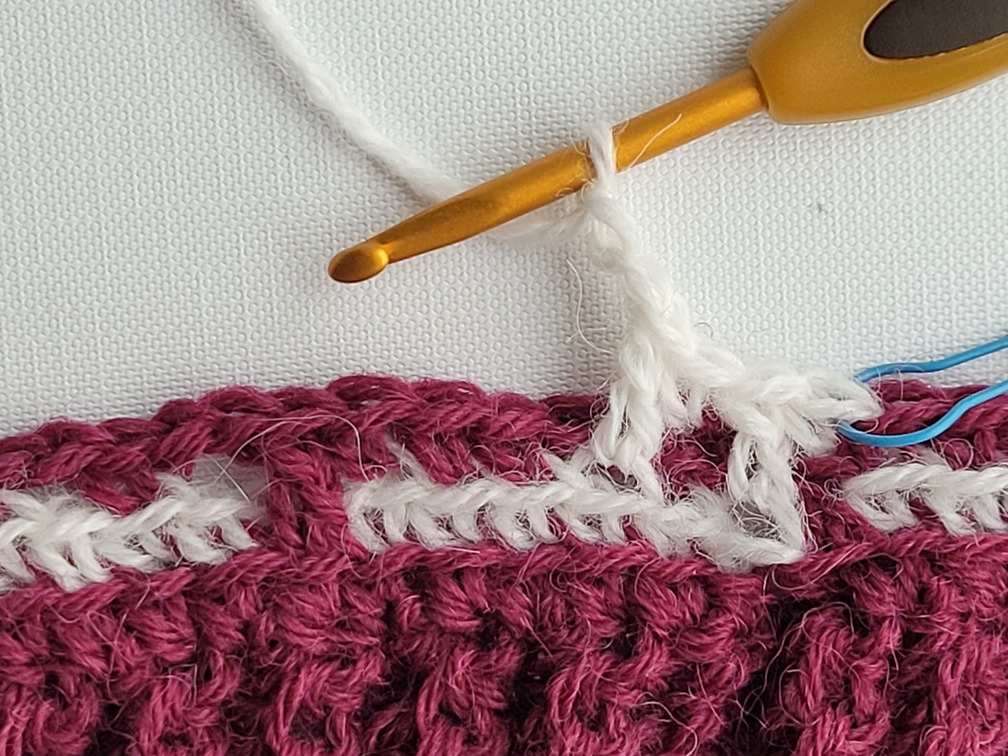
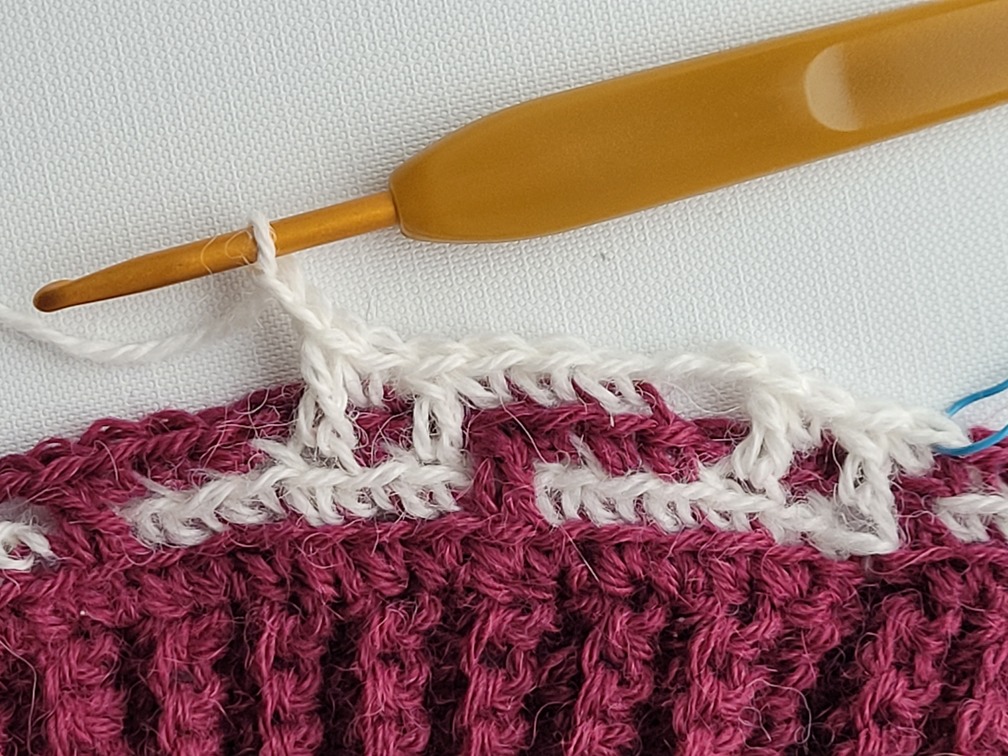
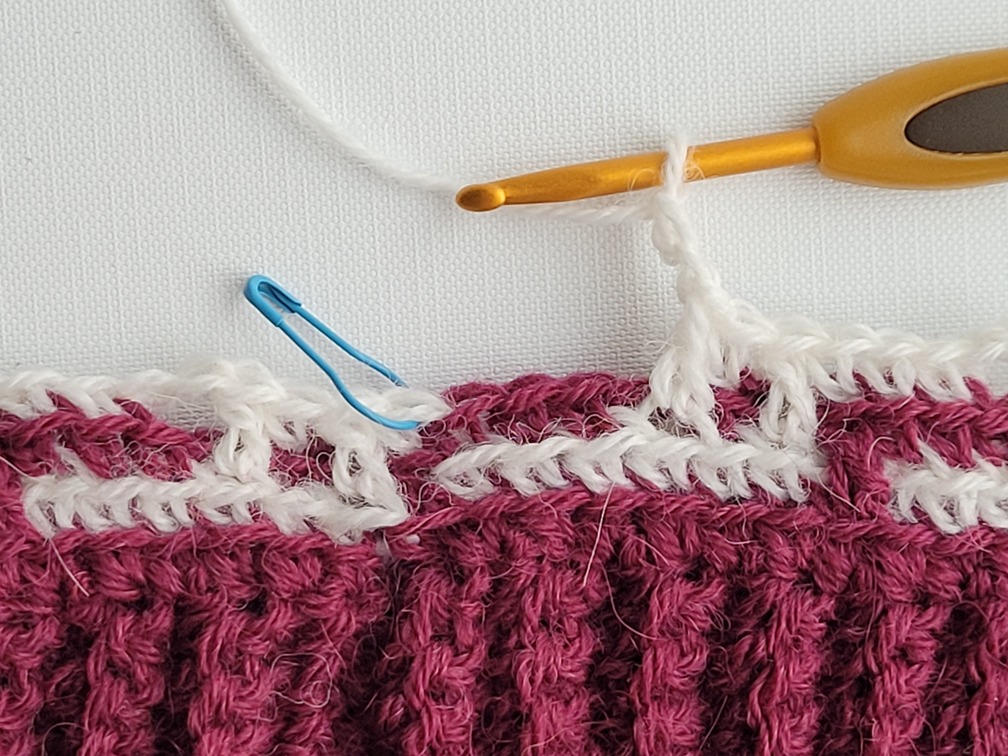
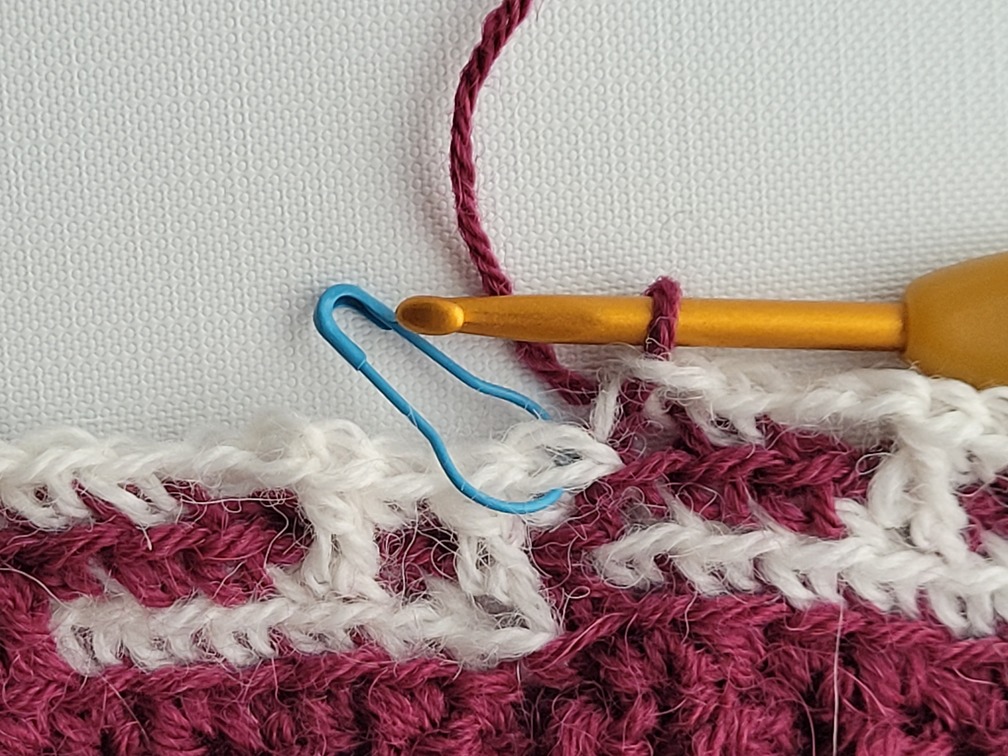
Round 5 (yarn A): ch2 (mark this ch2 as a new BOR), sk 1st, BLsc3, BLmosaicdc1, ch2, sk 1st, BLsc1, [ch2, sk 1st, BLsc3, BLmosaicdc1, ch2, sk 1st, BLsc1] rep around until BOR. Change to Yarn B in final st.
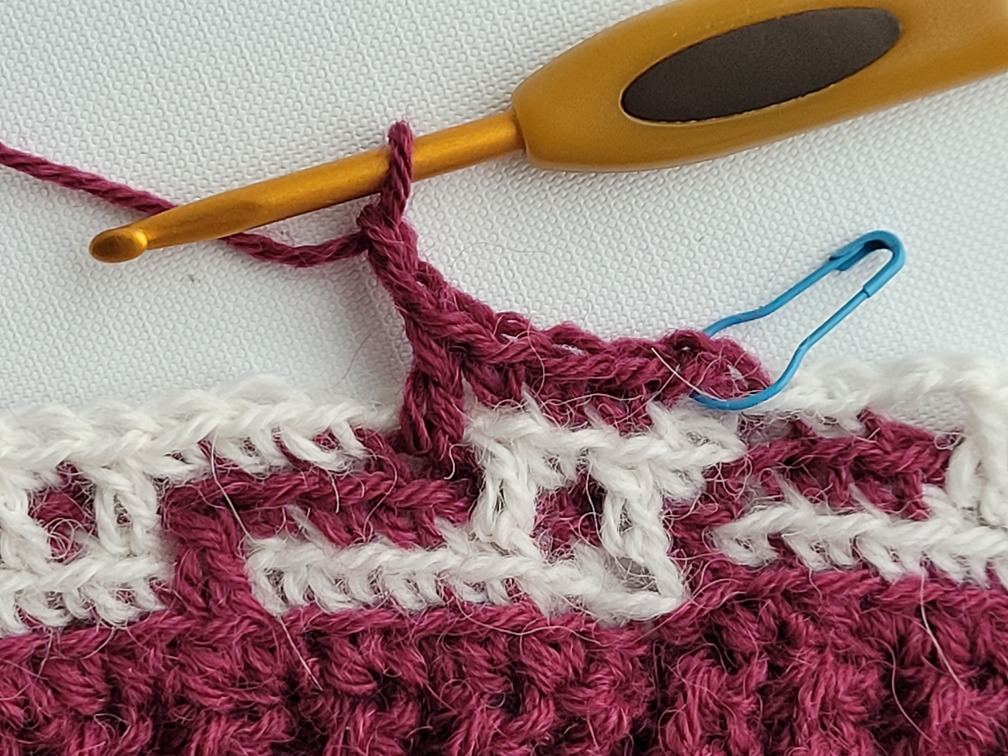
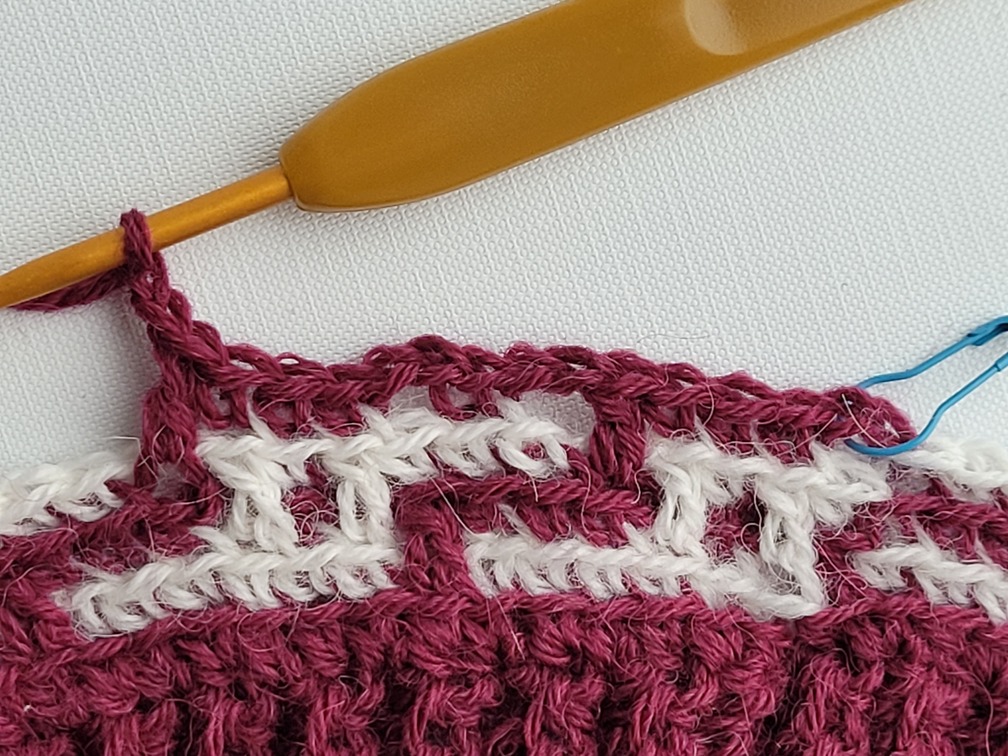
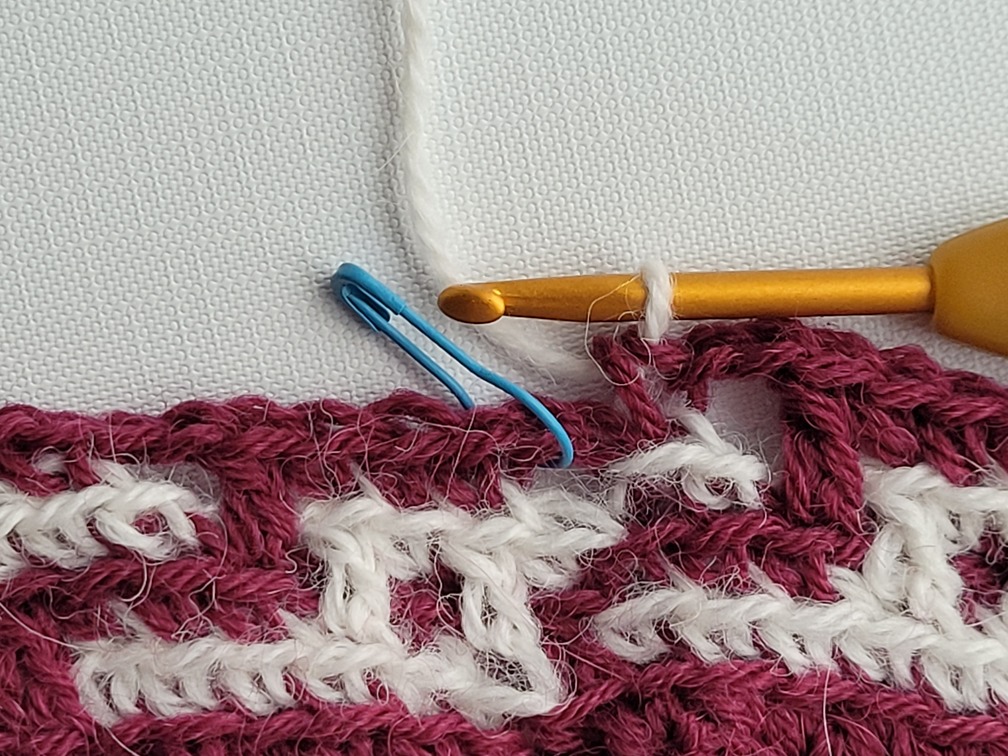
Round 6 (yarn B): BLmosaicdc1 in a st from round 4 under BOR (mark this st as a new BOR), ch2, sk 1st, BLsc3, BLmosaicdc1, BLsc1, [BLmosaicdc1, ch2, sk 1st, BLsc3, BLmosaicdc1, BLsc1] rep around until BOR. Change to Yarn A in final st.
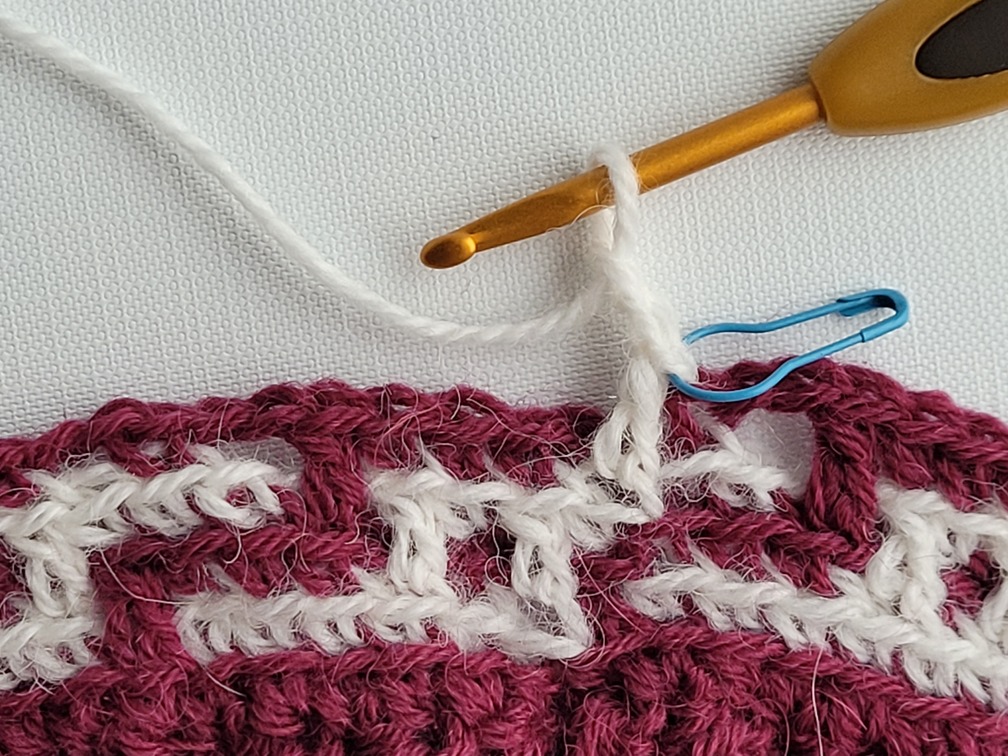
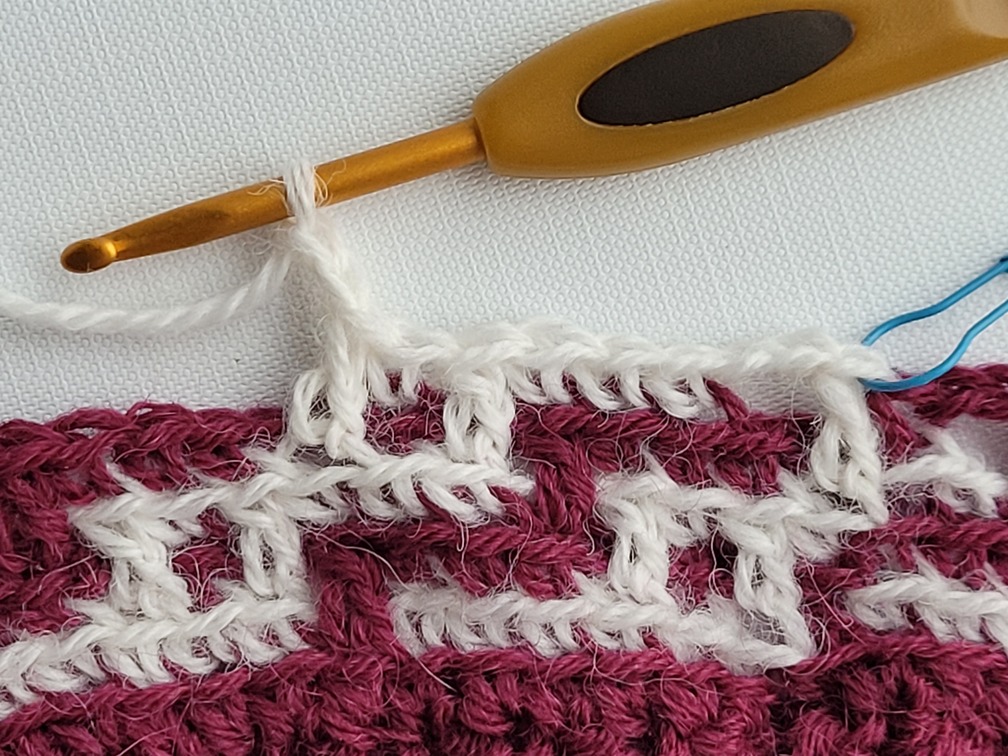
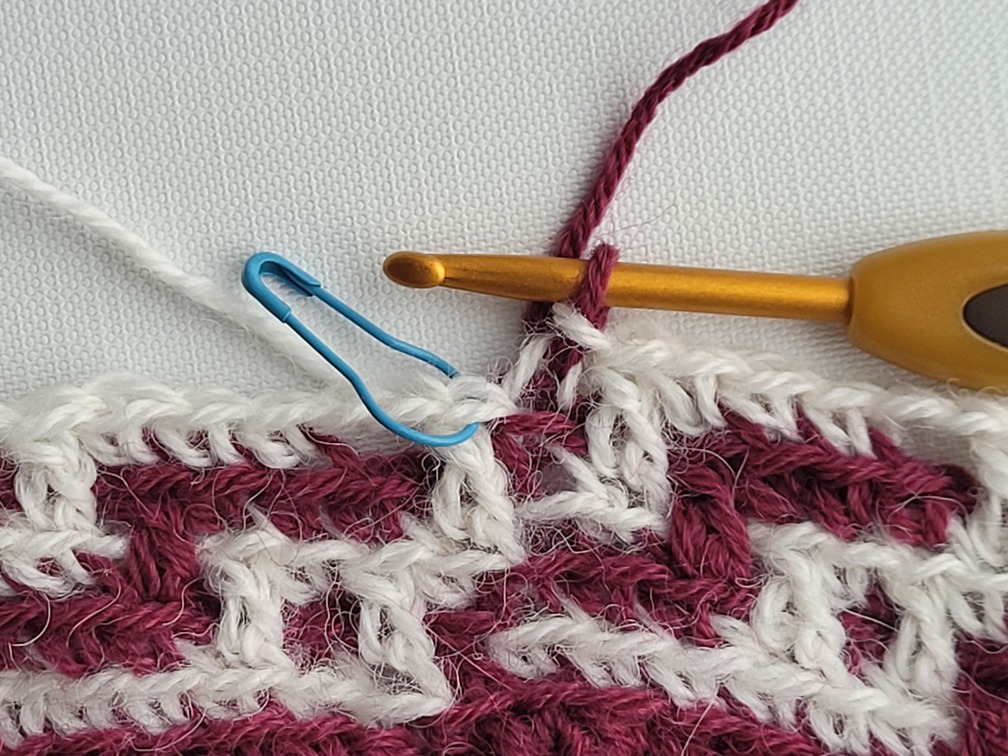
Round 7 (yarn A): BLsc1 in BOR (mark this st as a new BOR), BLmosaicdc1, ch2, sk 1st, BLsc1, ch2, sk 1st, BLsc2, [BLsc1, BLmosaicdc1, ch2, sk 1st, BLsc1, ch2, sk 1st, BLsc2] rep around until BOR. Change to Yarn B in final st.
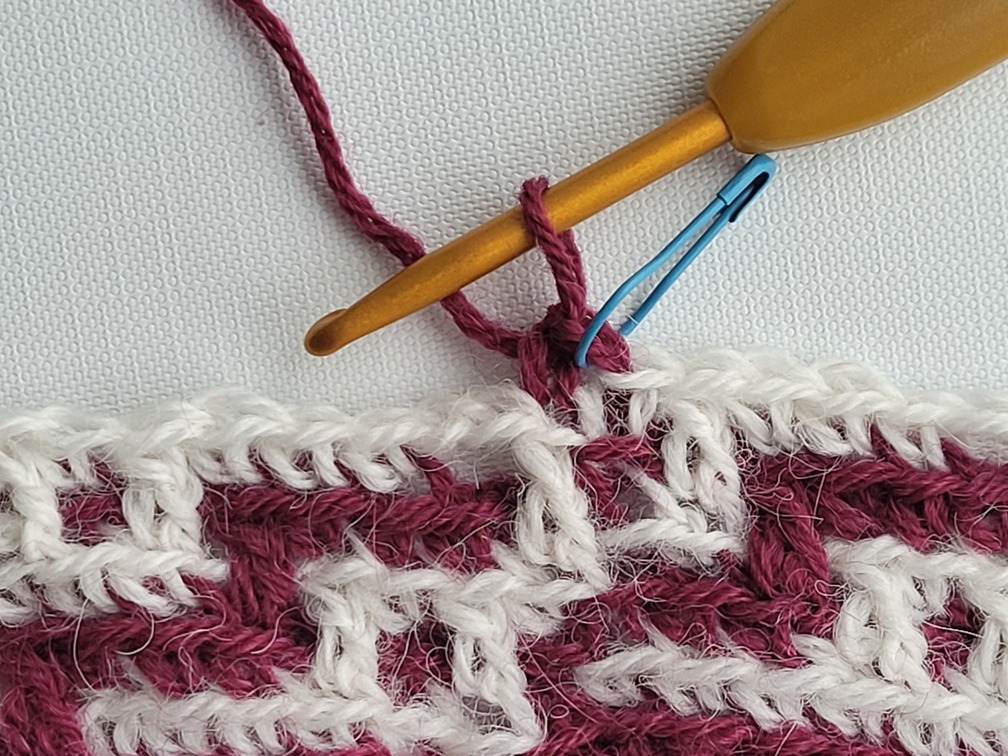
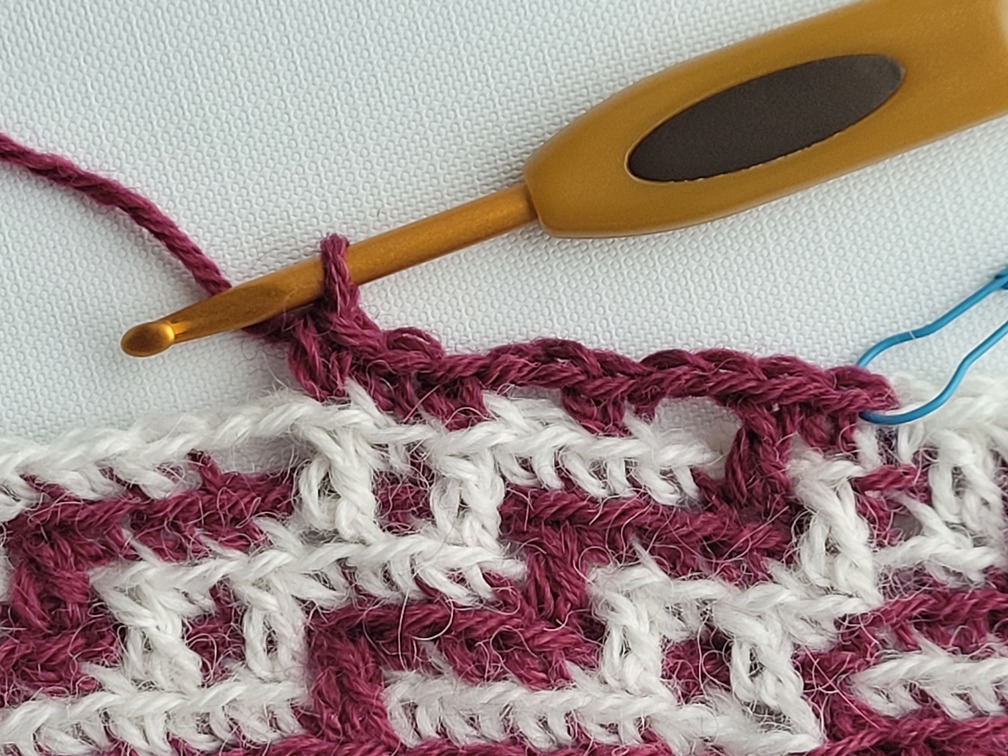
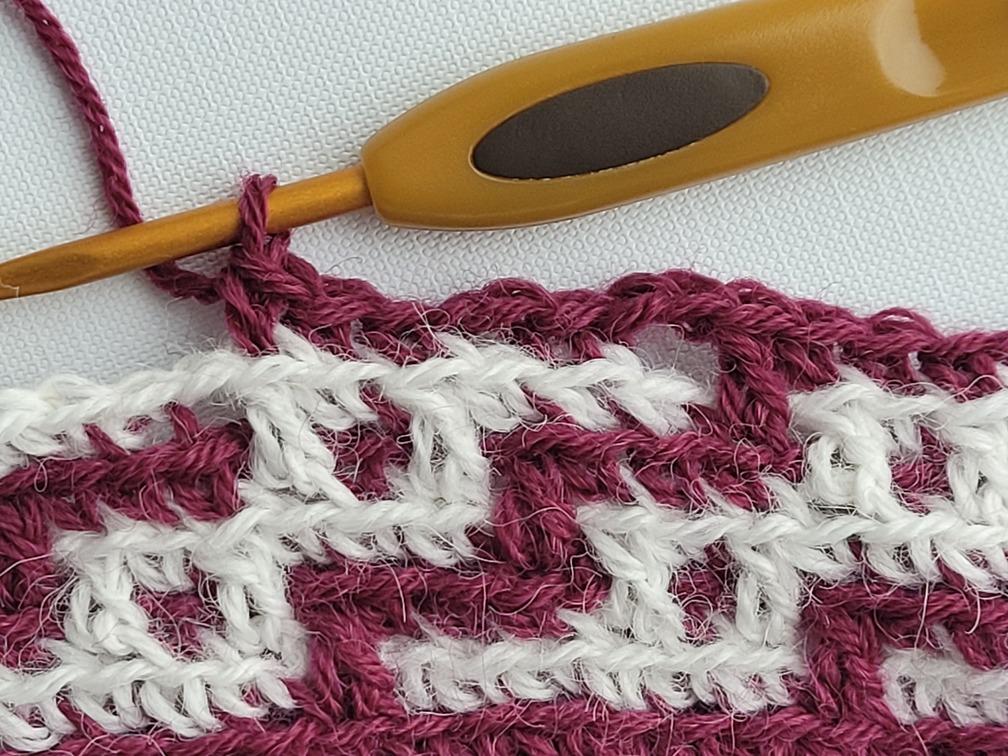
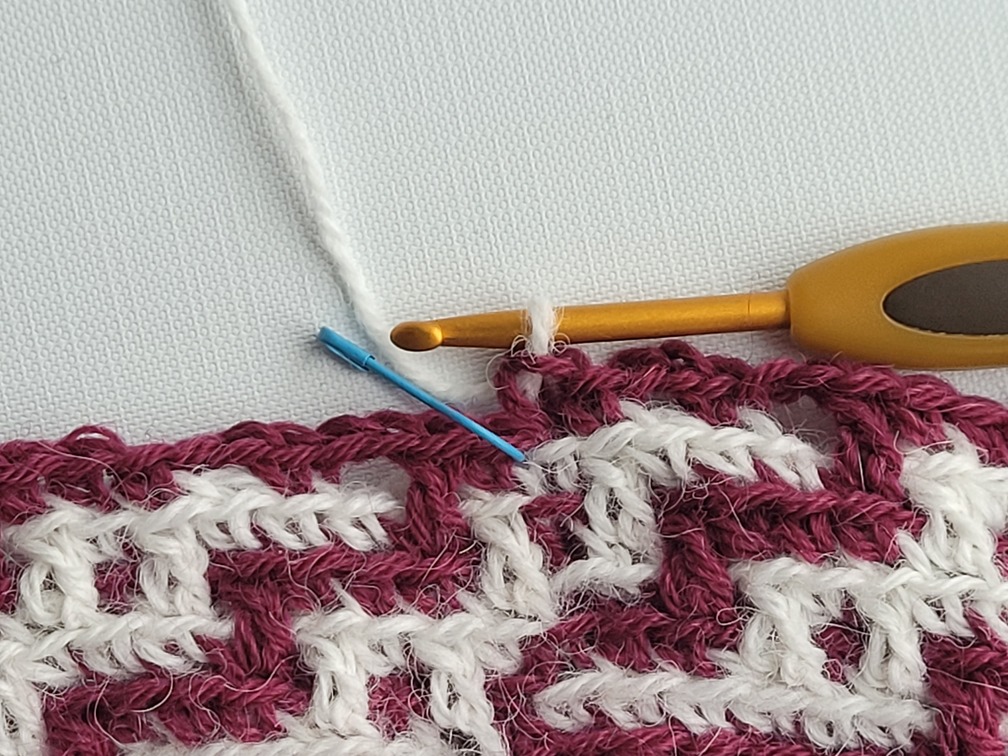
Round 8 (yarn B): BLsc1 in BOR (mark this st as a new BOR), BLsc1, BLmosaicdc1, BLsc1, BLmosaicdc1, ch2, sk 1st, BLsc1, [BLsc2, BLmosaicdc1, BLsc1, BLmosaicdc1, ch2, sk 1st, BLsc1] rep around until BOR. Change to Yarn A in final st.
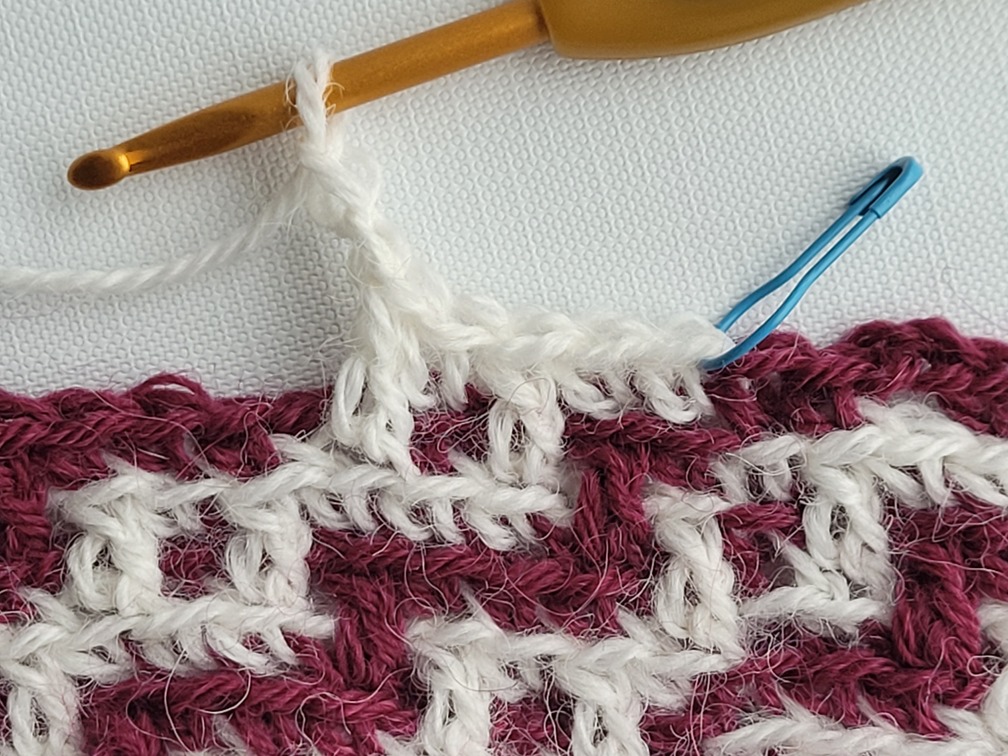
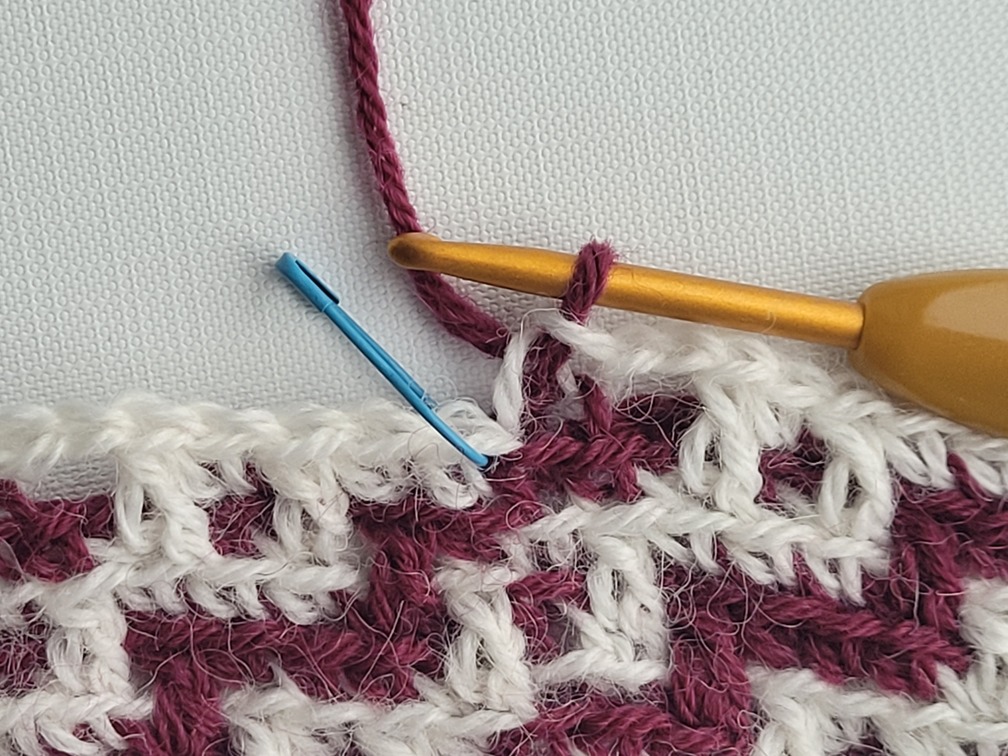
Round 9 (yarn A): BLsc1 in BOR (mark this st as a new BOR), ch2, sk 1st, BLsc3, BLmosaicdc1, ch2, sk 1st, [BLsc1, ch2, sk 1st, BLsc3, BLmosaicdc1, ch2, sk 1st] rep around until BOR. Change to Yarn B in final st.
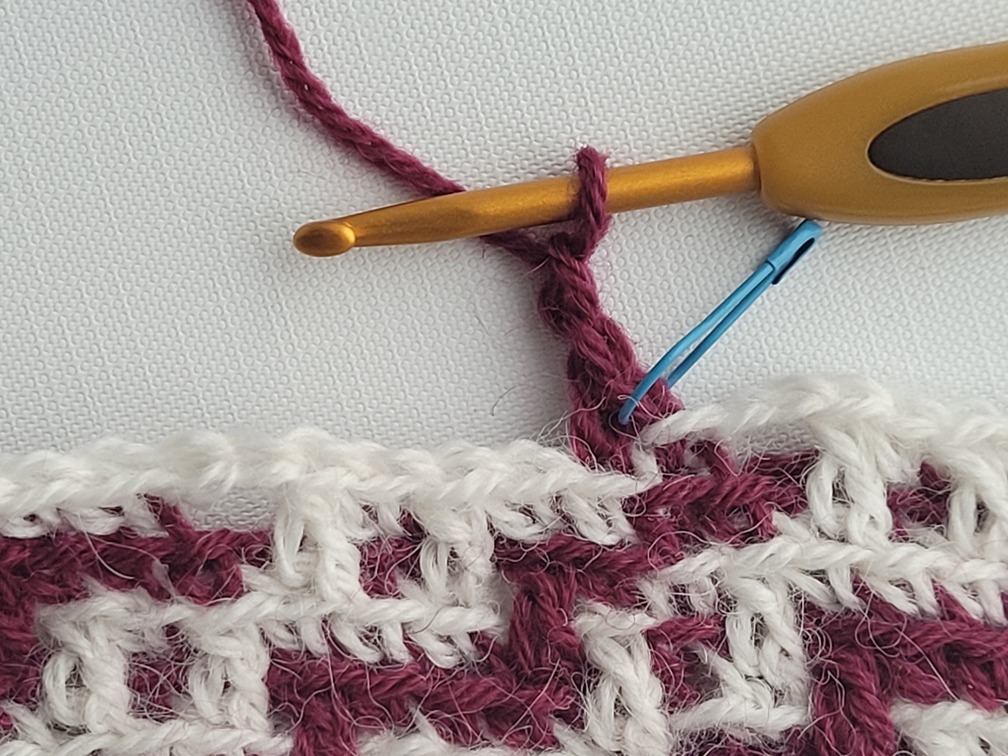
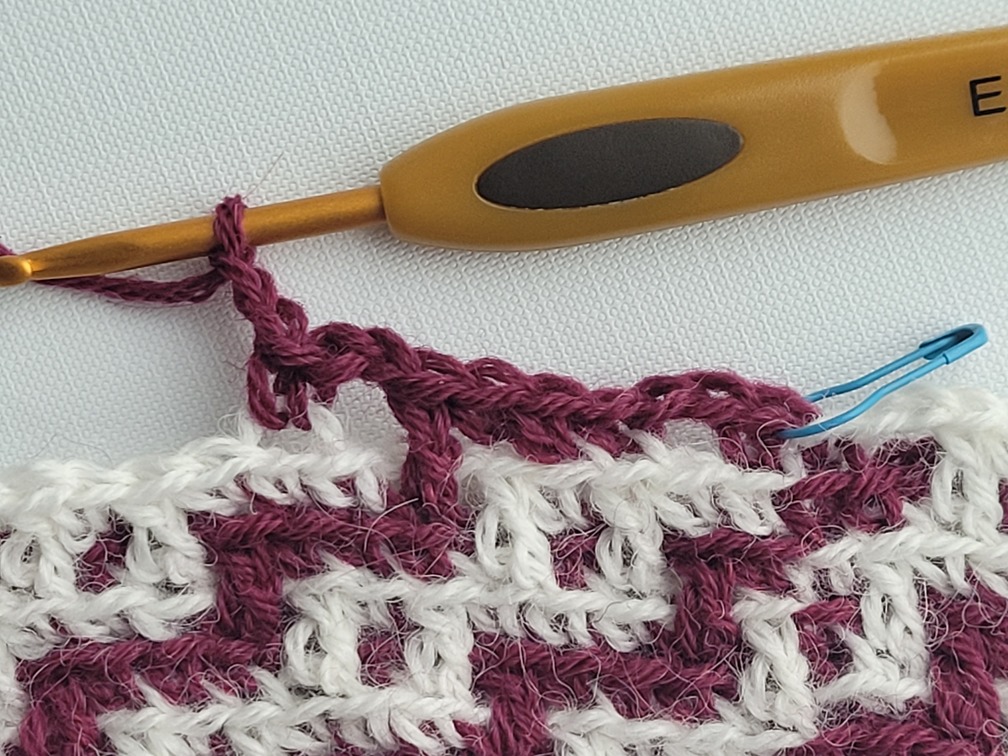
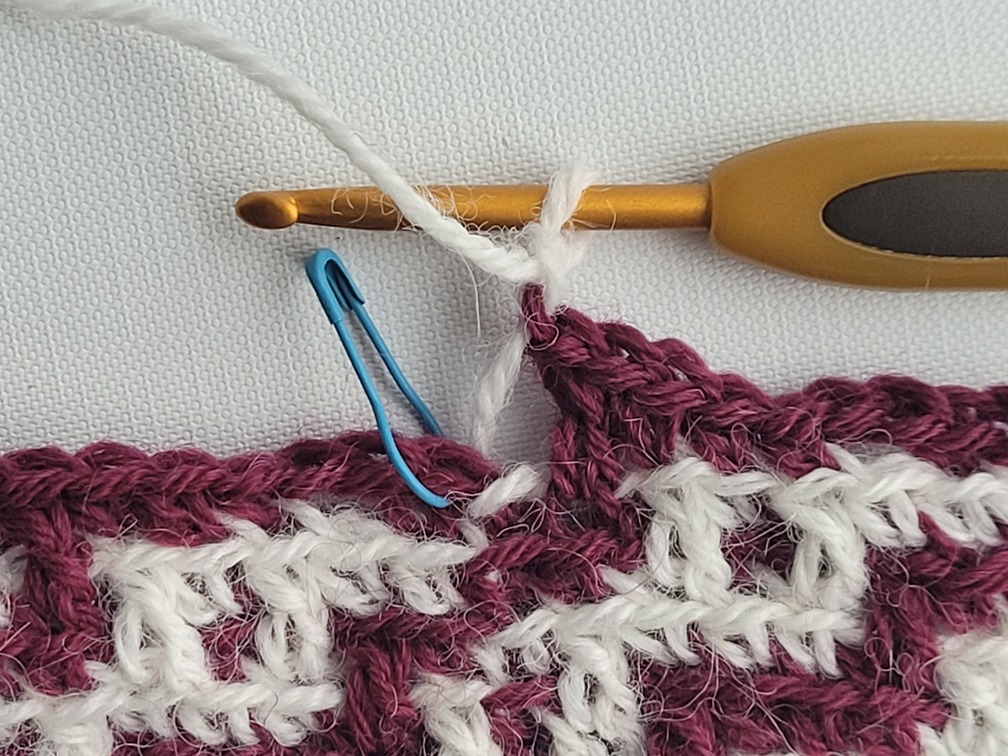
Round 10 (yarn B): BLsc1 in BOR (mark this st as a new BOR), BLmosaicdc1, ch2, sk 1st, BLsc3, BLmosaicdc1, [BLsc1, BLmosaicdc1, ch2, sk 1st, BLsc3, BLmosaicdc1] rep around until BOR. Change to Yarn A in final st.
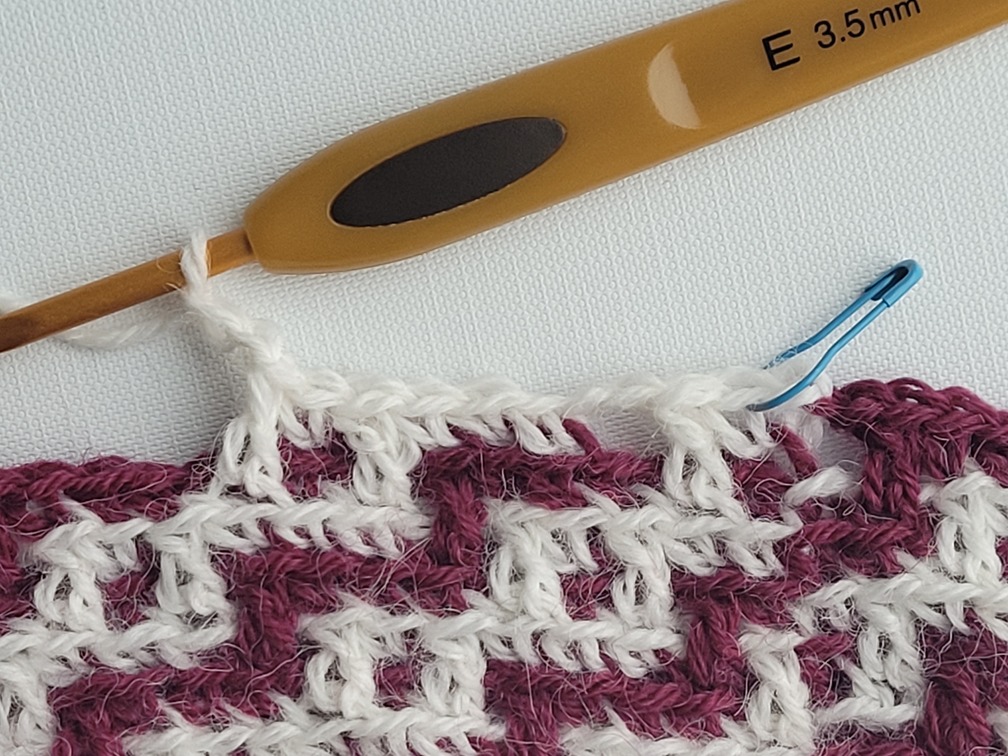
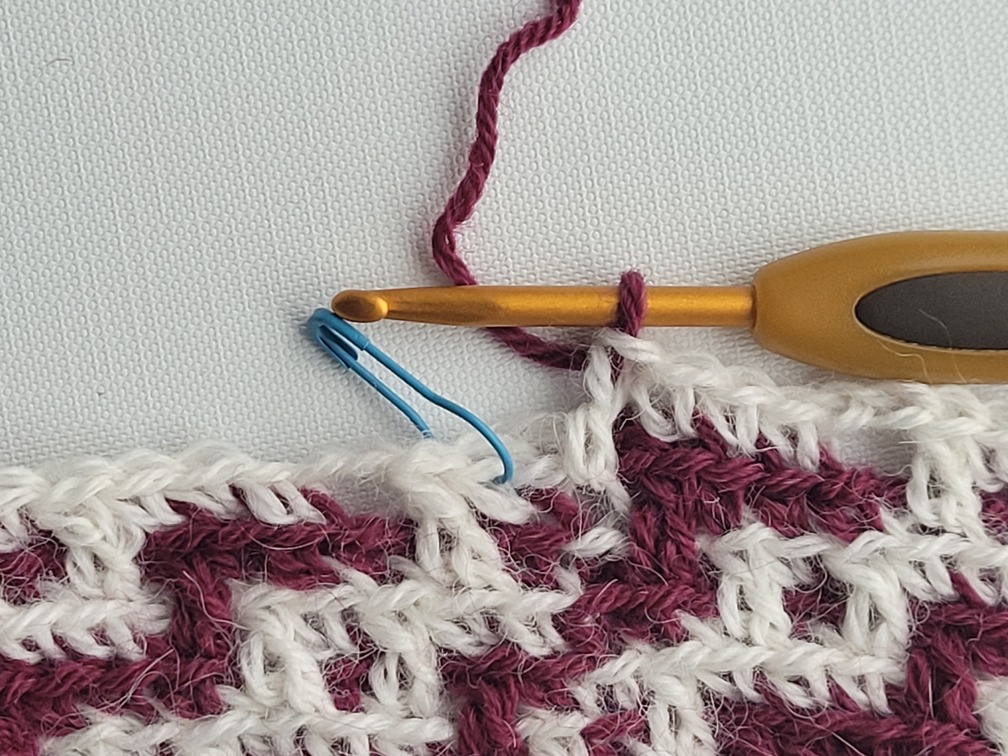
Round 11 (yarn A): BLsc1 in BOR (mark this st as a new BOR), BLsc1, BLmosaicdc1, ch2, sk 1st, BLsc1, ch2, sk 1st, BLsc1, [BLsc2, BLmosaicdc1, ch2, sk 1st, BLsc1, ch2, sk 1st, BLsc1] rep around until BOR. Change to Yarn B in final st.
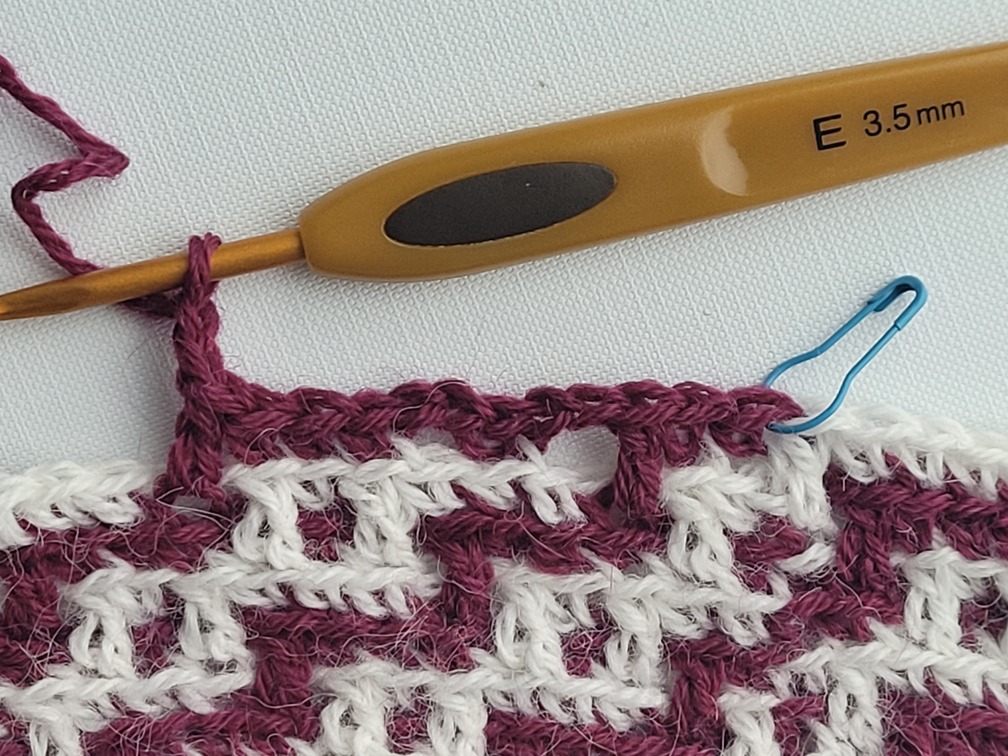
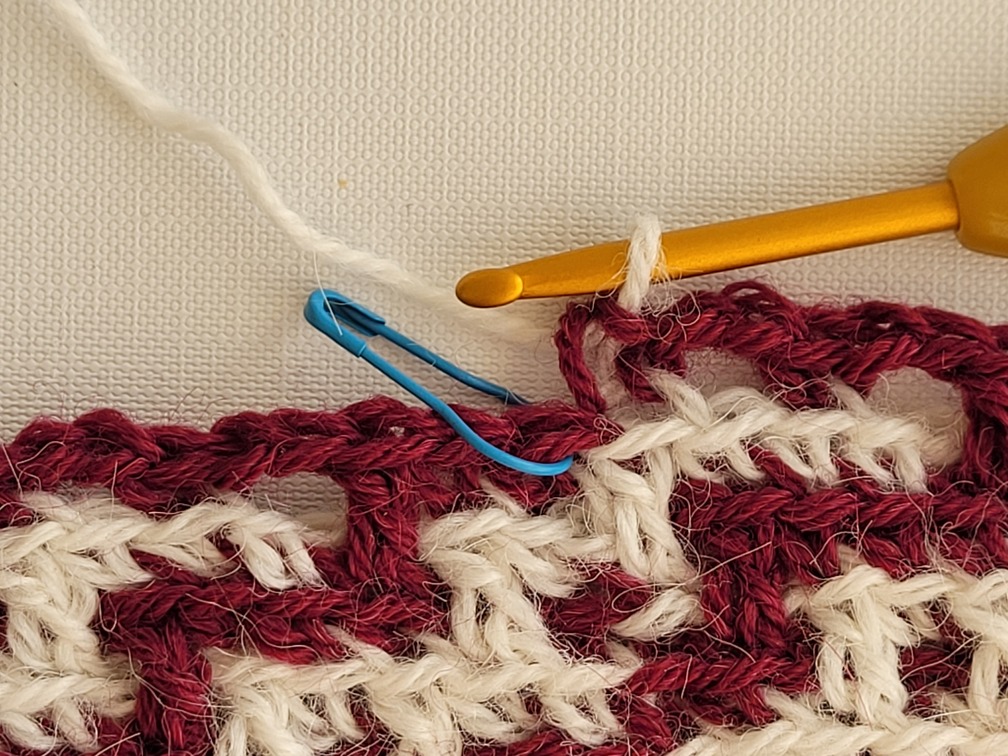
Round 12 (yarn B): BLsc1 in BOR (mark this st as a new BOR), BLsc2, BLmosaicdc1, BLsc1, BLmosaicdc1, [ch2, sk 1st, BLsc3, BLmosaicdc1, BLsc1, BLmosaicdc1] rep around until 1 st remains before BOR. Change to Yarn A in final st.
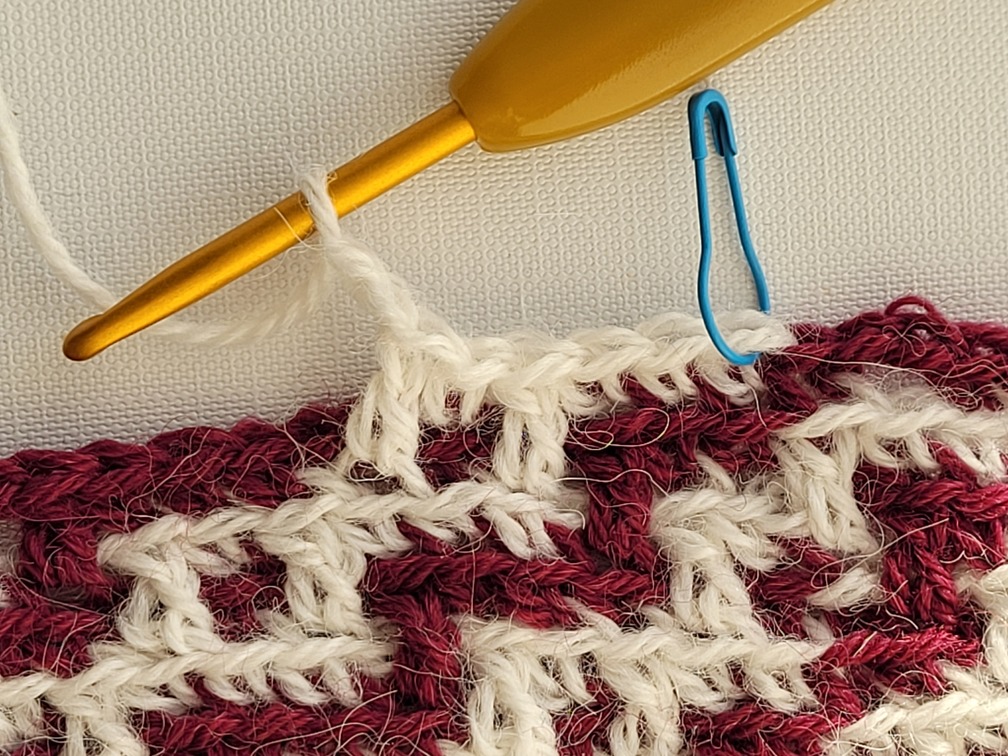
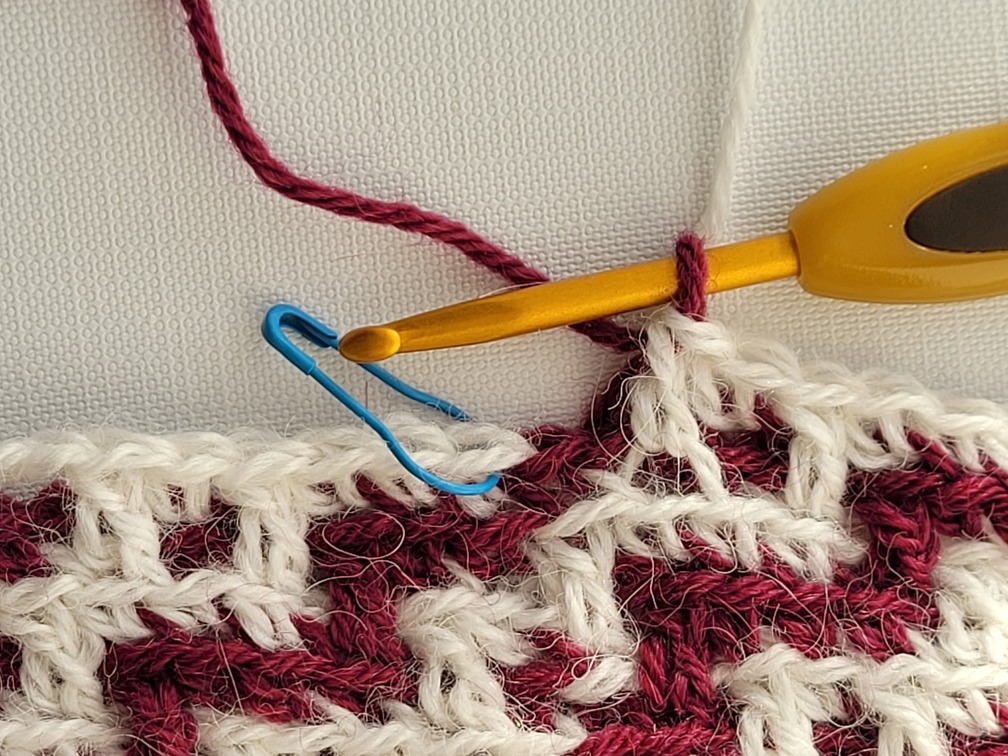
Next, repeat Rounds 3 – 12 until Round 52 or until desired height.
Last Round (yarn A): BLmosaicdc1 in one st before BOR (mark this st as a new BOR), BLsc6, [BLmosaicdc1, BLsc6] rep around until BOR, slst in BOR to close the round. Remove stitch marker.
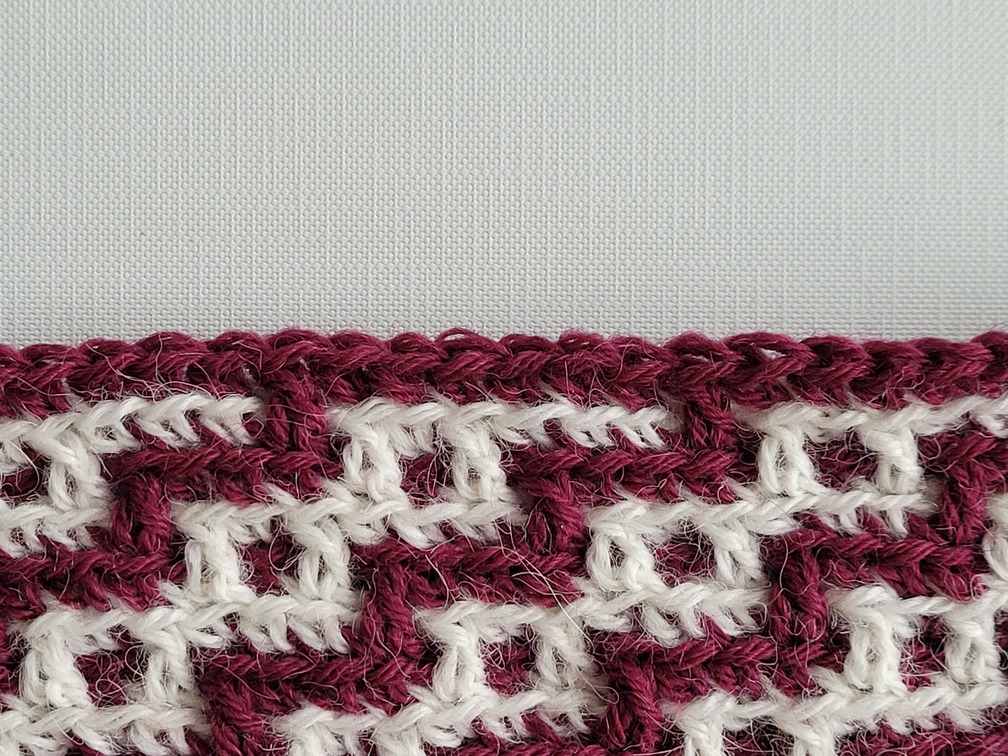
Don’t change the yarn and don’t break the yarn.
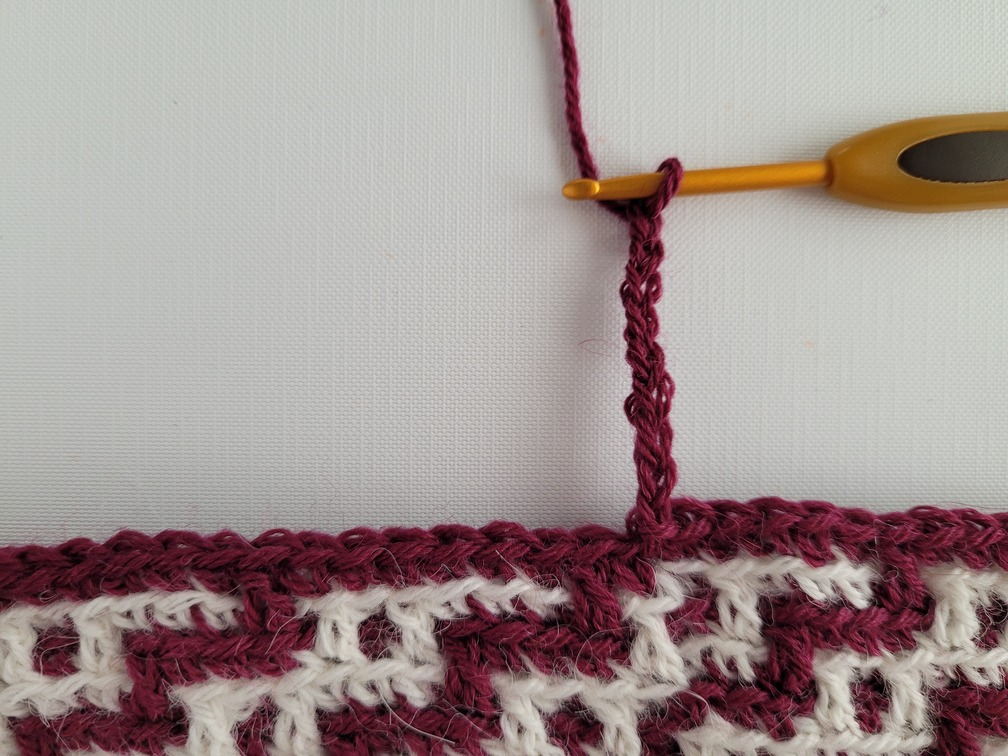
Ribbing 2
This ribbing 2 is worked in rows and attached to the main body as you go. Continue with 3.5mm hook.
Row 1: ch8, sc in 2nd ch from hook and in each ch back to the main body. Join to the next st of the main body with a slst, work 1 more slst in the next st of the main body (2 slsts for joining), ch1. Turn. (7 sts)
Row 2: Starting in the 4th st from the hook, BLsc in each st across. Turn. (7 sts)
Row 3: ch1 (doesn’t count as a st), BLsc in each st across. Join to the next st of the main body with a slst, work 1 more slst in the next st of the main body (2 slsts for joining), ch1. Turn. (7 sts)
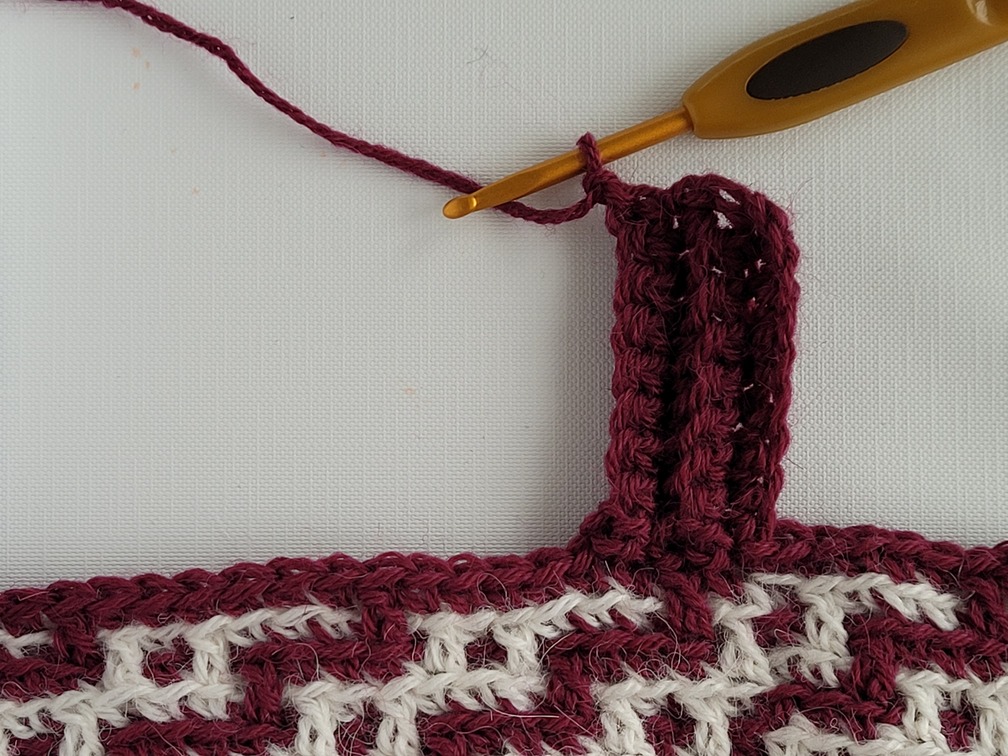
Repeat Rows 2-3 until your ribbing is joined to the entire main body. Then join your last row with the first row using the slip stitches.
Fasten off yarn, weave in all ends and block your cowl.
If you have any suggestions or have found a mistake, please email me at mycrochetory@gmail.com.
Finished your Duende Cowl? I’d love to see it. Share it on Instagram with #mycrochetory and tag @mycrochetory.
Stuck on a round? Ask in my Facebook Group or Ravelry Group, where other crocheters can help you too.
More mosaic crochet patterns
Hooked on mosaic now? These patterns of mine use the same technique, each in a different shape.
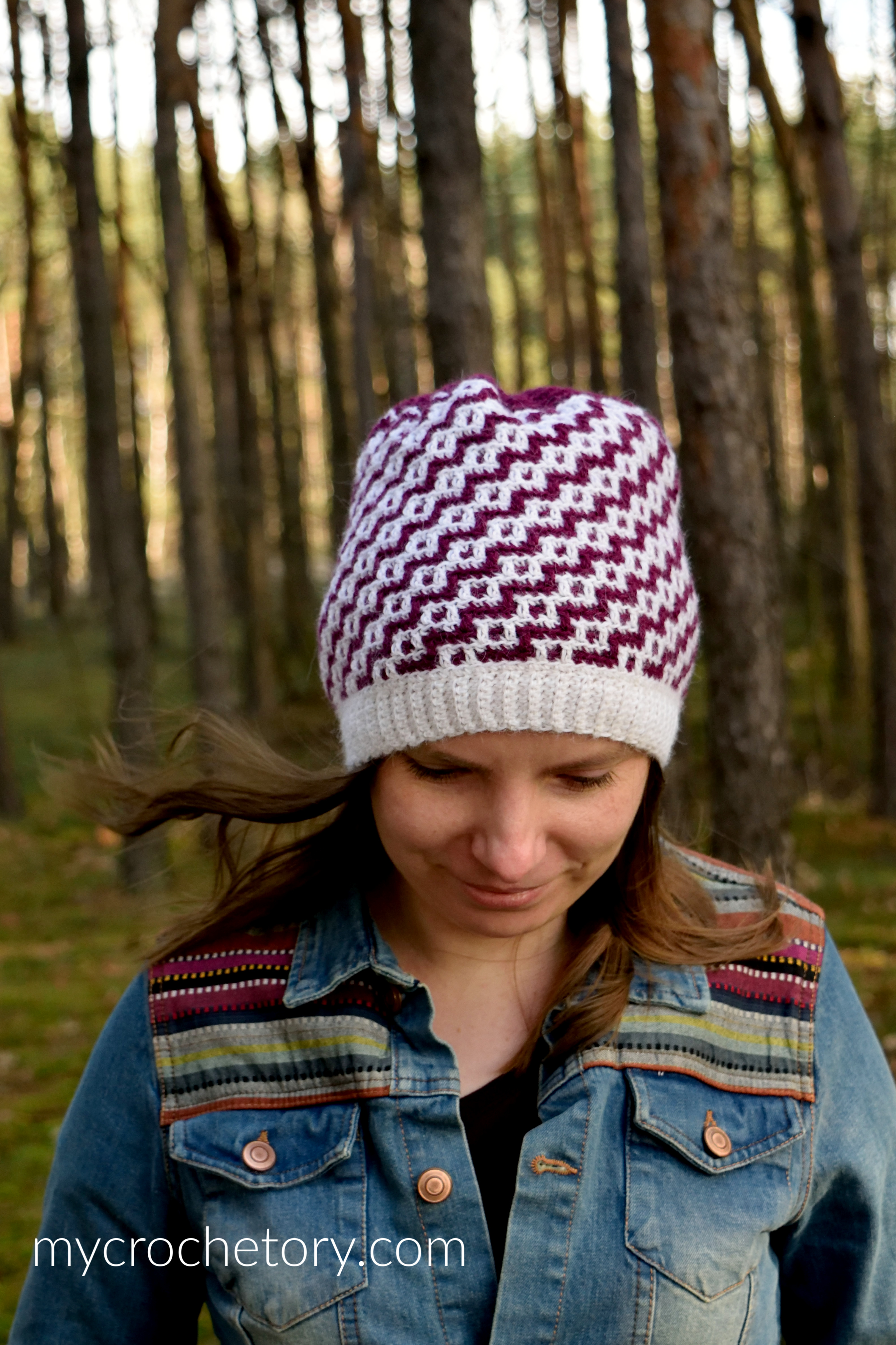
- Duende Hat. The matching mosaic hat, so you can make the full set.
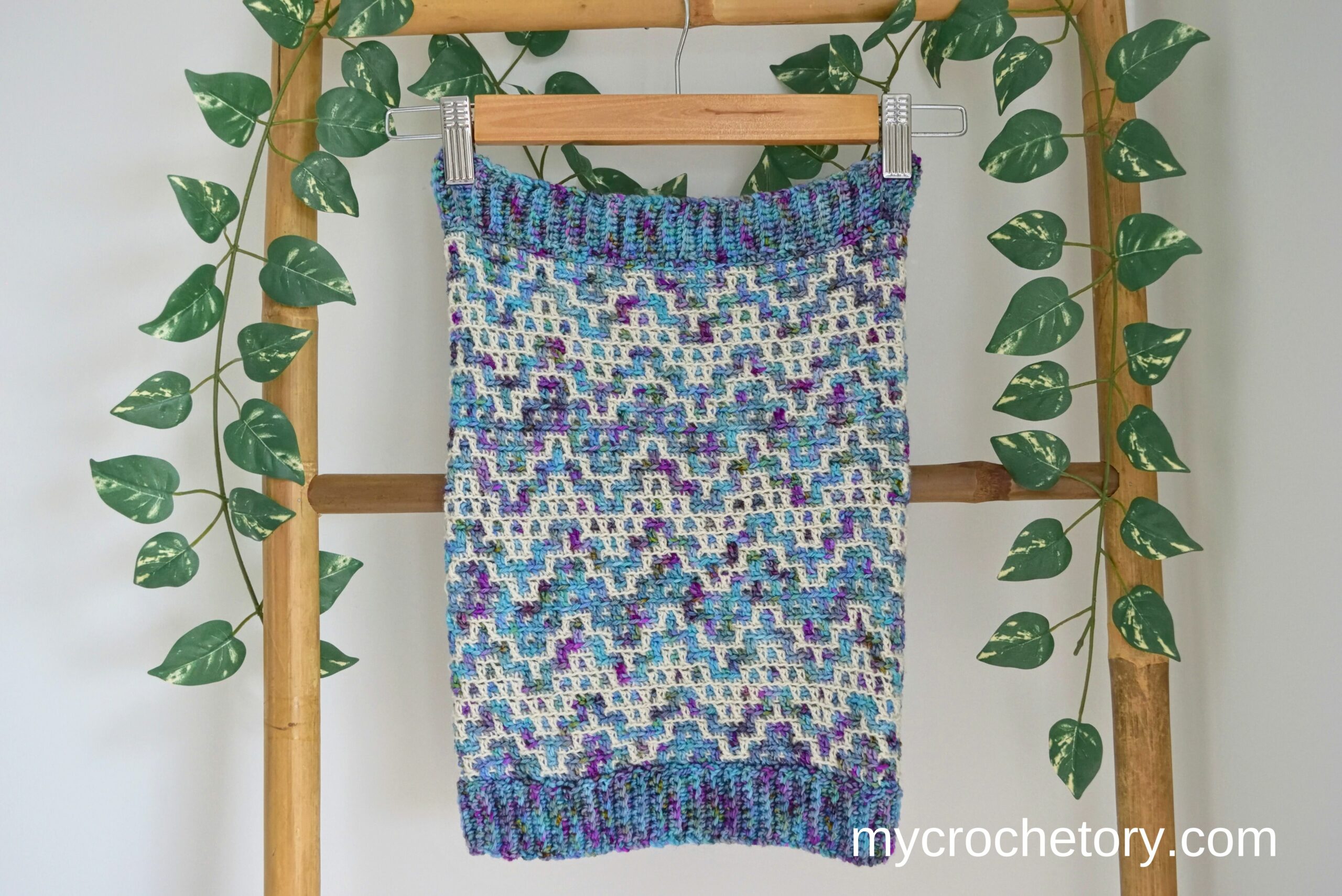
- Namari Mosaic Cowl. A two-color mosaic cowl in the round, with attached ribbing.
- Drutozlot Mosaic Cowl. Another mosaic crochet cowl, worked in the round.
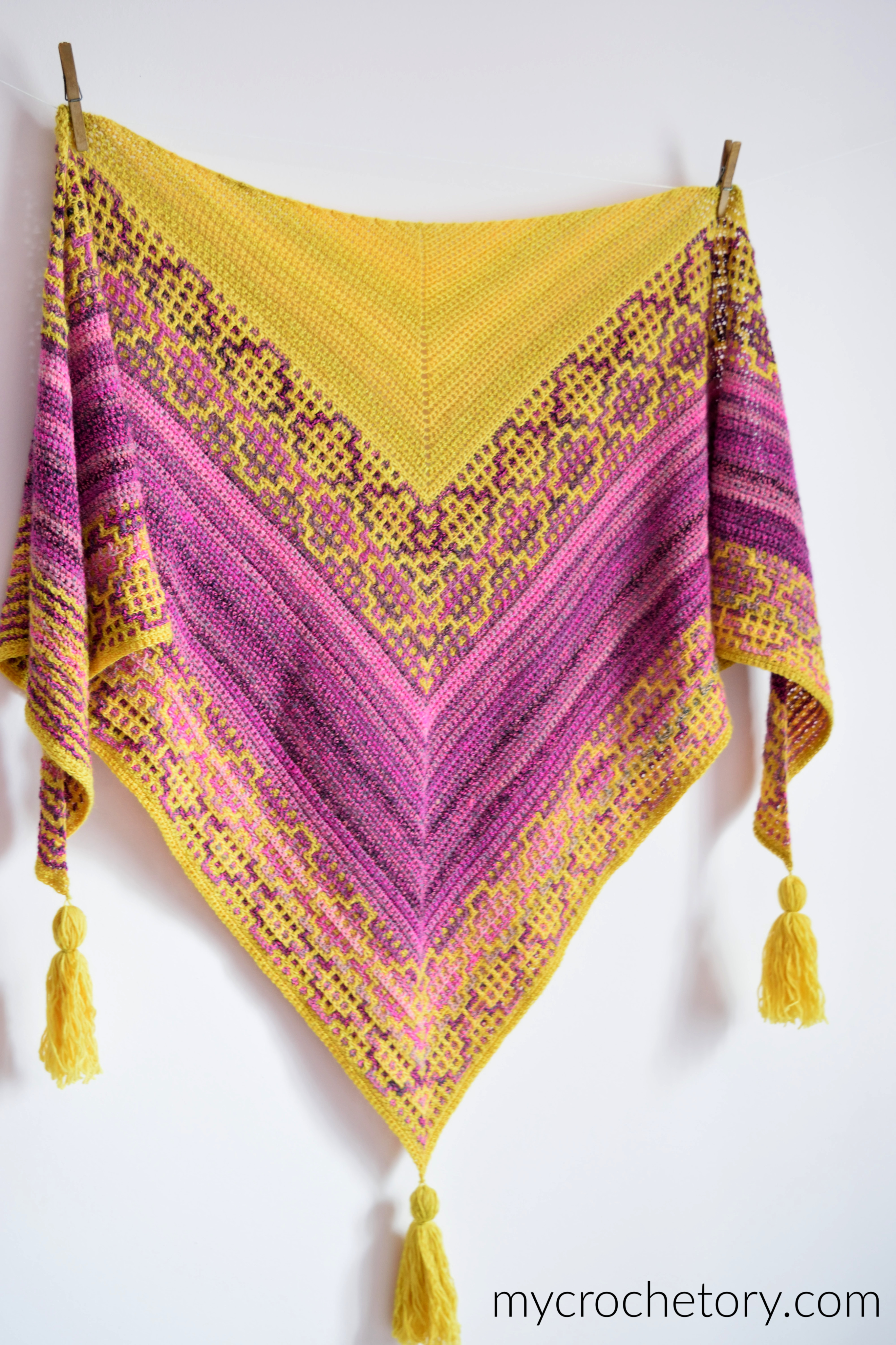
- Carina Mosaic Shawl. A two-color mosaic triangle shawl, worked top down.
- Mosaic crochet in rows. My tutorial for mosaic worked flat, with a practice swatch.
- 10 free mosaic crochet patterns. More mosaic projects to try next.
More crochet cowls from me
Want a cowl in a different stitch? Each of these keeps your neck warm in its own way.
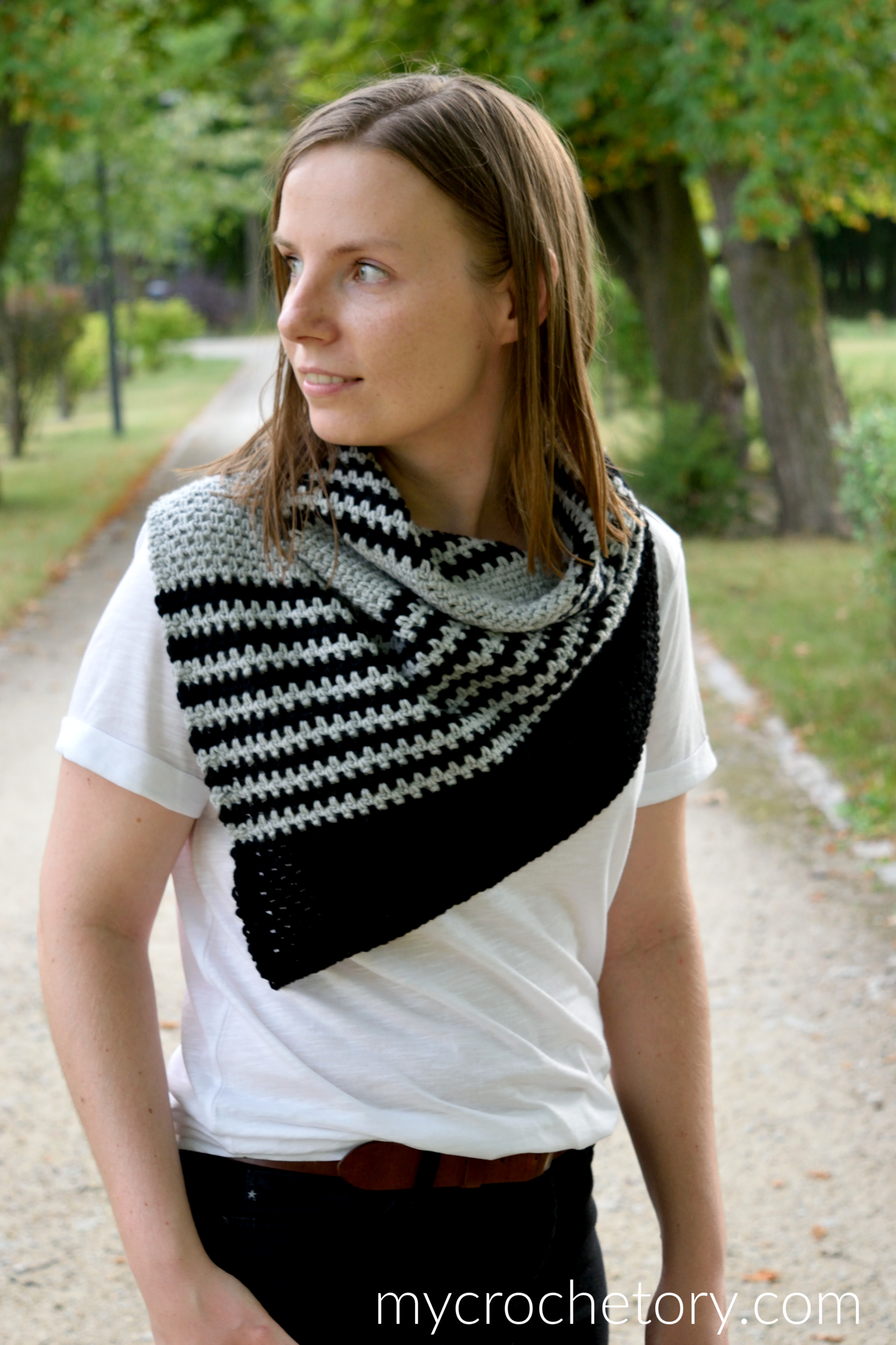

- Greus Cowl. An asymmetric moss stitch cowl in two colors.
- Ombre Moss Stitch Cowl. Three shades of moss stitch in the round, with a ribbed brim.
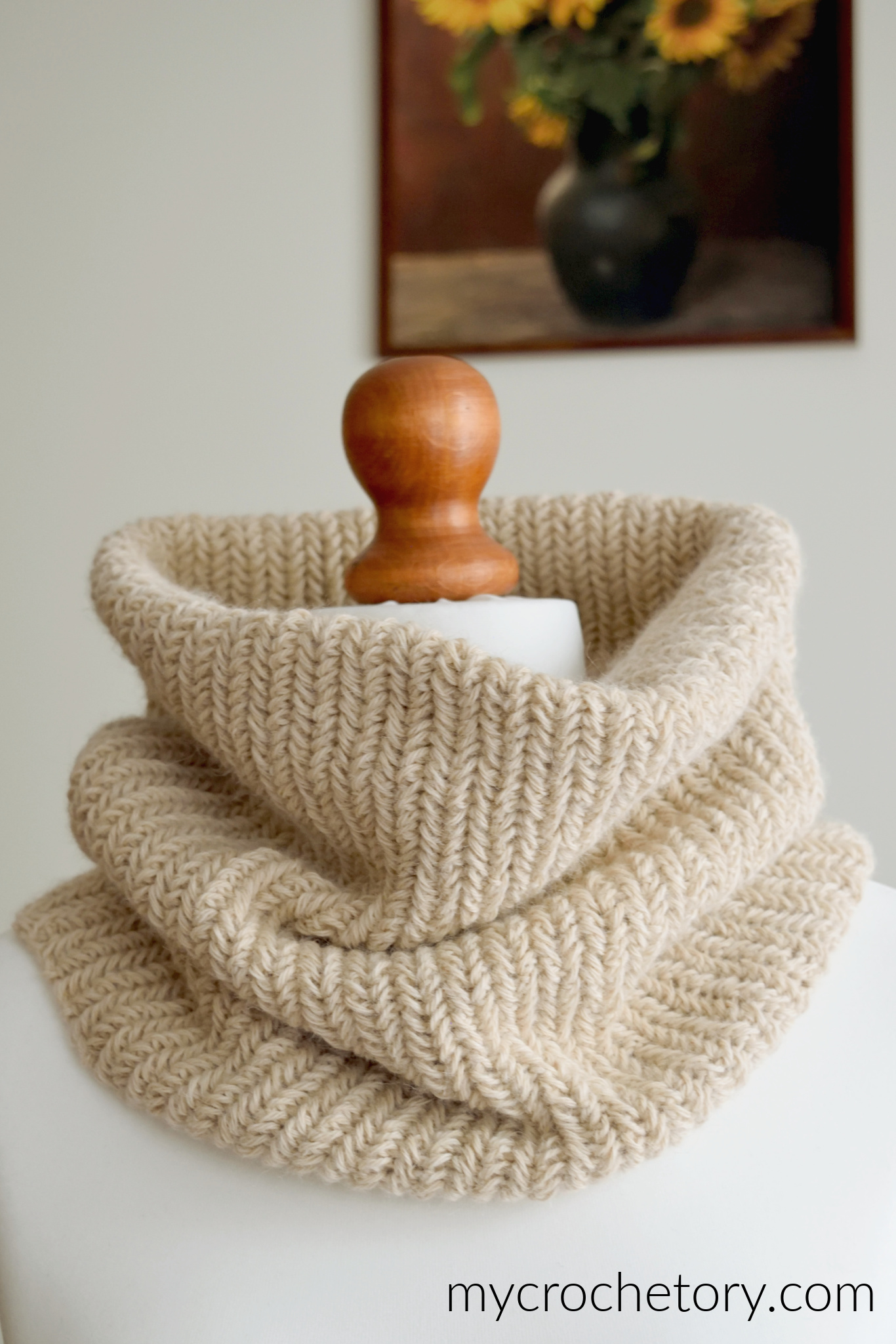
- Herringbone Cowl. A warm neck warmer in herringbone stitch.
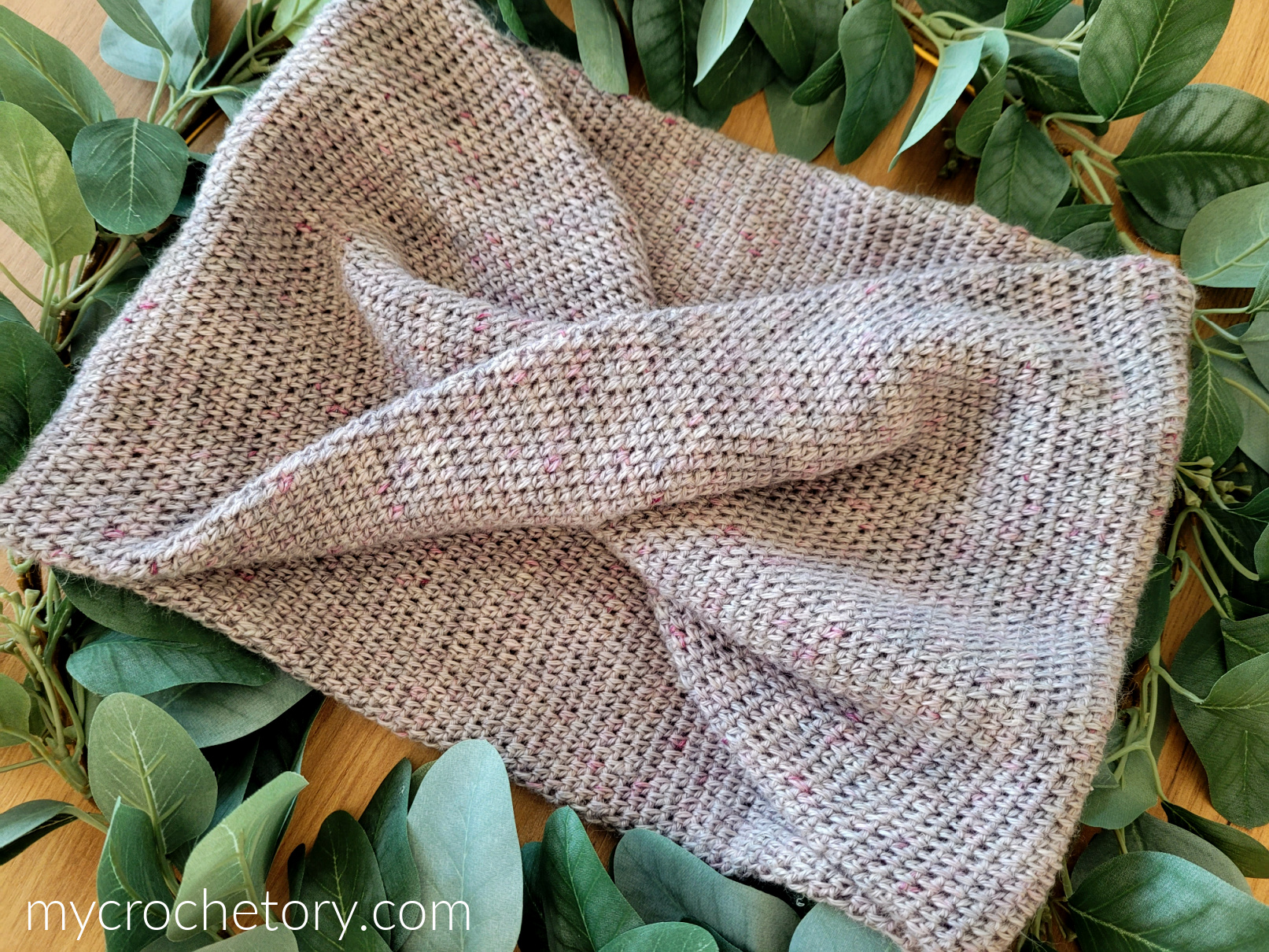
- Lilac Mobius Cowl. One twist and one easy stitch that looks like knitting.
Mosaic crochet cowl FAQ
Is a mosaic crochet cowl hard to make?
It’s an intermediate pattern, but you only need single crochet, double crochet and the back loop. Every round has step photos, so you can check your work as you go.
Can I follow the chart instead of the written rounds?
Yes. Use whichever you like, the chart or the written rounds. The chart is read from bottom to top and from right to left, one round per row of squares.
Is there a hat to match the mosaic crochet cowl?
Yes, the Duende Hat uses the same mosaic and the same colors. You can also get both patterns together as a set on Etsy.
Leave a Reply