
Updated: 8 January 2026 by Sylwia (MyCrochetory)
I ignored the V stitch for a long time. Not on purpose. It just never grabbed me.
Every time I saw it, it looked stiff. A little flat. Like something that only works in perfect photos. So I kept scrolling and picked other stitches instead.
What finally made the difference was not the stitch itself. It was the yarn I used and how tightly I was holding everything. Once I switched to a softer yarn and eased up my grip, the fabric looked completely different. Cleaner. Lighter. Much closer to what I actually wanted to make.
This tutorial is for that moment when a stitch should work, but something feels off. I will show you how I approach the V stitch, where beginners usually get stuck without realizing it, and what small details change how the fabric looks and feels.
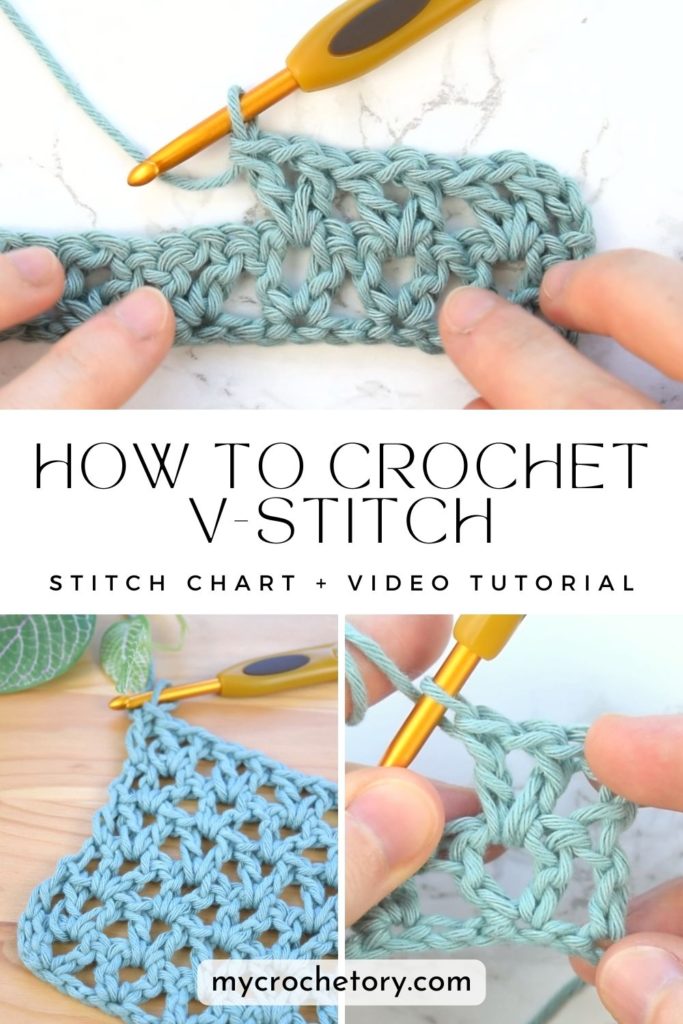
WHAT IS THE V STITCH
The V stitch looks simple on paper, but it reacts quickly to how you work it.
It is made from two double crochets with a chain between them, all worked into the same space. That chain creates space in the fabric. When it is pulled too tight, the V shape closes in. When the tension is relaxed, the stitch definition becomes clear.
This stitch shows tension issues right away. Small changes in grip are visible almost immediately in the fabric. Even tension gives you clean, open rows. Tight tension makes the fabric stiff and uneven.
I use the V stitch when I want movement and drape. It works well for shawls, wraps, and lightweight scarves. I avoid it for rigid or sharply shaped pieces. This stitch makes the most sense when softness matters more than structure.
WHAT YOU NEED BEFORE YOU START
You do not need much to start the V stitch. That is part of the reason it works so well for practice.
A smooth yarn is the easiest choice here. Heavily textured yarns make it harder to see where each stitch goes, especially in the first few rows. When the stitch definition is clear, it is much easier to spot mistakes early.
Use the hook size recommended on your yarn label as a starting point. There is no need to size down or adjust anything yet. Focus on keeping your grip relaxed and your stitches even before experimenting with hook changes.
Basic stitches are all you need. You should be comfortable making a chain and a double crochet. If those still feel uncertain, it helps to review them first. My basic crochet stitches tutorial covers chain stitches, double crochet, and a few other essentials without overcomplicating things.
That is it. No special tools, no extra techniques, no setup beyond the basics.
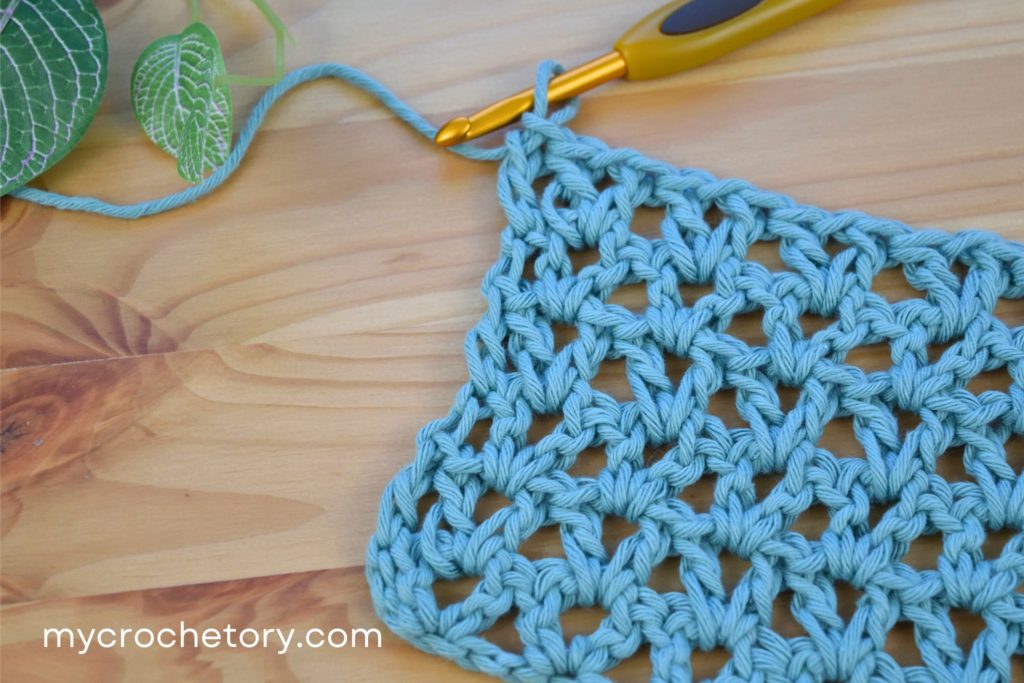
How to Crochet the V Stitch Step by Step
This is the point where the V stitch usually makes sense.
Once you see the full repeat and work a few rows, the pattern becomes much easier to follow.
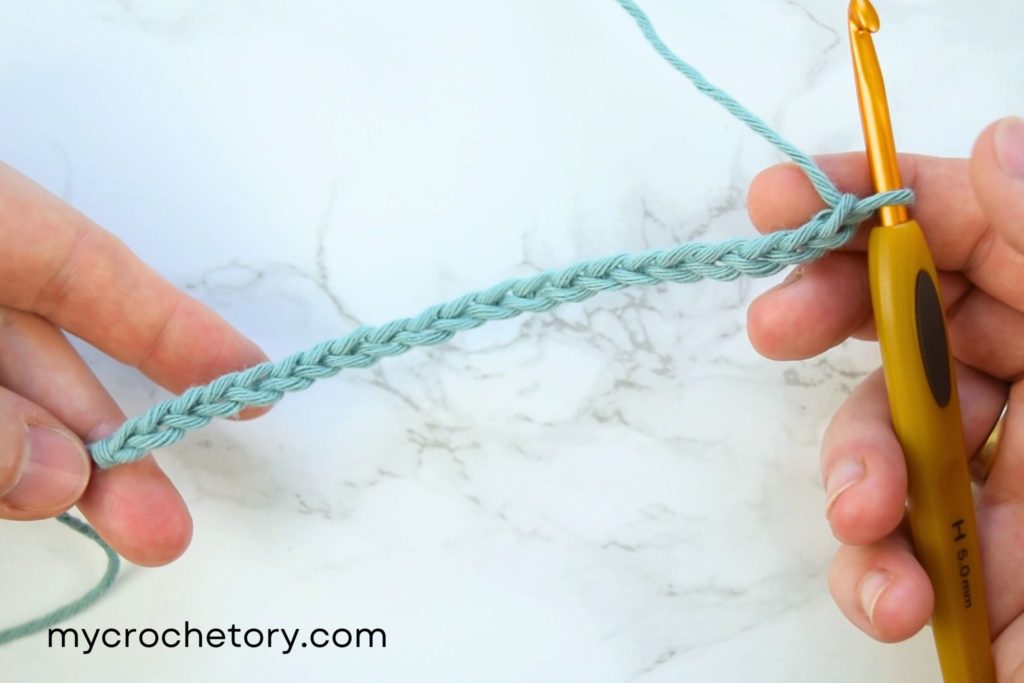
Start with a foundation chain worked in multiples of three. This keeps the V stitches lined up as the row grows.
Your first V goes into the fourth chain from the hook. Work one double crochet, chain one, then another double crochet into that same chain.
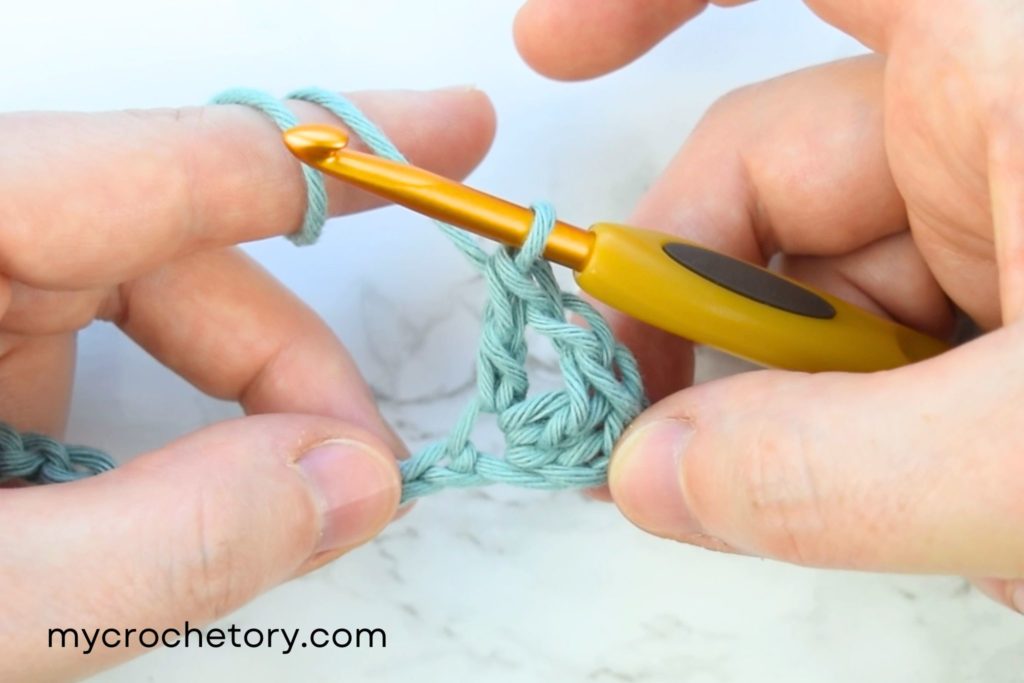
This is where many beginners tighten their grip without noticing. If your hands start to feel tense, pause. Loosen your grip. Then keep going.
Skip two chains and repeat the V stitch across the row. The spacing may look uneven at first. That is completely normal. Finish the row before deciding anything went wrong.
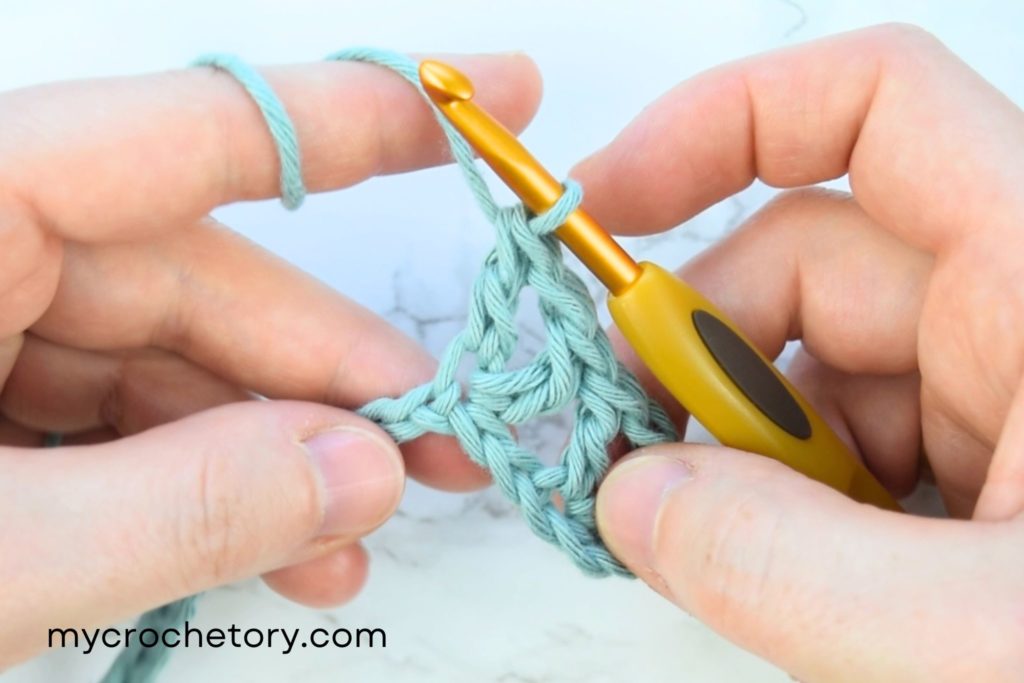
End the row with a double crochet in the last chain. Skipping this stitch often causes the edge to lean as more rows are added.
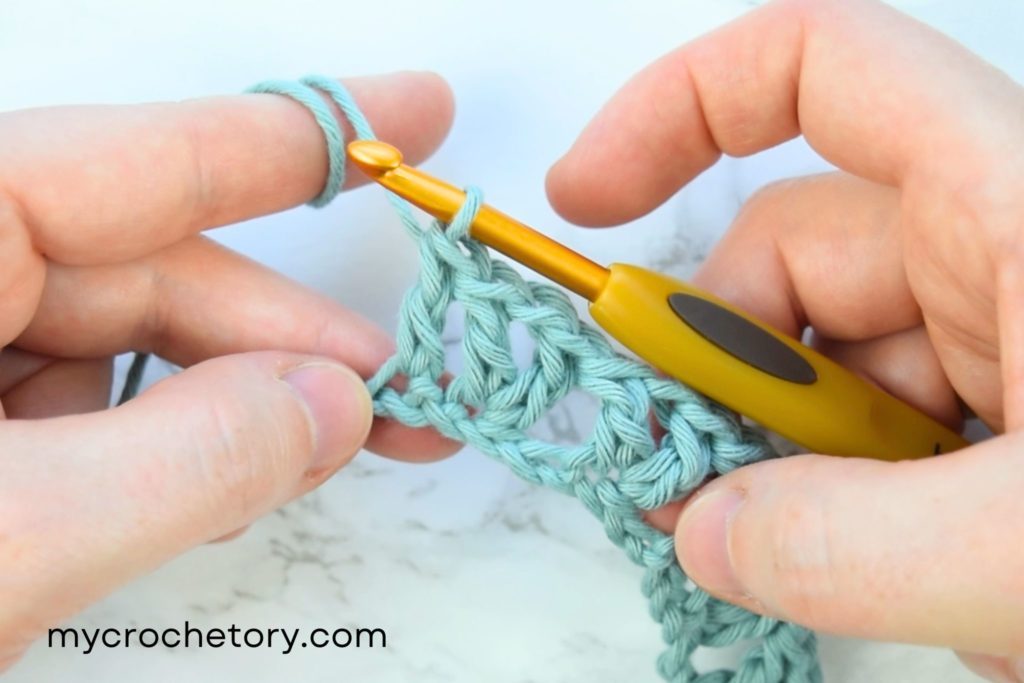
For the next row, start with a chain two. This chain counts as the first double crochet. Work the next V stitch into the chain one space from the row below. Place one double crochet, chain one, and another double crochet into that space.
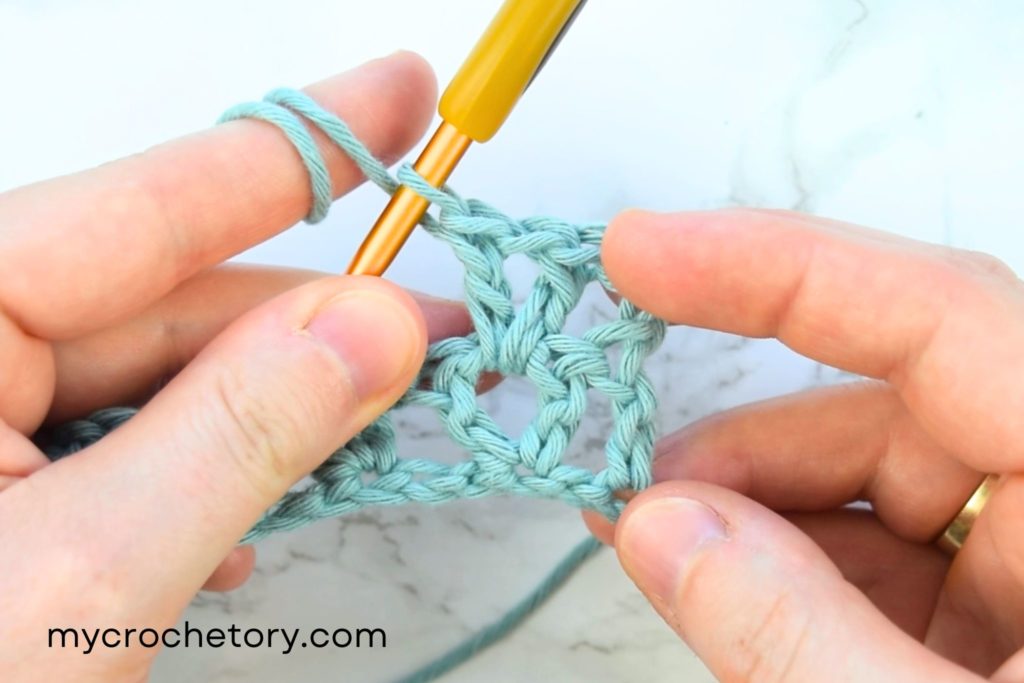
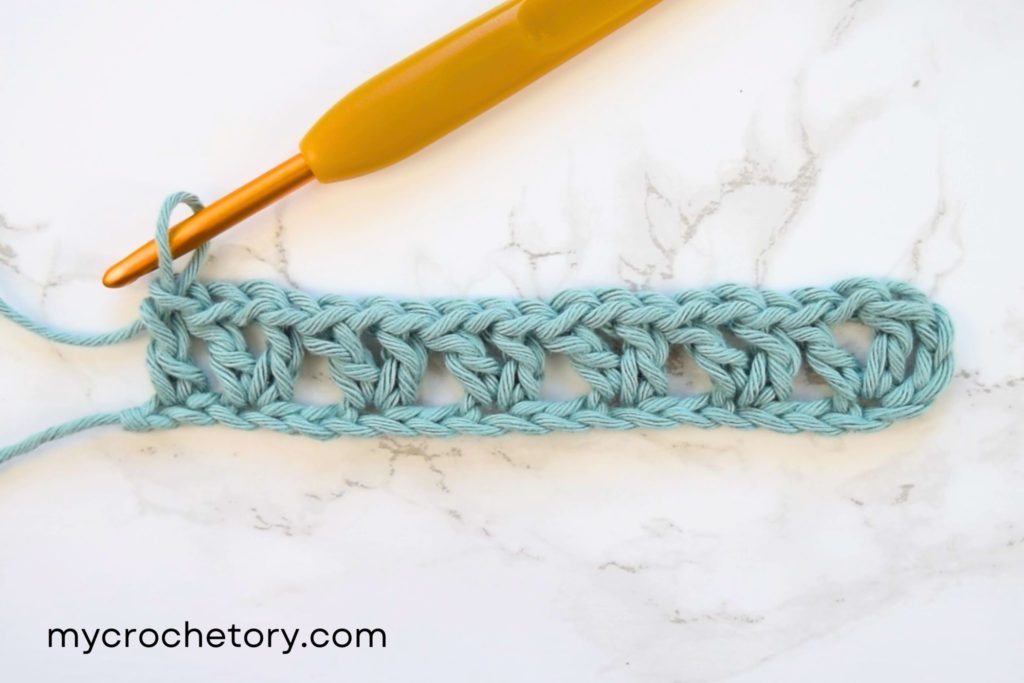
Repeat the V stitch in each chain one space across the row. This placement is key. Each V stitch belongs in the chain space, not into a stitch. Keeping this consistent helps the rows stay even and the pattern clear.
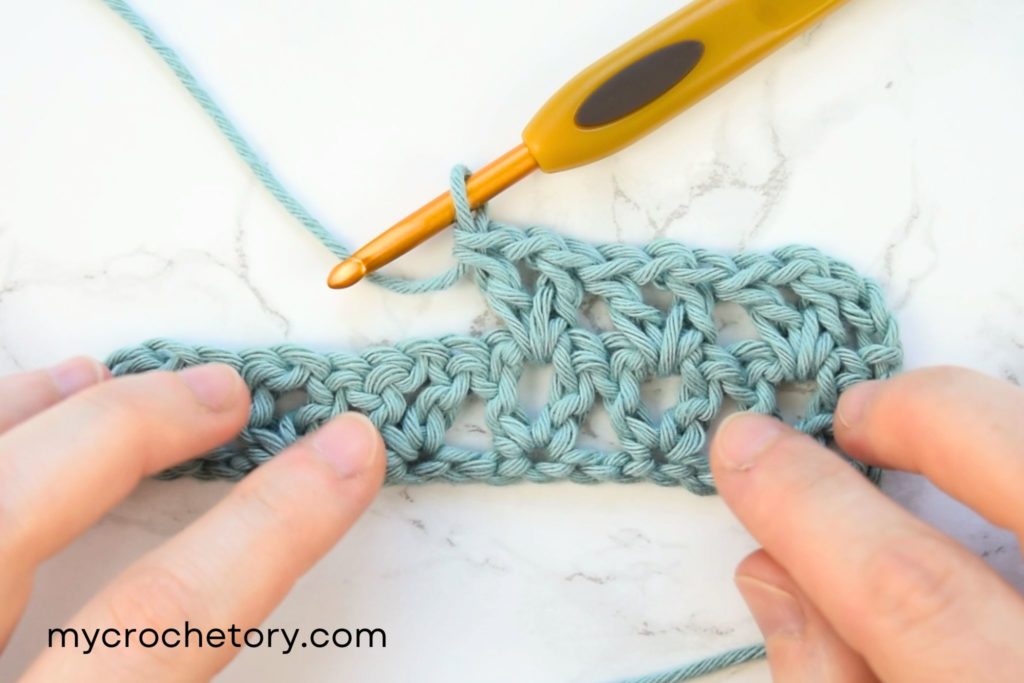
At the end of the row, work one double crochet into the top of the turning chain. Turn your work and repeat the same steps for the next row. After a few rows, the V shapes become easy to spot without counting every stitch.
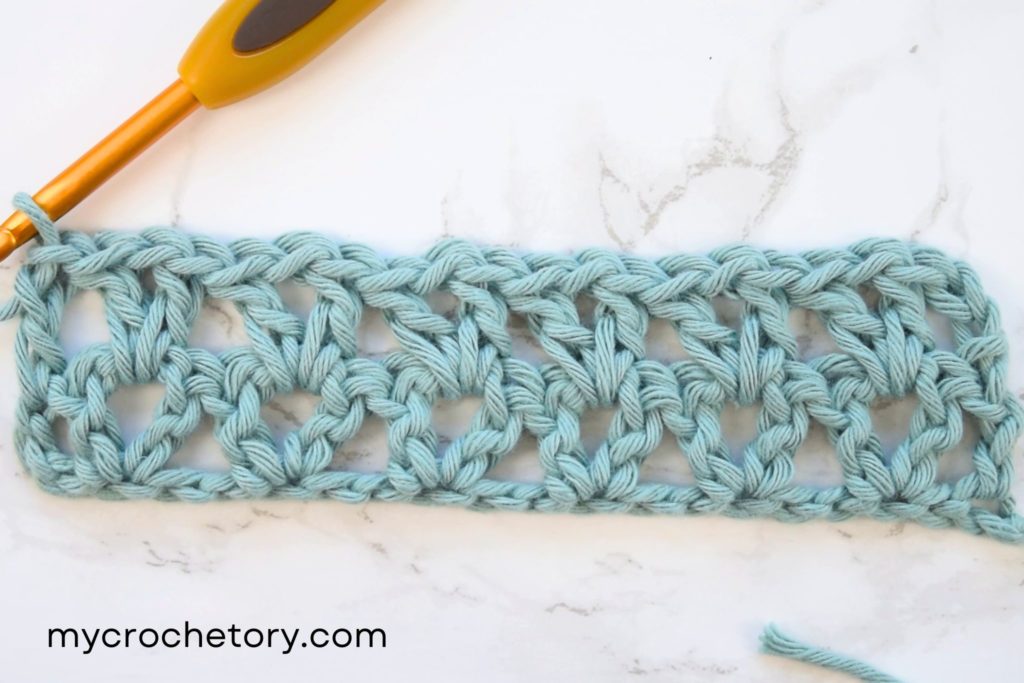
Photos can be especially helpful here. Use them to check stitch placement, chain spaces, and edge stitches. If something looks off, compare it to the previous row before pulling anything out. Small placement fixes often solve the problem.
How to Create V Stitch Rows Evenly
Uneven rows usually show up after a few repeats, not in the first row.
That is when small placement mistakes start to add up.
The most important thing to check is where you place each V stitch. Every V belongs in the chain one space from the row below. Not into a stitch. Not around it. Into the chain space. Missing that spot even once can shift the whole row.
Tension matters more here than speed. If your grip slowly tightens as you work, the rows begin to pull in. If your hands feel tense, pause and reset before continuing. Even tension helps the V shapes line up cleanly.
Turning chains affect the edges more than most people realize. Keep your chain two consistent at the start of every row. Changing the height from row to row often shows up as a wavy or slanted edge.
If something looks uneven, check the last completed row before frogging everything. In many cases, one misplaced V stitch is the cause. Fixing that single spot is often enough to get the rows back on track.
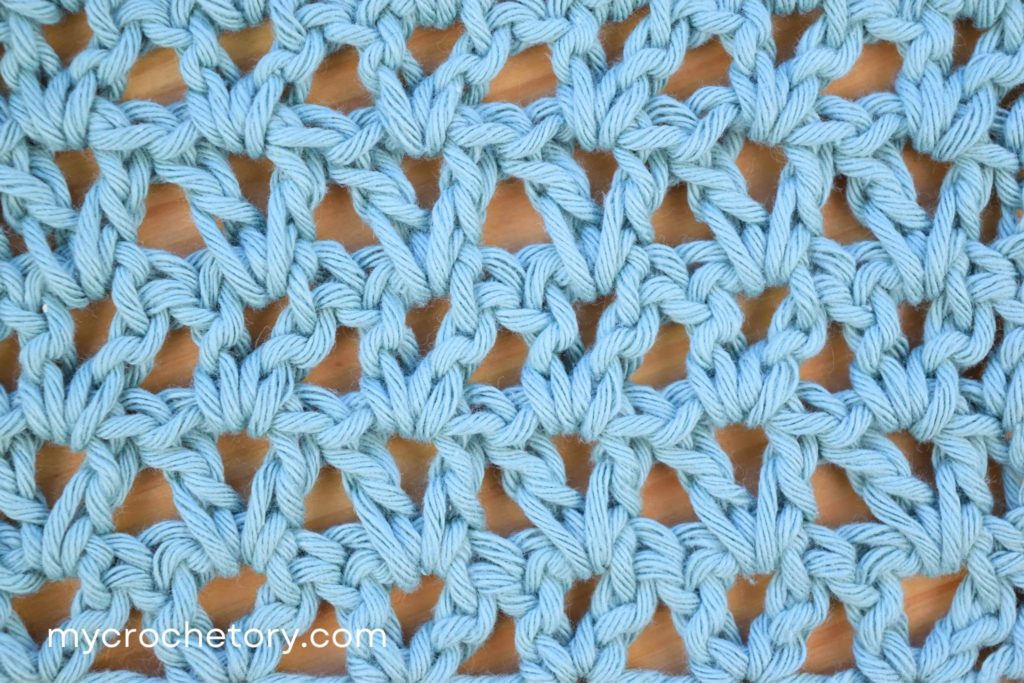
V Stitch Chart
If you like having a visual guide nearby, the stitch chart can be very handy.
It shows how the V stitches line up from one row to the next. This makes it easier to check placement, especially after a few rows, when everything starts to blend together. Many people use the chart when something looks a bit off and they want to find the issue without pulling out their work.
You do not have to crochet straight from the chart. It works best as a quick check. A glance is often enough to confirm spacing, repeats, or edge stitches. Then you can keep going with the written steps.
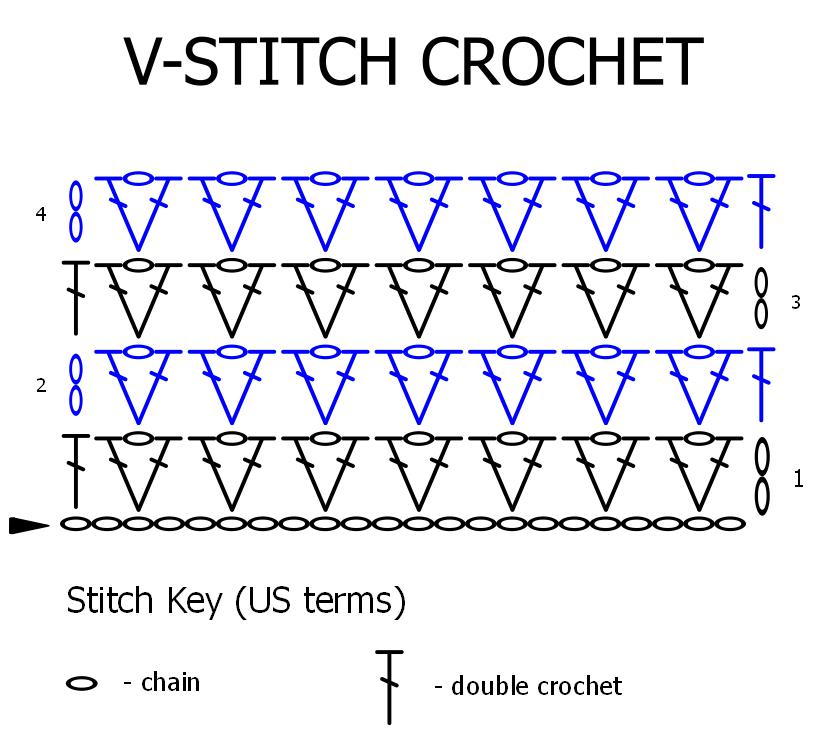
Stitch Key (US terms):
- ○ – chain (ch)
- T – double crochet (dc)
If you prefer written instructions, you can skip the chart completely. The V stitch works well either way. But if you like to double check your work or feel more confident with a visual reference, the chart is a helpful extra to keep close.
V Stitch Video Tutorial
Some things are easier to understand when you see them in action.
The video is most helpful for stitch placement and row changes. You can see where the hook goes, how the chain one space looks, and how the edges are finished at the end of each row. This can be useful if your rows start to look uneven and you are not sure why.
Use the video as a guide, not something you need to follow step by step. Pause when needed. Rewind when something is unclear. Watching one full row from start to finish is often enough.
If you learn better by watching than by reading, the video supports the written steps. It is there to help you double check placement, not to rush you through the stitch.
TIP: To view this V-stitch crochet video tutorial properly, please disable any ad-blocker you have running.
V Stitch Variations You Can Try
Once the basic V stitch feels comfortable, small variations can change the look without changing the process. These versions use the same idea but different stitches. Each one creates a slightly different fabric and works better for specific types of projects.
You do not need to learn anything new here. Focus on stitch height and spacing. That is where the difference shows up.
Half Double Crochet V Stitch
This variation creates a denser fabric with less space between rows. It is a good option for projects that need more warmth or structure.
Start with a foundation chain in multiples of three. For the first row, chain two for the turning chain. Work one half double crochet, chain one, then another half double crochet into the third chain from the hook.
Skip one chain and repeat the same sequence across the row.
For the next row, chain two again. Work the same stitch sequence into each chain one space from the previous row. Continue until you reach the length you want.
Treble Crochet V Stitch
This version creates a taller and more open fabric. It works well for lightweight projects where drape matters.
Begin with a foundation chain in multiples of three. For the first row, chain four for the turning chain. Work one treble crochet, chain one, then another treble crochet into the sixth chain from the hook.
Skip two chains and repeat across the row.
For the next row, chain four again. Work the same stitch sequence into each chain one space from the row below. Continue as needed.
No Space Double Crochet V Stitch
This variation removes the chain space between stitches. The result is a tighter and more solid fabric.
Start with a foundation chain in multiples of six. For the first row, work two double crochets into the fourth chain from the hook. Skip one chain and repeat across the row. End with one double crochet in the last chain.
For the next rows, chain three. Skip two stitches, then work two double crochets between each V from the previous row. Repeat until the piece reaches the desired length.
Double Crochet V Stitch with Picot
This version adds a decorative detail without changing the base structure.
Start with a foundation chain in multiples of three plus one. Chain three, which counts as the first double crochet. Work another double crochet into the fifth chain from the hook. Chain one, make a picot by chaining three and slip stitching into the first chain, then work another double crochet into the same stitch.
Skip two stitches and repeat across the row.
For the next row, chain three. Work the V stitch with picot into the chain space of each V from the previous row.
This variation adds a light decorative detail and works well when you want something simple but not plain.
Quick Notes Before You Choose a Variation
Each of these versions uses the same V stitch placement. Once you understand where the stitches go, switching between them feels straightforward.
If you are unsure which one to use, make a small swatch first. The difference between dense and open fabric becomes clear after just a few rows.
Tips and Fixes for a Neater V Stitch
You do not need perfect rows for this stitch to look good.
You just need to pay attention as you go.
Most small issues come from tension, not from doing anything “wrong.” A lot of people start relaxed and then slowly tighten their grip without realizing it. It is very common. If your hands start to feel tense, stop for a second. Stretch your fingers. Then keep going with a lighter grip. Even tension matters more than speed here.
Placement is the next thing to watch. Each V stitch goes into the chain one space from the row below. When you stay consistent with that spot, the pattern stays clear and the rows line up nicely.
Turning chains also play a bigger role than they seem. Try to keep your chain two the same height every time. Small changes from row to row often show up later as edges that lean or look uneven.
If something starts to look off, check the last row first. In many cases, one stitch is simply in the wrong place. Fixing that one spot is often enough. There is no need to pull out half your work right away.
If the fabric feels tight or stiff, tension is usually the reason. Loosen your grip a little and work one more row before making any big decisions. If the V shapes start drifting to one side, look at placement first. If the edge leans, check the turning chain and the final stitch of the row.
Taking a short pause to look things over before frogging can save a lot of time. Most V stitch issues have a simple fix once you know where to look.
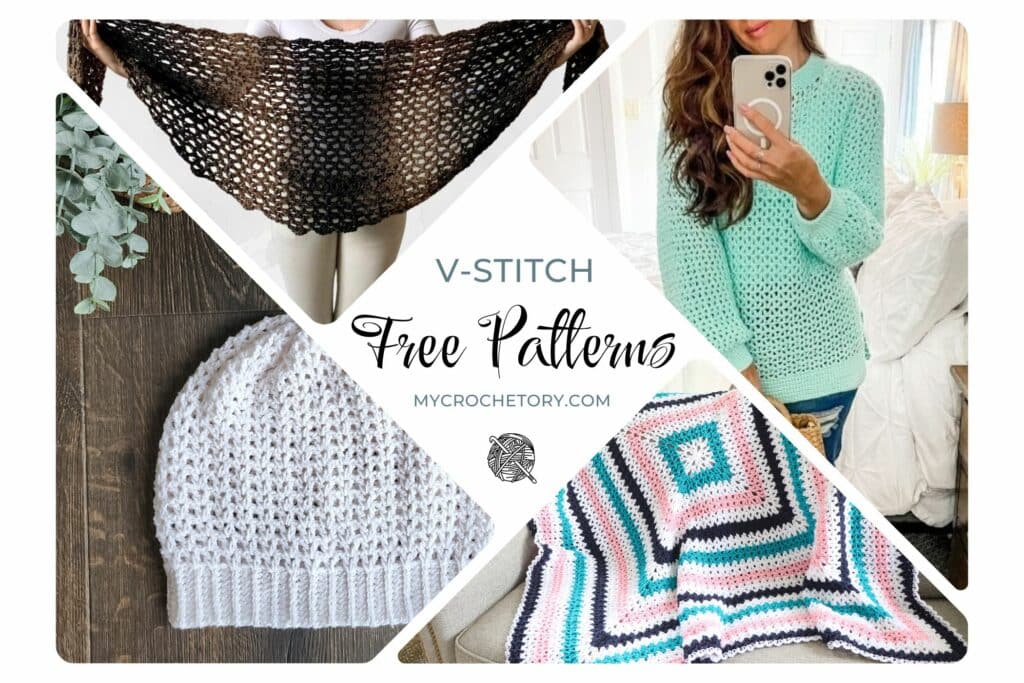
Projects You Can Make with the V Stitch
This is a stitch you will actually want to use, not just test once and move on.
It works really well for projects where you want the fabric to feel light and easy. Shawls and wraps are a great starting point. The stitch gives you nice drape without adding weight. Lightweight scarves are another good option if you want texture but not too much bulk.
Blankets are also a good fit. The rows build up at a steady pace, which helps on bigger projects. The finished fabric feels soft and flexible, not thick or stiff.
You can use the V stitch for simple garments too, like relaxed tops or easy layers. These projects stay comfortable to wear and do not feel tight or restrictive. Just keep in mind that this stitch works better for soft shapes than for sharp, structured designs.
If you want ideas before choosing your next project, you can look through these free V stitch crochet patterns. Seeing finished pieces often makes it easier to picture how the stitch will look in your own work.
If you are not sure where to start, try something small first. A scarf or a simple wrap is usually enough to get a feel for the stitch and decide what to make next.
Frequently Asked Questions About the V Stitch
Is the V stitch beginner friendly?
Yes. If you can make a chain and a double crochet, you can handle the V stitch. The key is taking your time in the first few rows.
Why do my V stitches look uneven?
This usually comes down to placement or tension. Make sure each V goes into the chain one space from the row below and that your grip stays relaxed.
What yarn works best for the V stitch?
Smooth yarns make it easier to see stitch placement, especially when you are learning. Heavily textured yarns can hide small mistakes and make the stitch harder to read.
Does the V stitch use a lot of yarn?
It uses slightly more yarn than very tight stitches, but not an extreme amount. The open structure balances things out.
Can I use the V stitch for garments?
Yes, especially for relaxed pieces and layers. The fabric stays flexible and comfortable, which works well for tops, wraps, and light cardigans.
If you’d like to support me, please share this tutorial with others using the share buttons at the bottom of post and pin it to your Pinterest board.
Thank you for stopping by and Happy Crocheting!
MORE CROCHET STITCHES
If you found this V-stitch tutorial helpful, you might also like posts:
- How to crochet HERRINGBONE STITCH
- How to crochet MOSS STITCH
- How to crochet BASKETWEAVE
- How to DC 2 Rows at Once
- How to crochet CLAMSHELL STITCH
- How to crochet STAR STITCH
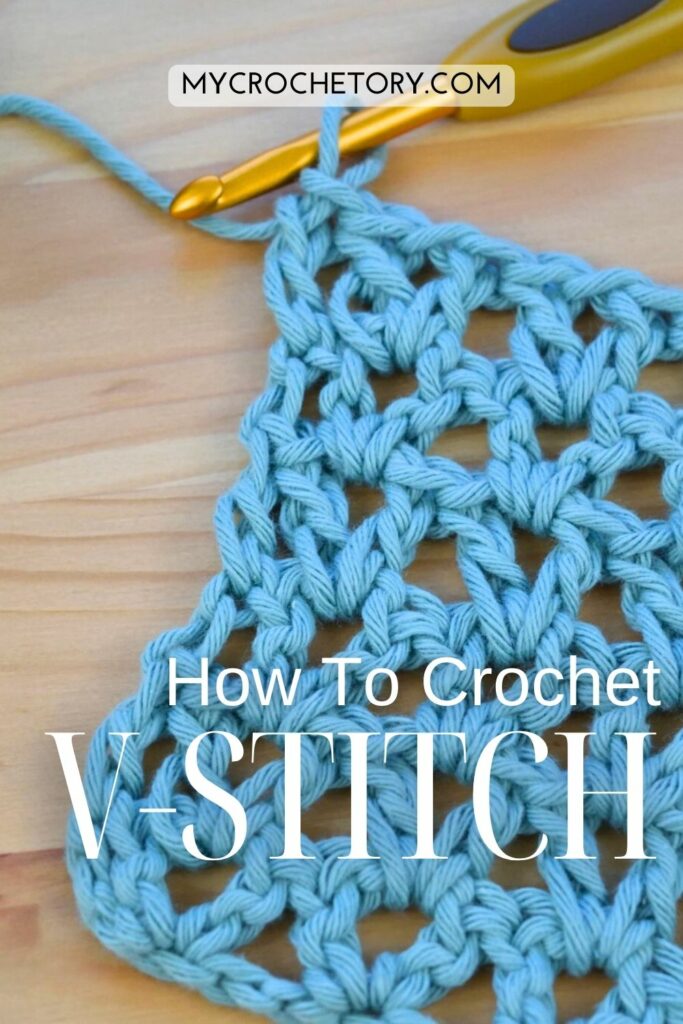
Don’t forget to save this Pin for easy reference: 📌
We’d love to hear about your crochet adventures and see your beautiful creations. Drop a comment below sharing your thoughts, questions, or even your favorite crochet tips! Your voice adds a vibrant thread to our forum community.
Sharing is caring! If you found this guide helpful, consider spreading the love. Click the share button and inspire other crocheters.
Stay in the loop with our latest crochet guides, tips, and inspiration. Subscribe to our newsletter for exclusive content straight to your inbox. Never miss a stitch—subscribe today!czy
Happy crocheting, and may your yarn always be tangle-free!
Join my Facebook Group and Official Ravelry Group where you can find necessary support, you can ask questions or share your finished projects.
You can also follow my Instagram, Facebook page and Pinterest.
Leave a Reply