
Updated: 5 October 2026 by Sylwia (MyCrochetory)
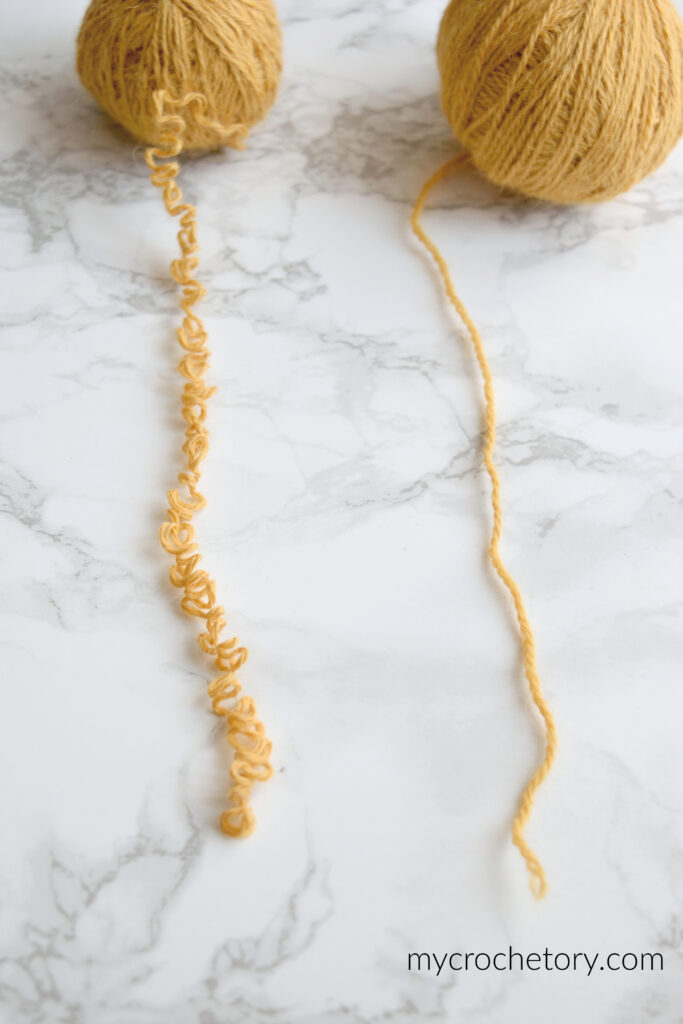
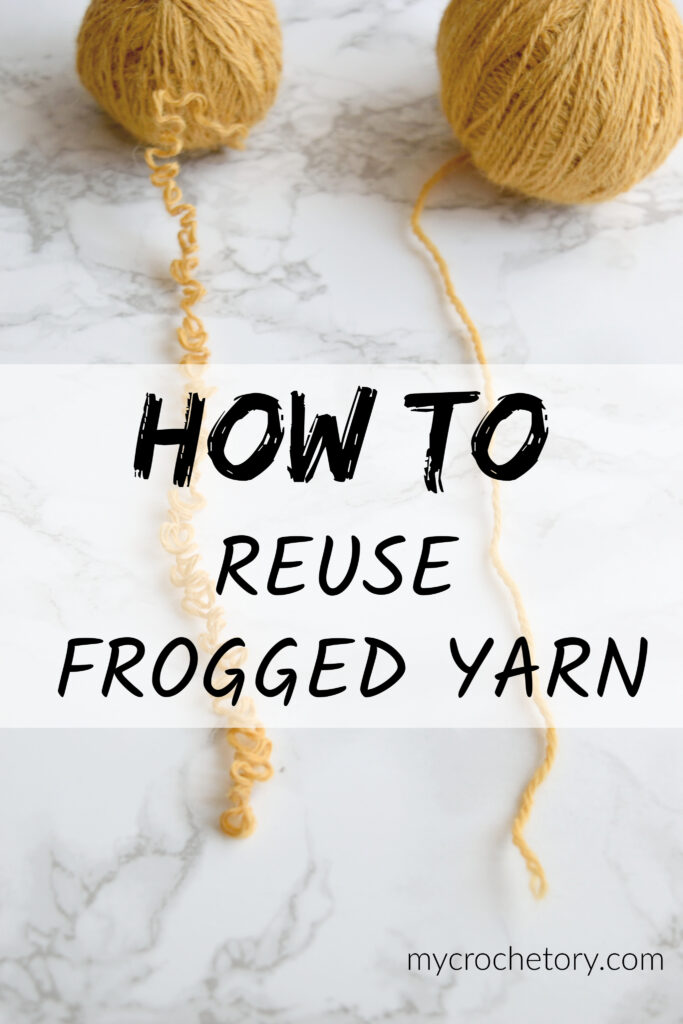
Want to reuse frogged yarn, but right now it looks more like a bowl of instant noodles than something you could crochet with? I’ve been there! When you unravel a project, the yarn comes out all curly and wavy, and that’s totally normal.
I’m sure I’m not the only one with a few projects hiding in the back of the closet that will never be finished. As a designer, I also know that sometimes a finished piece just doesn’t turn out the way I imagined it. So instead of letting that yarn sit there, I frog it and get it ready for something new.
The secret is in what happens after you unravel. With a bit of water, a towel and some patience, those kinks relax, and your yarn turns straight and smooth again. Below, I show you exactly how I do it, step by step, plus a steam option for yarns that stay wavy.
I’ll also share tips for getting yarn out of an old sweater and for yarns that are tricky to frog. So grab that forgotten project, and let’s give its yarn a fresh start!
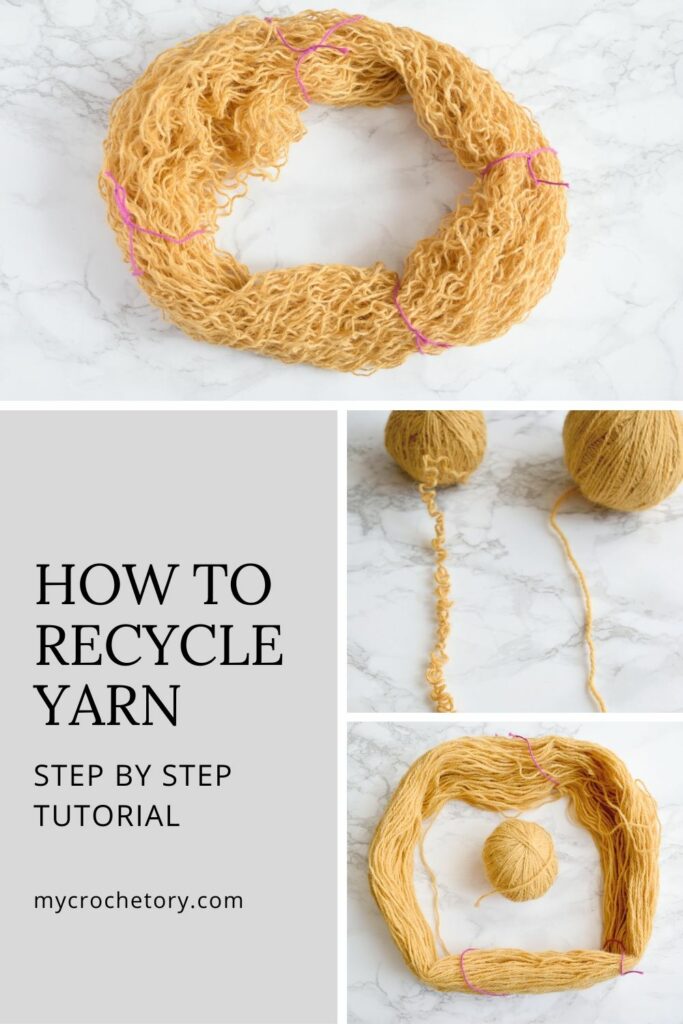
Nothing to frog today? Lucky you! Save this pin to your Pinterest board anyway, so these steps are just one click away the next time a project doesn’t work out.
What is frogging in crochet and knitting?
Frogging simply means unraveling your crochet or knitting, so you pull out the stitches and get your yarn back. I have to admit, I love this name! When you rip out stitch after stitch, it sounds a bit like “rip it, rip it”, which is just like a frog saying “ribbit”.
So that’s where frogging comes from, and that’s why unraveled yarn is called frogged yarn.
And don’t feel bad if you frog a lot, because every crocheter and knitter does it. Sometimes it’s only a few rows because of a little mistake. Other times, it’s a whole project you know you’ll never wear. But when you frog a whole piece, every stitch leaves its shape behind in the yarn.
The good news? That’s really easy to fix, and I’ll show you how in a moment.
Which yarns are easy to frog, and which ones are tricky?
Smooth yarns like wool, cotton and acrylic are the easiest to frog, because the stitches slide out without a fight. Fuzzy yarns are a whole different story, though. Mohair, eyelash yarn and other yarns with a soft halo love to grab onto each other, and once those fibers mesh together, pulling them apart gets really hard.
So if your project is fuzzy, take it slow. Undo one stitch at a time and hold the rest of your work with your other hand, so nothing pulls tight. Here’s a fun trick too. Some knitters put mohair in the freezer for an hour or two before they start, because the cold makes the fibers less clingy.
And keep a pair of tiny scissors close by, so you can snip any fuzz that just won’t let go.
Sadly, there’s one kind of project you can’t frog at all, and that’s anything felted. Once wool has felted, the stitches are locked together for good, so there’s simply no yarn left to pull out.
How to reuse yarn from an old sweater
Fell in love with the yarn of a thrift store sweater, but not with the sweater itself? Then don’t leave it on the shelf, because you can take that sweater apart and reuse its yarn! You just open it up piece by piece and then unravel each piece, starting from the top.
Before you buy it, though, turn the sweater inside out and take a good look at the seams. Do you see a thin zigzag thread wrapped around the edges? That’s called serging, and it means the sweater was cut from big pieces of knitted fabric.
So sadly, it would only give you a pile of short bits of yarn. What you want is a sweater whose pieces were knitted to shape and then sewn together, because that’s the kind that unravels into long, happy strands.
Found a good one? Great, now it’s time to open it up. Start with the neckband, then take off the sleeves, open the side and sleeve seams, and finish with the shoulder seams. Take your time with the scissors, and only cut the yarn that holds the seams together, never the knitting itself.
Next, find the edge where each piece was bound off, usually at the top, and start unraveling from there. If you start at the other end, you’ll just get a tangled mess. Once you have your yarn, it’s ready for the four steps below.
How to straighten frogged yarn, step by step
Straightening frogged yarn is so much easier than it looks! You only need four steps, unravel, soak, dry and rewind, and you probably have everything you need at home already. Here’s what to get ready.
- your crochet or knit project
- a few strips of scrap yarn
- a sink, bowl or bucket
- water
- wool wash or mild soap (optional)
- a big bath towel
Step 1. Unravel and wind it into a skein
First, start unraveling your project and wind the yarn into a ball as you go. Then wrap that yarn around something big to make a large loop, which is called a skein. A yarn swift makes this super easy, but honestly the back of a straight chair works just as well. And if you like, you can skip the ball and wind the yarn straight into a skein.

When you get to the end, tie the skein loosely with scrap yarn in 3 or 4 places, so nothing can tangle. I used bright pink scrap yarn in my photos, because then the ties are easy to find later. Now slide the skein off your chair or swift, and do the same with every ball.


Step 2. Give your yarn a bath
Next, it’s bath time! Fill a bowl, a bucket or a clean sink with enough cool or lukewarm water to cover your yarn. If the yarn could use a wash, add a little mild soap too. Then put your skein in and gently push it down until it’s soaked all the way through. Just don’t swish it around, because rubbing can make wool felt. Now leave it there for a couple of hours, so the water has time to relax all those kinks from the old stitches.

Step 3. Hang it to dry
After its bath, lift the skein out carefully and gently squeeze out the water, but don’t wring it. Then lay it on a big bath towel, roll the towel up and press as you go, so the towel soaks up even more water.


Finally, hang your skein to dry somewhere it can drip freely, away from heat and direct sunlight. While it hangs, its own weight slowly pulls the yarn straight.

Step 4. Rewind it
As soon as your yarn is completely dry, wind it into a ball or back into a skein. And that’s it! Your yarn is smooth again and ready for a brand new project. Need some ideas? Browse my free crochet patterns and pick your next favorite.


Stuck with a stubborn skein? Come ask me in my Facebook Group or my Ravelry Group, I’m happy to help. You can also find me on Instagram, Facebook and Pinterest.
How to straighten frogged yarn with steam
Gave your yarn a bath, and it’s still wavy? Don’t give up yet, because steam might be exactly what it needs!
Steam is a great option for yarns that just won’t relax in water, especially acrylic and other synthetic yarns. The warm steam softens the fibers, so the kinks can finally let go. And here’s a bonus. You don’t have to wait for hours while your yarn dries.
A simple steam iron is all you need. Wind your yarn into a big, loose circle and lay it on your ironing board. Then hold the iron a few inches above the yarn and give it a few bursts of steam, but never touch the yarn with the iron.
Now gently pull the circle, and you’ll see the strands straighten out right in front of you. It’s the same trick that’s used for steam blocking finished cotton and acrylic projects, so it’s a handy one to know!
No iron nearby? No problem. You can lay the skein on a cake rack over a pot of boiling water and let the steam rise through it. A handheld clothes steamer works too, as long as you keep it close to the yarn without touching it. Just watch your fingers, because steam gets really hot, really fast!
Can you use frogged yarn without washing it?
Yes, you can crochet or knit with frogged yarn right away, but I really don’t recommend it. The yarn stays crimped and springy, so your new stitches come out uneven, and the whole project just doesn’t look as nice as it could.
Of course, not everyone agrees with me, and lots of crocheters and knitters happily work straight from a frogged piece. And if you only frog a few rows soon after you made them, the yarn usually hasn’t had time to get very wavy, so you can simply keep going.
But for a whole project, and especially an old one, I always give my yarn a bath first. It only takes a little extra time, and your new project will look so much better.
Frogged yarn FAQ
What if my frogged yarn has weak spots or knots? No stress, just cut them out! Then join the two ends again with one of my 4 easy ways to join yarn ends, like the Russian join. My guide shows each one step by step, so you can pick the join that fits your yarn best. They’re all so neat that you’ll hardly spot them in your new project.
Will my frogged yarn work just like new yarn? Almost, but not always. Yarn that has been used before can lose a little of its stretch, so your new stitches may turn out a bit bigger or smaller than with brand new yarn. So before you start something big, crochet a small swatch and check your gauge. It only takes a few minutes, and it can save you from frogging all over again!
Should I hang a weight on my yarn while it dries? Yes, if your yarn is still really wavy, a little weight can help a lot. Just hang something light from the bottom of the skein, like a clothes hanger, and let it gently pull the kinks out while the yarn dries. But don’t go too heavy, because a big weight can stretch your yarn, and then you’ve got a new problem.
Loved this tutorial? Then join my newsletter, and I’ll send you more tips like this one, straight to your inbox.
More tutorials
You might also enjoy these tutorials.
- How to do intarsia crochet
- How to crochet the moss stitch
- Mattress stitch join tutorial
- How to crochet ribbing
- Magic knot for joining yarn
- Free crochet tutorials for beginners
So, tell me, what are you frogging right now? An old sweater, or a project that just didn’t turn out the way you hoped? Share it in the comments, and add your best tip for straightening yarn too, because I love learning something new from you!
i’ve done this before when my yarn had a good percentage of wool, and it was fine. I’ve also tried this with acrylic yarn and the kinks will not come out however much I wash it. Rather than waste it I just knitted a throw for the house.
My grandmother taught me to do this and I have tried to tell others all of my life. So good that you’re telling even more people. For acrylic yarn, I always use wool wash and very warm water to help the crinkles to straighten out
i’m a knitter but want you to know this is a great tutorial that i can definitely use (yes, i frog a lot).
thankyou very much!
Thank you!
I absolutely loved it who would have thought about doing this Thanks for the information.
I love this information. I have lots of unfinished projects. Thanks again for sharing. I have been wondering for years what to do with them